
Some graduates respond to a university’s decline by cutting ties, withholding donations, and distancing themselves from campus life. In recent years, a number of Harvard alumni have taken that route, saying they no longer recognize the institution they once supported. But one group of graduates has chosen an approach rooted in persistence rather than retreat: remaining involved and pressing for institutional change from within the alumni community.
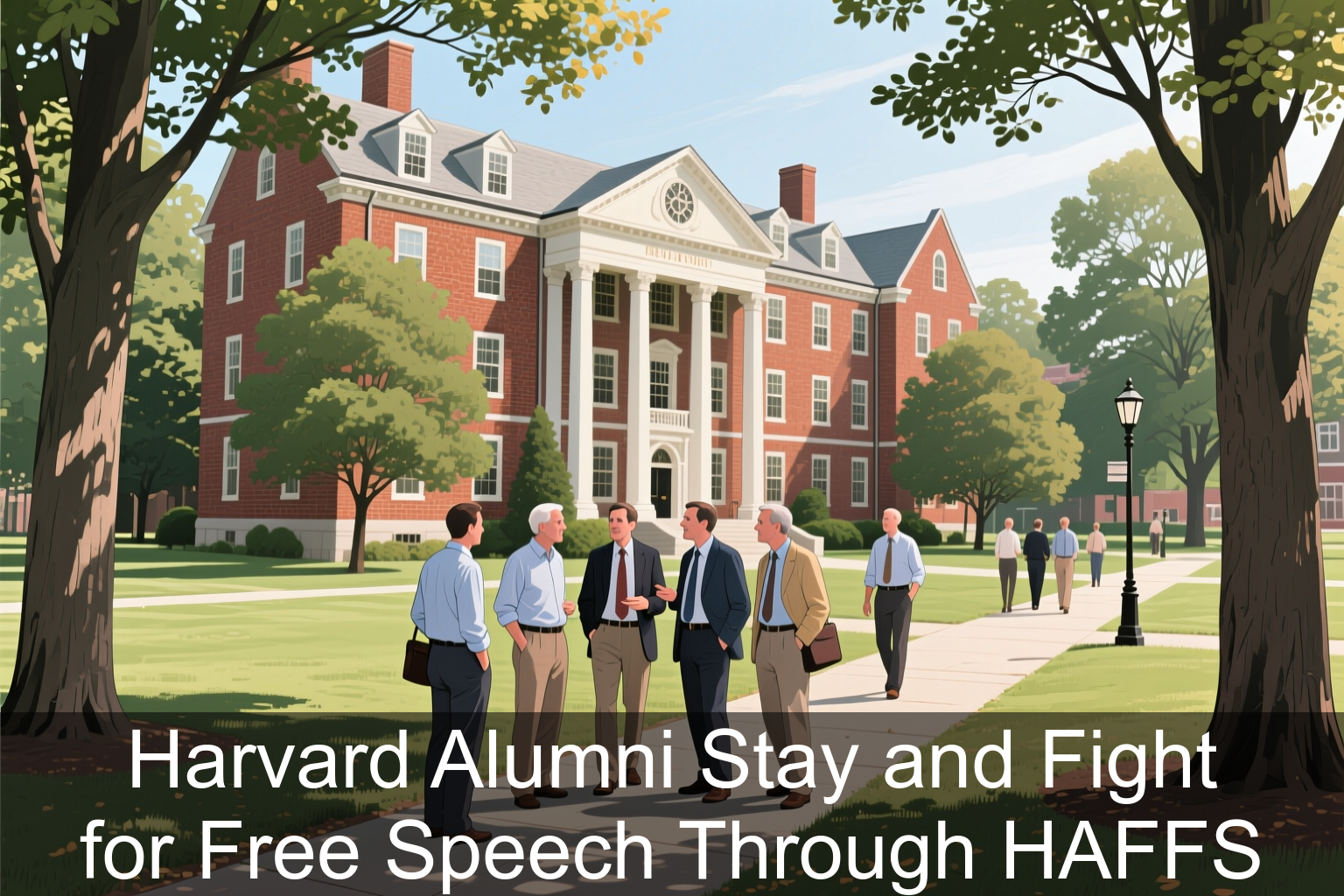
That effort is being carried out by HAFFS, a Harvard alumni organization focused on reviving free speech and academic freedom at the university. Instead of walking away “in disgust,” the group’s members argue that abandoning the school guarantees that the trends they oppose will continue unchecked. Their aim is to stay engaged and use alumni networks and influence to push Harvard back toward open inquiry and viewpoint diversity.
The group’s mission is framed around a belief that universities function best when students and faculty can speak freely, debate controversial issues, and pursue scholarship without ideological pressure. From a libertarian and conservative perspective, HAFFS positions itself as a counterweight to campus climates where dissent can be punished informally, where accepted opinion narrows, and where institutional incentives reward conformity over candid discussion.
HAFFS’ strategy, as described, is not about severing relationships with Harvard but about leveraging the unique role alumni can play in a university’s public reputation and long-term trajectory. The organization’s approach treats alumni involvement as an accountability mechanism: graduates can keep attention on policies and cultural norms that affect expression, and they can encourage reforms aimed at restoring academic standards tied to free exchange of ideas.
The broader story is a contrast between two impulses among disillusioned alumni. One is to disengage entirely, signaling disapproval through absence. The other, embodied by HAFFS, is to remain present and organized, betting that sustained pressure and consistent advocacy can help redirect the institution toward stronger protections for speech and academic freedom.