
News Updates

  • Sheinbaum’s Early Moves Put Mexico on a Collision Path with the U.S. and Its Own Democratic Norms

    Sheinbaum’s Early Moves Put Mexico on a Collision Path with the U.S. and Its Own Democratic Norms

    Mexico’s new president, Claudia Sheinbaum, is steering her administration into a confrontational posture that is reverberating beyond the country’s borders. The direction of travel, as her government takes shape, suggests a growing willingness to test limits both in Mexico’s democratic framework and in its relationship with the United States.

    In Washington, the immediate concern is not only policy disagreement but the broader trajectory of Mexico’s governance. When a neighboring country with deep economic ties to the U.S. signals a readiness to challenge established rules and institutions, the fallout rarely stays contained. The friction is emerging early, before the normal rhythms of bilateral problem-solving can settle in.

    At home, the more serious issue is institutional. The Sheinbaum government is being described as moving away from basic civic expectations in a democratic system—standards that rely on restraints, predictable rules, and respect for the structures that keep political power from becoming arbitrary. From a limited-government perspective, those guardrails are not abstract ideals; they are the practical protections that allow civil society, markets, and individual rights to function without constant political interference.

    Taken together, these developments point to a governing approach that invites confrontation rather than compromise. A strategy that elevates conflict with external partners while straining domestic democratic norms risks narrowing Mexico’s room to maneuver. It can also make ordinary cooperation—on trade, security, and cross-border challenges—harder to sustain, because the underlying trust in stable governance starts to erode.

    For Mexico and the United States alike, the stakes are structural, not merely partisan. If the new administration continues down a path that collides with U.S. interests while also weakening the civic foundations of Mexican democracy, the result could be a longer period of tension with consequences that reach into economic confidence, institutional legitimacy, and the day-to-day predictability that citizens and businesses depend on.
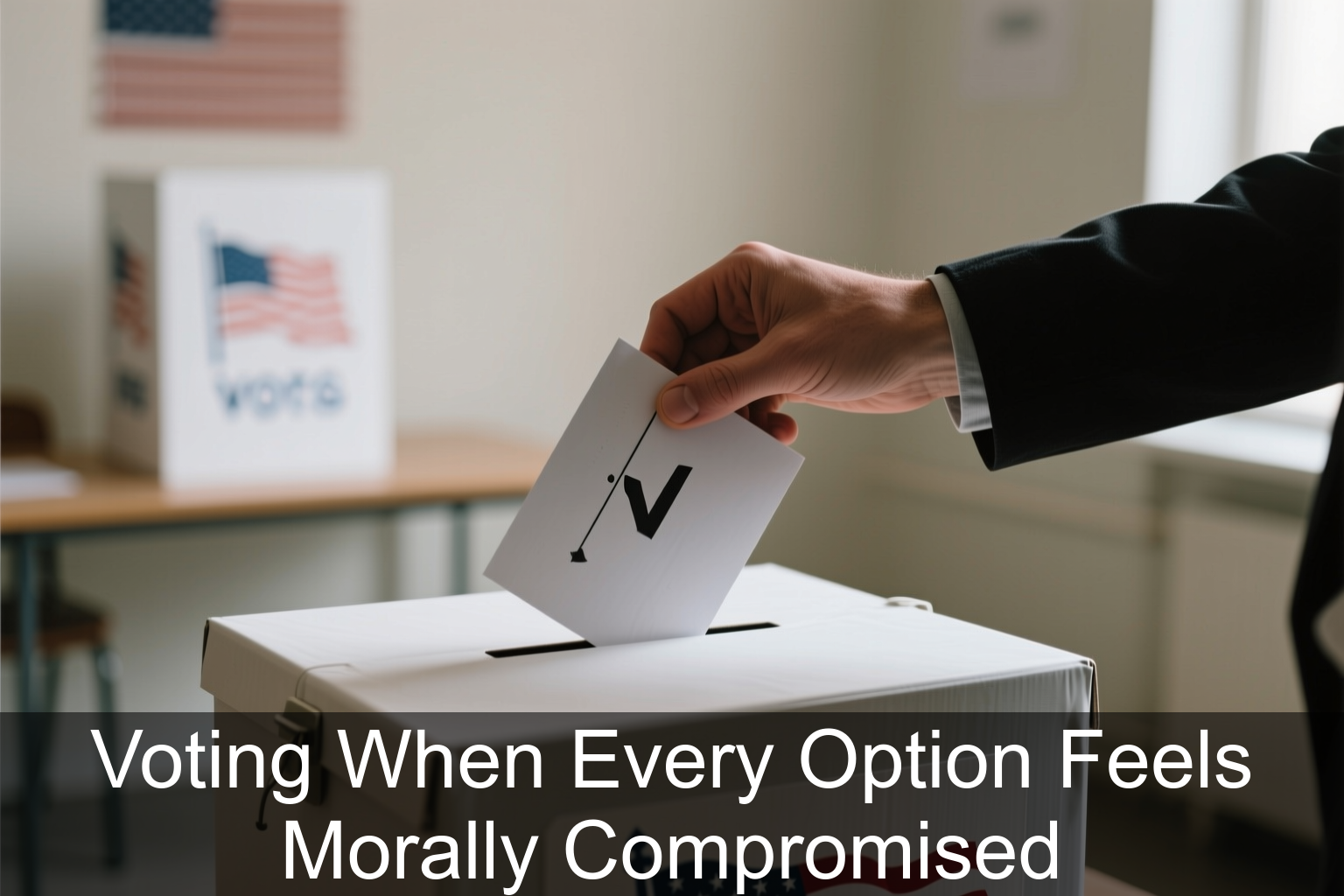
  • Voting When Every Option Feels Morally Compromised

    Voting When Every Option Feels Morally Compromised

    Casting a ballot is often described as a straightforward civic duty, but in practice it can feel like an exercise in moral accounting. When the candidates on offer appear flawed—or even plainly unfit in character—voters are forced to weigh responsibilities that do not fit neatly into slogans. The central difficulty is not whether moral considerations matter in politics, but how to apply them when every available choice carries serious drawbacks.

    For many citizens, the hardest part is admitting that elections rarely present a clean test of personal virtue. Voting is not the same as endorsing a person’s private life, nor is it a ceremonial declaration of moral purity. It is a decision made within constraints, aimed at selecting an officeholder who will wield real authority over laws, budgets, and executive power. That reality pushes voters to think in terms of consequences, trade-offs, and the likely results of empowering one candidate over another.

    Still, reducing elections to a cold calculation can become its own mistake. Character can affect judgment, self-restraint, and respect for limits—especially in offices that demand discretion. A candidate’s personal conduct, public honesty, and temperament may signal how that person will treat opponents, handle crises, or use the machinery of government. Those concerns are not moral posturing; they are part of evaluating risk, competence, and trustworthiness in someone who seeks power.

    From a conservative and libertarian perspective, one practical way to approach these dilemmas is to focus on the scope of authority being granted and the damage that can be done when power is concentrated in the wrong hands. If government were smaller and more constrained, the personal failings of politicians would matter less because their capacity to impose harm would be limited. As long as modern offices carry sweeping leverage, voters must scrutinize not only stated policies but also the likelihood that a flawed individual will abuse discretion, disregard checks, or expand government further.

    The moral burden does not end with the vote itself. When voters choose among imperfect options, they may still have duties afterward: to hold leaders accountable, to refuse rationalizations that excuse obvious misconduct, and to support reforms that reduce the stakes of national elections. That includes strengthening institutions, preserving constitutional limits, and prioritizing decentralization—so that fewer decisions are made by a single person and more can be corrected at local levels or through normal democratic processes.

    In the end, the uncomfortable truth is that electoral choices can demand hard work of conscience. Voters may have to decide whether they are selecting the least harmful alternative, guarding against a worse outcome, or supporting a platform that better aligns with limited government and ordered liberty—even if the messenger is personally objectionable. These are not decisions that can be outsourced to partisan reflexes or simplified into purity tests. They require clear-eyed judgment about what is being chosen, what is being prevented, and what responsibilities remain once the election is over.

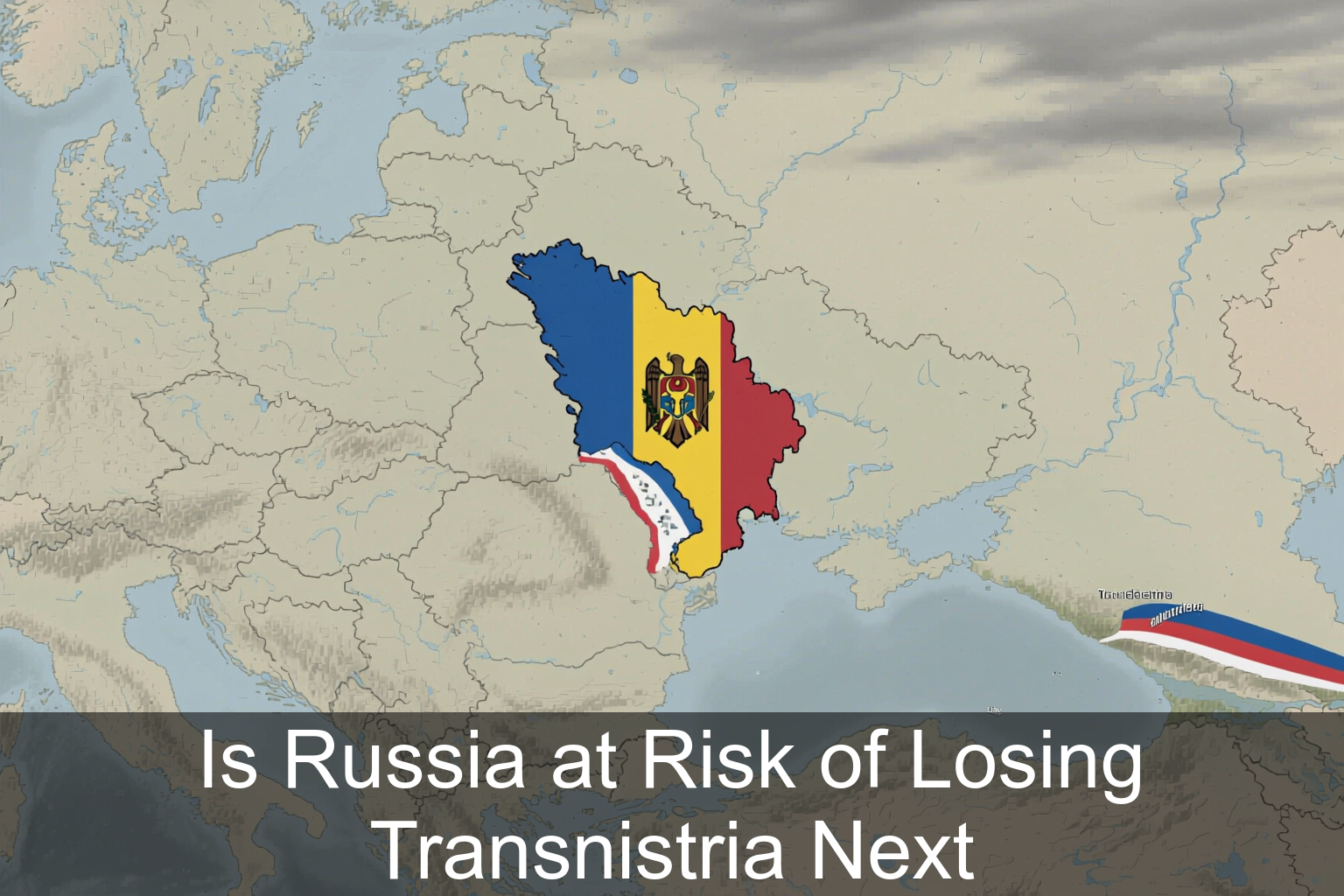
  • Is Russia at Risk of Losing Transnistria Next?

    Is Russia at Risk of Losing Transnistria Next?

    Russia’s geopolitical position has been eroding in multiple places, and the small breakaway region of Transnistria is increasingly part of that conversation. The question is not only about Moscow’s influence in Eastern Europe, but also about whether a long-frozen dispute on Moldova’s eastern edge could shift in ways the Kremlin cannot easily control.

    Transnistria is a narrow strip of territory along the Dniester River that has operated outside the Moldovan government’s authority since the early 1990s. It functions with its own de facto institutions and has long relied on Moscow’s political backing. For years, Russia’s role there has been a symbol of its ability to project power and keep leverage over neighboring states without direct annexation.

    That leverage depends on practical realities as much as rhetoric. With Russia’s resources and attention pulled toward other priorities, maintaining influence over a distant enclave becomes harder, especially when geography and regional politics limit Moscow’s options. Transnistria sits between Moldova and Ukraine, and any disruption to Russia’s access, logistics, or political channels can quickly reduce the credibility of its security guarantees and its ability to shape outcomes on the ground.

    For Moldova, the existence of a separatist enclave has been a persistent constraint on sovereignty and national decision-making. A weakening Russian position would matter not because it automatically resolves the dispute, but because it could change what is negotiable and what is enforceable. In practical terms, if Moscow’s capacity to sustain its position declines, Moldovan authorities and their partners may see more room to press for a settlement that strengthens Moldova’s territorial integrity.

    From a conservative and libertarian perspective, these developments underscore a broader pattern: centralized authoritarian regimes often overextend, and the costs eventually show up in places that once looked permanently locked into their orbit. Countries on Russia’s periphery have their own interests, and they tend to move toward arrangements that promise more security, self-determination, and economic opportunity when Moscow’s coercive reach weakens. Whether Transnistria follows that trajectory will depend on regional coordination, local dynamics, and the hard constraints of power—rather than on slogans from any capital.

  • UK Blocks Cenk Uygur and Hasan Piker From Entry, Raising New Free Speech Concerns

    UK Blocks Cenk Uygur and Hasan Piker From Entry, Raising New Free Speech Concerns

    The United Kingdom has denied entry to two prominent U.S.-based political commentators, Cenk Uygur and Hasan Piker, a move that is drawing renewed attention to how British authorities are using immigration powers in politically sensitive cases. The decision effectively prevents both men from traveling to the UK.

    Uygur is widely known as a political host and media figure, while Piker is a high-profile online commentator. Although the ban is an immigration action rather than a criminal proceeding, the practical result is the same: they are barred from appearing in person for events, interviews, or public discussions inside the country.

    Supporters of open debate argue that such exclusions resemble viewpoint-based gatekeeping, where unpopular or controversial speech becomes a reason to restrict access. From a libertarian-leaning free expression perspective, the concern is less about whether any particular speaker is agreeable and more about the precedent: once the state normalizes using border control to filter lawful political commentary, the target list can expand quickly.

    The episode has also prompted the question of effectiveness. If limiting attention was part of the purpose, the outcome may be the reverse, as the ban itself amplifies public interest and drives more coverage and online conversation than an ordinary visit would have generated. In the modern media environment, attempting to suppress speech often gives it a larger platform.

    More broadly, the decision fits into growing criticism that the UK is moving away from a robust culture of free expression. Critics say the country’s recent trajectory encourages officials to treat contentious political speech as a problem to be managed rather than a liberty to be protected, with immigration enforcement becoming one more tool that can be applied selectively.

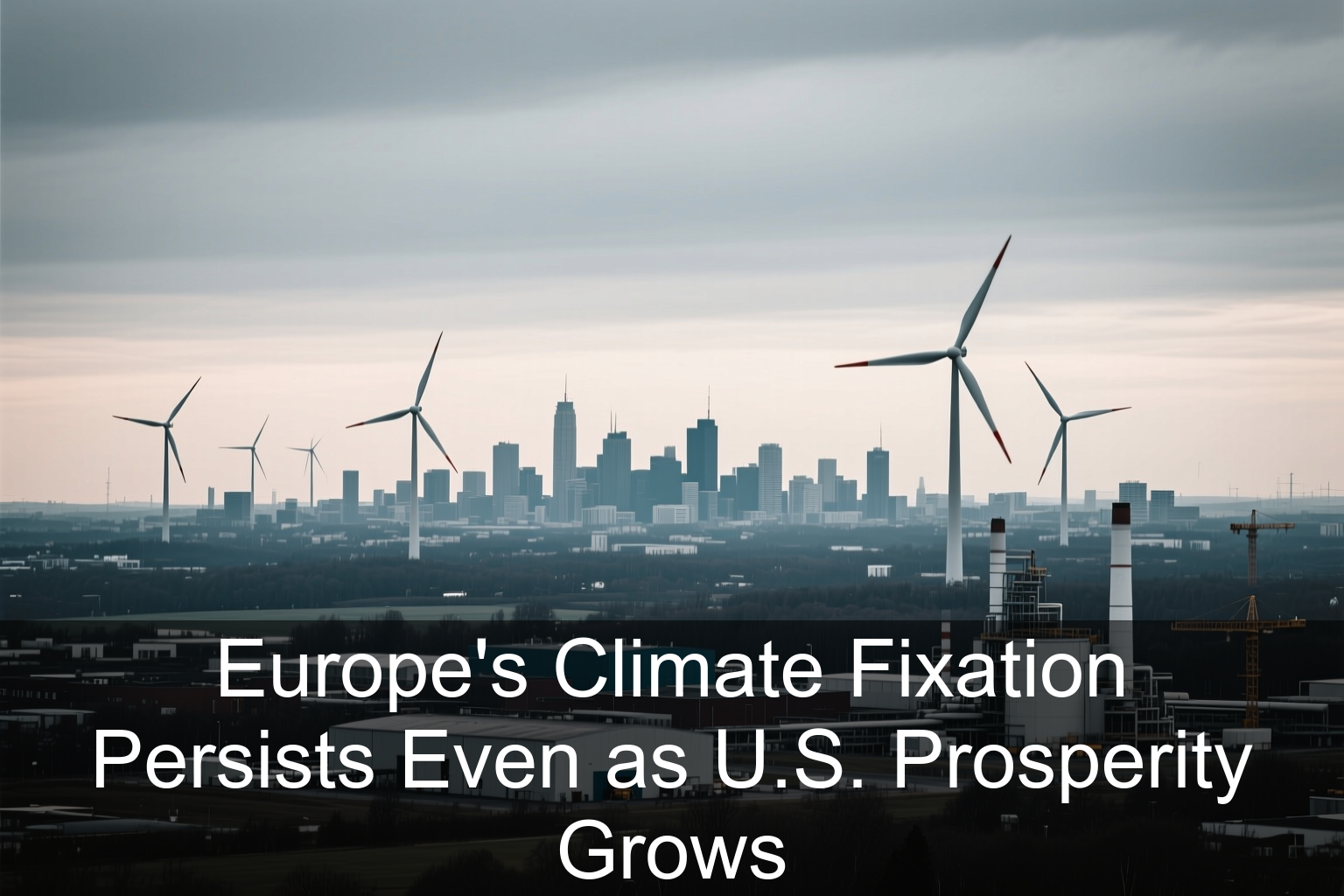
  • Europe’s Climate Fixation Persists Even as U.S. Prosperity Grows

    Europe’s Climate Fixation Persists Even as U.S. Prosperity Grows

    Europe’s political class continues to treat climate policy as the central organizing principle for economic and social planning. Even as voters contend with higher costs and slower growth, European leaders and institutions keep returning to the same set of sweeping emissions mandates, subsidies, and restrictions that have defined the continent’s approach for years.

    A key contrast highlighted in recent commentary is the divergent economic trajectory between the United States and Europe. The argument presented is that America has continued to grow wealthier, while Europe has committed itself more deeply to an approach portrayed as underperforming—one that emphasizes aggressive climate targets despite persistent concerns about affordability, industrial competitiveness, and household energy expenses.

    From a conservative and libertarian perspective, the durability of Europe’s climate agenda is less about new evidence that the strategy is working and more about institutional momentum. Once large regulatory frameworks and spending commitments are in place, bureaucracies, aligned interest groups, and political coalitions have incentives to defend and expand them, even when promised benefits are disputed or costs become harder to ignore.

    The same critique extends to how European policymakers communicate the issue. The framing often centers on urgency and sweeping societal transformation, which can make it politically difficult to admit tradeoffs or recalibrate when policies produce strained budgets, elevated prices, or pressure on manufacturers. In that view, the result is a cycle in which ambitious plans are repeatedly reinforced rather than reconsidered.

    The overall claim is that Europe’s leaders are not stepping back from climate alarmism but instead entrenching it, despite signs that the strategy is failing to deliver broadly shared prosperity. Meanwhile, the United States is presented as moving in a different direction—one associated with rising wealth—underscoring the author’s conclusion that Europe is doubling down on policies that are not working as intended.

  • Senate Contest Takes an Unusual Turn as Campaign Tactics Raise New Questions

    Senate Contest Takes an Unusual Turn as Campaign Tactics Raise New Questions

    Voters watching this year’s Senate battlefield have grown accustomed to hard-edged campaigning, but one marquee race has started to stand out for reasons that have less to do with policy and more to do with political maneuvering. What had been a familiar contest between two parties is now being shaped by unexpected moves that complicate the path to Election Day and make it harder for the public to evaluate candidates on substance.

    Instead of a straightforward argument over issues like spending, inflation, border security, and the size of government, the contest is being influenced by tactical decisions that appear designed to alter the field itself. When campaigns focus on gaming outcomes rather than earning votes through clear positions and credible records, the result is often confusion, distrust, and a political environment where accountability becomes harder to pin down.

    From a conservative and libertarian perspective, the troubling part is not merely that politics can get messy—it is that this kind of “strategic weirdness” tends to reward insiders and punish ordinary citizens who want transparent competition. If the rules, messaging, or candidate lineup are being manipulated to produce a preferred result, that is a direct hit to the idea that elections should be an honest test of ideas, competence, and character.

    The consequences extend beyond a single state. Senate control affects taxes, regulation, judicial confirmations, spending levels, and oversight of executive power. That makes the integrity and clarity of a Senate campaign more than a local curiosity; it is part of whether voters nationwide can trust that political outcomes reflect genuine public choice rather than clever scheme-making by consultants and party strategists.

    As the race heads deeper into the campaign season, the key question is whether the candidates and their allies return the focus to verifiable claims, clear policy proposals, and open debate—or whether the contest continues drifting toward tactics that obscure responsibility. A healthy republic depends on competition that is understandable to voters, not puzzles designed to confuse them.

  • Graham Platner’s Sexting Scandal Renews Scrutiny of His Record and Judgment

    Graham Platner’s Sexting Scandal Renews Scrutiny of His Record and Judgment

    New disclosures involving alleged sexually explicit messaging have placed Senate candidate Graham Platner back under an unflattering spotlight. The latest reports add to a growing list of controversies from his past that critics argue raise questions about his judgment and readiness for higher office.

    The emerging sexting claims have become the most recent catalyst for renewed attention on Platner’s personal conduct. As the story has circulated, it has also prompted a broader review of earlier incidents and troubling details that have followed him throughout his political rise.

    For voters trying to evaluate candidates on character and competence, the central issue is not gossip but credibility. Conservatives and libertarians generally argue that leaders should be held to consistent standards: accountability for personal decisions, transparency when problems arise, and an ability to focus on the public’s business rather than self-inflicted distractions.

    At the same time, political opponents often use such controversies to shape an entire narrative around a candidate, sometimes leaving policy disputes in the background. That dynamic is especially pronounced in high-stakes races like a U.S. Senate campaign, where any fresh revelation can quickly become a defining theme and force a campaign into damage control.

    Platner’s situation now illustrates a recurring pattern in modern politics: private behavior becomes public, and the resulting fallout tends to amplify earlier concerns rather than remain an isolated episode. With the sexting revelations described as only the latest in a longer trail of problematic details, the question for the electorate is whether Platner has offered satisfactory explanations and whether his campaign can refocus on issues that matter to citizens.

    As the campaign continues, scrutiny of Platner’s past is likely to persist, both from the press and from voters who want confidence that a prospective senator can exercise restraint and sound judgment. In a political climate already defined by low trust, candidates who accumulate repeated controversies often find that each new report makes it harder to move on—regardless of their policy agenda.

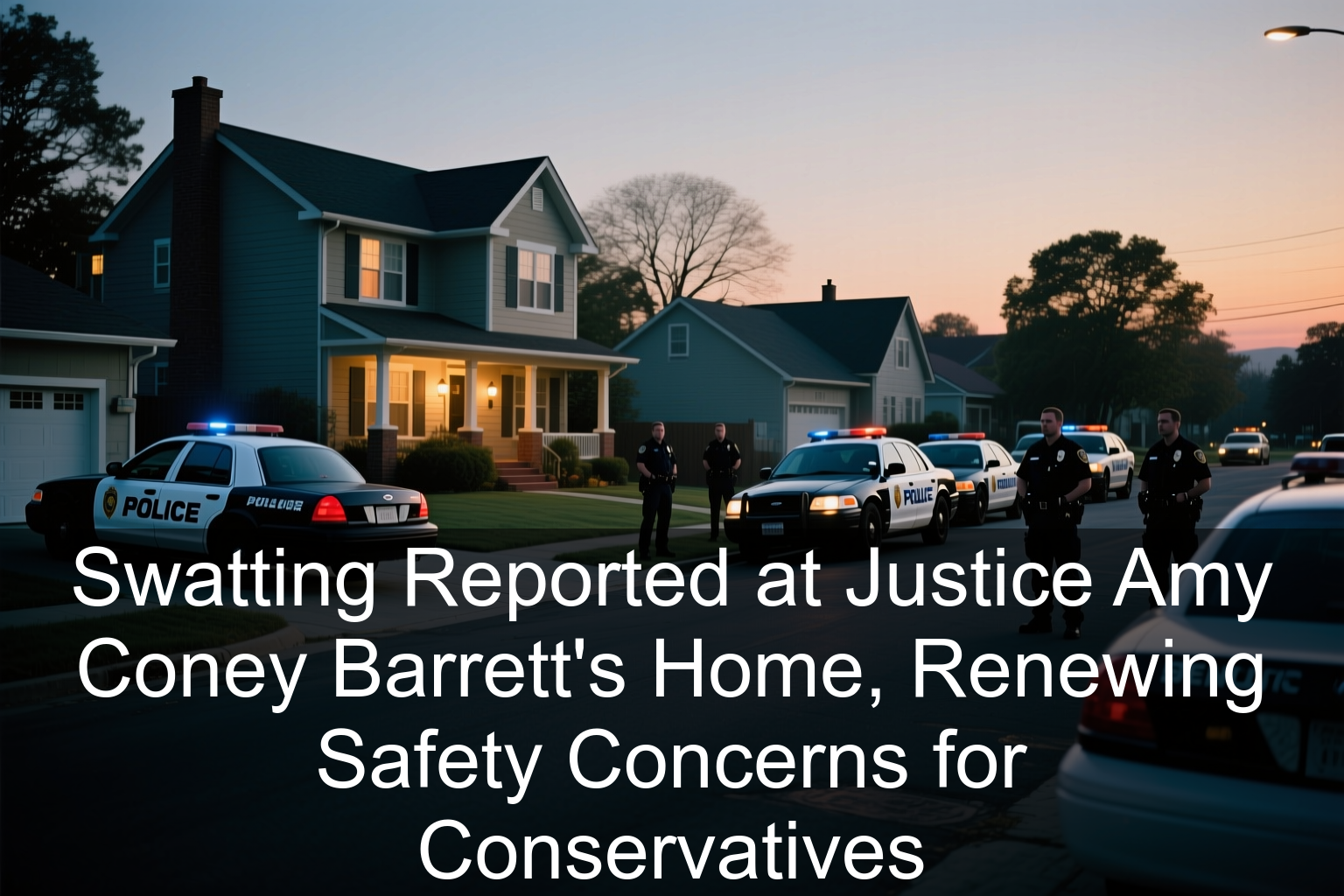
  • Swatting Reported at Justice Amy Coney Barrett’s Home, Renewing Safety Concerns for Conservatives

    Swatting Reported at Justice Amy Coney Barrett’s Home, Renewing Safety Concerns for Conservatives

    Reports say a swatting call targeted the residence of Supreme Court Justice Amy Coney Barrett, the latest episode in a broader pattern of threats and harassment directed at prominent conservatives. Swatting typically involves a false emergency report intended to trigger an armed police response, placing occupants and responding officers at risk.

    The incident is being discussed as part of a continuing climate in which political disagreement has spilled into intimidation tactics. Commentators note that when false reports are used to send law enforcement to a private home, the danger is immediate and indiscriminate, affecting families, neighbors, and public safety personnel alike.

    In conservative and libertarian circles, the episode is also being framed as another consequence of heated rhetoric from national leaders. In that view, language that treats political opponents as illegitimate can encourage unstable actors to escalate from online hostility to real-world threats, even if those leaders did not direct a specific act.

    Justice Barrett has been a frequent subject of political anger since joining the Supreme Court, and her position on major cases has made her a high-profile target. The reported swatting at her home adds to concerns that the rule of law is being strained by a culture that increasingly tolerates personal harassment as a substitute for lawful civic engagement.

    Advocates for stronger accountability argue that swatting should be treated as a serious crime, not a prank, because it weaponizes emergency services and creates a high risk of injury or worse. They also contend that public officials across the political spectrum should condemn intimidation tactics clearly and consistently, especially when they are aimed at judges whose role depends on independence and security.

  • Pope Leo’s Warning Meets LinkedIn’s AI-Driven Career Theater

    Pope Leo’s Warning Meets LinkedIn’s AI-Driven Career Theater

    A glossy professional feed is supposed to showcase real work, real skills, and real ideas. Instead, many users now scroll through a stream of exaggerated “lessons learned,” self-congratulatory career updates, and motivational posts that read as if they were assembled from templates rather than lived experience. The result is a public square for professionals that often feels strangely empty, even when it is crowded.

    That emptiness is at the center of a broader concern about what happens when artificial intelligence becomes the default tool for writing, thinking, and presenting ourselves. The argument raised by Pope Leo in Magnifica Humanitas is that AI can threaten human creativity by nudging people toward imitation and convenience instead of originality and craft. When a machine can quickly generate plausible-sounding prose, the temptation grows to publish something “good enough” rather than to do the harder work of saying something true, specific, and earned.

    LinkedIn offers a clear illustration of how this shift plays out in daily life. As AI-generated content becomes easier to produce, the platform can fill with low-effort writing that mimics insight without delivering it. Posts may look polished on the surface while conveying little more than vague encouragement, recycled talking points, or generic career morality tales. The feed becomes a showcase of performance rather than competence, and of signaling rather than substance.

    From a conservative and libertarian perspective, the problem is not that people are free to speak, market themselves, or use new tools. The issue is what a culture of frictionless automation does to personal responsibility and standards. When professional identity is increasingly curated by prompts and auto-completions, individuals can slide away from accountability for their own words and ideas. In the long run, a society that rewards manufactured sameness over hard-won excellence will find it harder to cultivate genuine talent, sound judgment, and the habits that sustain a free and productive economy.

    Magnifica Humanitas’s warning lands because it points to an old truth: creativity is not just output, but a human discipline. Work that matters typically requires attention, risk, and the humility to be wrong before being right. If AI makes it effortless to produce impressive-looking text, it can also make it easier to avoid that discipline. LinkedIn’s increasingly “slop-ridden” content environment, as critics describe it, becomes a practical case study in how quickly convenience can crowd out authenticity—and why calls to defend human creativity are not abstract, but urgently concrete.

  • James Talarico Walks Back Nonbinary-Era Rhetoric as Senate Bid Faces Scrutiny

    James Talarico Walks Back Nonbinary-Era Rhetoric as Senate Bid Faces Scrutiny

    As his Senate campaign draws greater attention, candidate James Talarico is facing renewed focus on earlier remarks that touched on theology, human nature, and sex. The controversy centers on statements he previously made about the nature of God and claims relating to how many sexes exist—comments that are now being softened or revised as the race intensifies.

    The shift has been noticeable to observers who have tracked his public messaging. Where earlier statements were delivered with confidence and broad moral framing, his more recent posture has involved clarification, rephrasing, and a more careful presentation of what he meant. The result is an impression that his campaign is trying to reduce exposure to issues that could become liabilities with a general electorate.

    In particular, questions have resurfaced about how Talarico discussed the concept of God in connection with modern identity politics. Those earlier comments are being re-litigated not merely as religious reflections, but as signals of how he might approach policy and public institutions when contested cultural questions arise.

    He is also being pressed on prior assertions about sex, a topic that has become a central point of political and legal conflict across the country. Critics argue that redefining or blurring foundational categories has downstream consequences for parental rights, women’s sports, medical ethics, and the ability of government to speak clearly about biology. Against that backdrop, Talarico’s recalibration is being treated as more than a personal evolution—it is being evaluated as political calculation.

    For voters who prioritize limited government and clear boundaries between private belief and state power, the episode raises a familiar concern: whether candidates adopt fashionable ideological language to satisfy activist demands, then pivot toward ambiguity when broader scrutiny arrives. As the campaign proceeds, the outstanding question is whether Talarico will offer straightforward, consistent answers on these cultural flashpoints—or continue adjusting his language as political incentives change.