
News Updates

  • Race Is No Excuse for Violence or Impunity

    Race Is No Excuse for Violence or Impunity

    Public arguments about crime and justice have drifted into territory that should be straightforward: intentionally attacking people with a knife is wrong, and a lack of remorse after harming others is morally repugnant. Those judgments do not change based on the attacker’s race, the victim’s race, or the politics of the moment.

    A decent society depends on equal standards. If the same act is condemned in one case but softened or rationalized in another because of racial identity, the principle of equal justice collapses into favoritism. That kind of double standard is corrosive to the rule of law and invites the public to believe that outcomes depend more on group identity than on facts and accountability.

    From a conservative and libertarian perspective, the baseline is simple: individuals are responsible for their choices. Race is not a moral permission slip, and it is not a legal defense. Treating identity as a shield against criticism, prosecution, or punishment is an attack on the idea that people stand equal before the law.

    It should also be uncontroversial to say that cruelty is still cruelty even when it is framed as grievance. If someone stabs another person and then shows no remorse, that is a serious moral failure regardless of the social narratives surrounding the incident. Excusing brutality because it comes from a preferred demographic is not compassion; it is a form of discrimination dressed up as empathy.

    A healthier public conversation would insist on the same standards for everyone: condemn violence, demand accountability, and reject ideological justifications that turn obvious wrongs into debatable questions. Equal justice is not optional, and it cannot survive if we allow race to determine whose crimes are minimized and whose suffering is taken seriously.
  • Spielberg’s New Political Message Revives Obama-Era Culture-War Tactics

    Spielberg’s New Political Message Revives Obama-Era Culture-War Tactics

    Steven Spielberg has again stepped beyond filmmaking into politics, aligning his public messaging with the cultural and partisan approach associated with former president Barack Obama. The result is less about debating concrete policy and more about shaping the public’s moral and social assumptions—an arena where symbolism often replaces substance.

    A recurring pattern in this kind of politics is a preference for carefully managed “disclosure” that appears candid while controlling what actually gets examined. Selective transparency can function as a shield: it creates the impression of openness, yet it narrows the range of permissible questions. From a conservative and libertarian perspective, this approach tends to treat citizens as an audience to be guided rather than equals to be persuaded.

    Another familiar feature is “distraction.” Instead of engaging the public on measurable outcomes—governance, institutional performance, spending, regulation, or the protection of civil liberties—attention is directed toward cultural flashpoints and emotionally resonant narratives. This can be effective politics, but it commonly sidelines the practical tradeoffs that matter to everyday life and to constitutional limits on power.

    Closely related is “deception,” not necessarily as outright falsehood, but as framing that blurs key distinctions. When rhetoric turns complex disputes into morality plays, it becomes easier to mischaracterize opponents’ concerns, reduce disagreements to bad motives, and avoid accountability for results. In culture-war terms, the debate shifts from whether a claim is accurate or a program works, to whether the right people are being celebrated or condemned.

    Finally, the environment created by these tactics invites “slop”: low-quality arguments, thin evidence, and social-media-ready claims that are hard to verify but easy to share. When influential figures normalize this mode of engagement, it lowers expectations for seriousness across the broader conversation. For those who prioritize limited government and individual freedom, that decline in rigor matters, because emotional spectacle often becomes the pretext for expanding institutional power.

    Spielberg’s posture, in this view, fits neatly into an Obama-era template: use cultural authority to set the terms of debate, keep the public focused on curated narratives, and treat dissent as suspect. Conservatives and libertarians may disagree among themselves on many issues, but they typically share a concern that a culture war run through entertainment and prestige politics leaves less room for pluralism, honest disagreement, and a citizenry capable of self-government.

  • New Jersey Detention Center Protests Raise Concerns Over Press Freedom and Public Safety

    New Jersey Detention Center Protests Raise Concerns Over Press Freedom and Public Safety

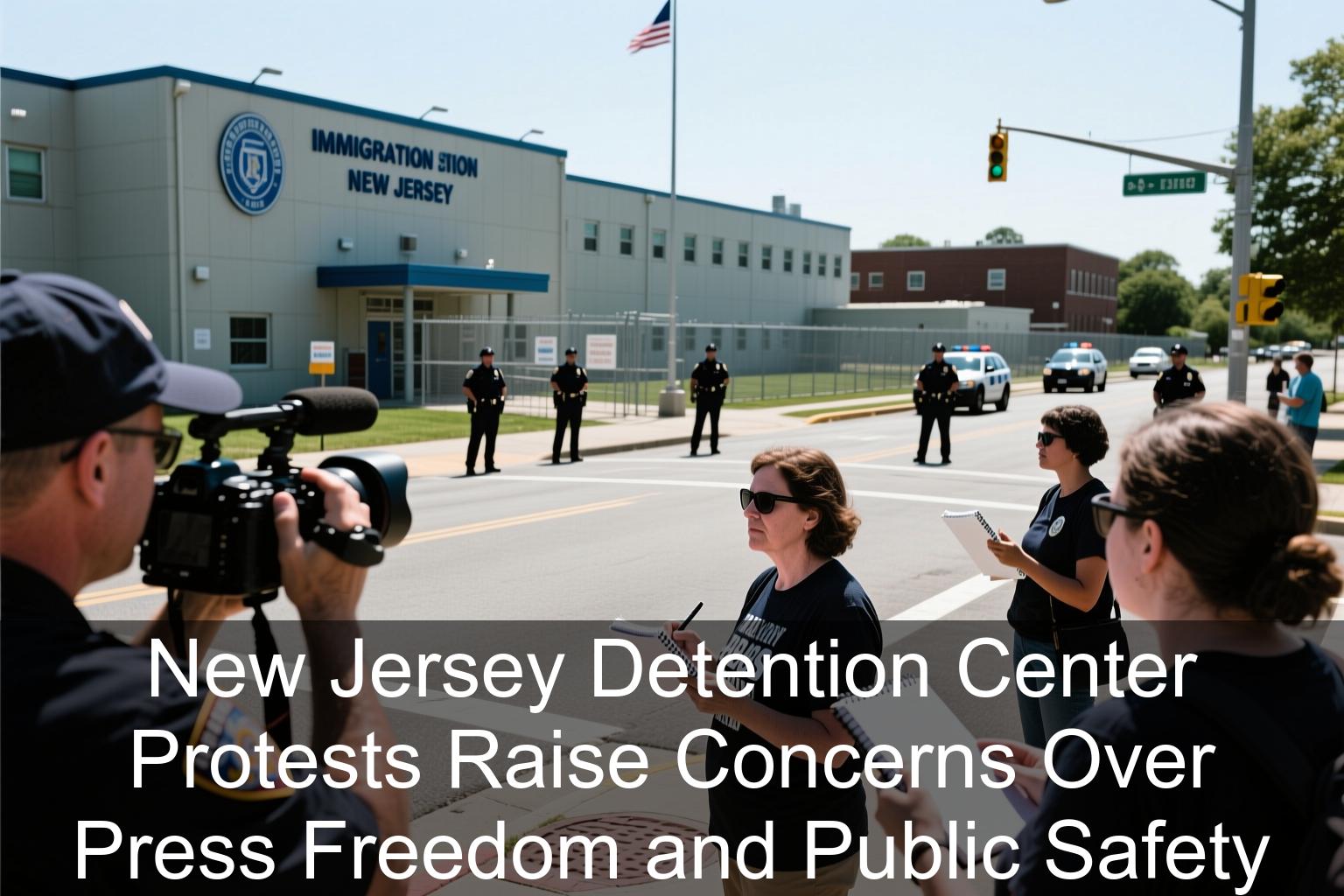
    Reporting from the public streets outside an immigration detention facility in New Jersey has drawn renewed scrutiny after accounts surfaced suggesting that covering nearby demonstrations can carry real physical risk. The episode is being framed by civil-liberties advocates as more than a local dispute, pointing instead to broader questions about whether Americans can observe, record, and report on contentious public events without retaliation.

    The Foundation for Individual Rights and Expression (FIRE) says it is continuing to monitor and document incidents in which protesters and journalists may be penalized for engaging in activity protected by the First Amendment. In its public communications, the organization emphasizes that the same constitutional safeguards that cover political speech also protect newsgathering and the public’s ability to witness government-adjacent activity in open spaces.

    At the center of the concern is the prospect that simply doing the work of journalism at protests near the New Jersey detention center could result in severe harm serious enough to require hospitalization. Civil-liberties advocates argue that when the costs of reporting include potential injury, the public loses access to independent information and government power faces less oversight.

    From a libertarian-leaning civil-rights perspective, the chilling effect matters as much as the incident itself. If individuals believe they could be punished or physically endangered for documenting demonstrations, fewer people will record encounters, fewer journalists will show up, and officials will operate with less accountability—outcomes that run directly against the principles of open government and free expression.

    FIRE says its ongoing effort is aimed at ensuring that neither demonstrators nor members of the press are punished for exercising constitutionally protected rights. The organization’s stated focus is on tracking violations, publicizing them, and pushing back on conduct that undermines peaceful protest, lawful observation, and the ability of journalists to report from public places.

  • California Unions’ New “Tax the Rich” Push Faces a Backlash of Math and Reality

    California Unions’ New “Tax the Rich” Push Faces a Backlash of Math and Reality

    California’s organized labor movement is once again betting on a familiar political strategy: raise taxes on high earners and promise bigger public-sector funding as the payoff. The latest “tax-the-rich” push is being promoted as a way to shore up government programs and meet big spending goals. But as the proposal collides with voter skepticism, economic constraints, and the state’s own budget problems, the campaign is showing signs of strain before it even reaches the finish line.

    At the center of the debate is a recurring California pattern: advocates argue that wealthy residents and large paychecks can be tapped again without broader consequences, while critics point out that the state’s revenue system already depends heavily on a small share of high-income taxpayers. That dependence makes Sacramento vulnerable when markets slide, capital-gains income falls, or top earners change their residency or alter how they realize income. A plan built on extracting even more from the same narrow group can look politically easy, but financially risky.

    Labor’s influence has long been intertwined with California’s public-sector growth. Union leadership often frames new revenue measures as necessary to protect schools, services, and staffing levels. Yet every additional surtax or high-end hike tightens the state’s reliance on volatile income streams. From a conservative and libertarian perspective, this is the core contradiction: the political coalition demanding greater and more permanent spending is trying to fund it through tax sources that are neither stable nor guaranteed.

    The initiative’s troubles reflect more than messaging. California already has a reputation for high taxes and heavy regulation, and proposals that further concentrate the burden on top earners can feed uncertainty for employers and investors. Even many voters who like the idea of taxing “someone else” can become wary when they see how quickly optimistic revenue projections can fail to materialize—especially during periods when the state is already juggling fiscal gaps and competing priorities.

    Organized labor may also be discovering the limits of its own playbook. When a movement repeatedly returns to the same solution—new taxes aimed at the same segment of the population—opponents can more easily define the measure as another round of extraction rather than reform. That makes it harder to build durable support beyond the core base, and it invites questions about whether Sacramento is addressing underlying cost drivers or simply seeking a larger pipeline of money to feed an expanding set of commitments.

    For Californians, the broader issue is whether the state will keep leaning into an unstable, top-heavy tax structure or pivot toward restraint, efficiency, and economic growth. The current proposal underscores the same unresolved tension: public-sector interests pushing for bigger government and higher spending, while the economic reality of revenue volatility—and the mobility of wealth—keeps undermining the promise that the bill can be sent to “the rich” with no tradeoffs.

  • Culture-Politics Battles Still Shape Pro Sports, but Their Reach May Be Shrinking

    Culture-Politics Battles Still Shape Pro Sports, but Their Reach May Be Shrinking

    For years, America’s biggest sports leagues have been more than games. They have also been stages where political and cultural disputes play out in front of enormous audiences. That mix has kept professional sports tied to broader national arguments, even as many fans say they would prefer leagues stick to competition rather than activism.

    The latest chapter shows that these clashes have not disappeared. Major league sports remain prominent enough that choices by teams, leagues, and athletes can quickly become symbols in wider ideological fights. The attention is not only about wins and losses; it also reflects how sports institutions are treated as cultural authorities, with their public statements and promotional campaigns scrutinized like those of major corporations or political organizations.

    At the same time, a key question is hanging over the entire discussion: how much longer can the major leagues count on their traditional position at the center of mass culture? The influence of professional sports has historically come from commanding shared, live attention—something fewer institutions can do. But entertainment options have multiplied, and audiences have fragmented across countless platforms and niches, reducing the number of truly universal cultural touchpoints.

    From a conservative and libertarian viewpoint, that changing landscape matters because it could limit how effectively leagues can use their brands to steer social debates. When fans have more choices and more ways to avoid messaging they didn’t sign up for, the leverage once held by major sports organizations may weaken. The relationship becomes more transactional: viewers can simply walk away, and leagues face stronger incentives to focus on delivering the product people actually pay to watch.

    None of this means the culture battles in sports are ending immediately. For now, the biggest leagues still draw enough attention that disputes over values, identity, and public posture will continue to surface in and around games. But the long-term trajectory may depend less on what leagues want to project and more on whether they can maintain the kind of broad cultural dominance that once made professional sports a near-universal gathering place.

    If that dominance continues to erode, the politics surrounding sports may not vanish, but it could lose some of its power to define national conversations. The games will still matter to dedicated fans, yet the broader ability of pro sports to shape public life could become just one influence among many—rather than the central arena it has been for so long.

  • Canada’s MAiD Surge Highlights How Single-Payer Rationing Can Push Patients Toward Death

    Canada’s MAiD Surge Highlights How Single-Payer Rationing Can Push Patients Toward Death

    Canada’s rapid growth in medically assisted death is increasingly being discussed alongside the realities of a government-run health system that often delivers care slowly and with limited alternatives. As access problems persist, critics argue that a program framed as “choice” can begin to resemble an institutional off-ramp for patients who cannot get timely treatment or adequate support.

    In a single-payer model, the state’s role as primary payer and organizer makes wait times and service shortages more than inconveniences; they shape the menu of real options available to people in pain. When specialist appointments, procedures, and long-term care supports are difficult to obtain, the balance between living with suffering and ending life can be influenced by what the system is willing or able to provide.

    The growth of assisted suicide and euthanasia, often referred to as MAiD in Canada, is described by opponents as a predictable outcome of rationing pressures. They contend that when patients encounter long delays, narrow eligibility for services, or few avenues to seek private alternatives, the pathway toward assisted death can appear clearer than the pathway toward treatment, rehabilitation, or sustained palliative care.

    From a conservative and libertarian perspective, the central concern is not only the existence of MAiD, but the incentives created when government both funds and constrains health care. A system that cannot reliably deliver prompt, high-quality care risks turning “personal autonomy” into a slogan that masks coercive circumstances—especially for people who are isolated, disabled, or financially unable to pursue care outside the public pipeline.

    The result, critics say, is a moral hazard built into single-payer administration: when sustaining life is expensive and difficult, and when bureaucratic gatekeeping limits options, assisted death can start to function as a policy-adjacent response to institutional failure. In that view, the most urgent reform is not expanding end-of-life pathways, but expanding access to care—shorter waits, more providers, and more freedom for patients to seek alternatives—so that choosing life is not the hardest option available.

  • Democrats and the Widening Patriotism Gap in U.S. Politics

    Democrats and the Widening Patriotism Gap in U.S. Politics

    Debates about love of country often get reduced to a single political figure or a single election cycle, but long-running survey patterns suggest something broader. Across recent presidencies, Democrats have consistently reported lower levels of pride in the United States than Republicans. That divide has shown up even in periods when Democrats controlled the White House.

    The most common explanation offered in partisan arguments is that dissatisfaction among Democrats is simply a response to Donald Trump. Yet the available trendline described in this discussion points to a more persistent difference: Democrats were less likely than Republicans to say they were proud of the country even during the Obama years, and that same general gap remained during the Biden presidency as well. In other words, the divide cannot be attributed only to one Republican leader.

    From a conservative and libertarian perspective, this matters because patriotism is not merely a mood; it shapes how citizens judge institutions, evaluate national history, and respond to calls for reform. When one major party’s coalition is more inclined to express lower national pride regardless of which party holds power, that outlook can influence policy priorities toward skepticism of longstanding civic traditions and a preference for sweeping structural changes.

    The persistence of the gap across administrations also suggests that the difference is tied to deeper ideological and cultural currents rather than short-term frustration. If the Democratic base tends to report less pride even when Democratic presidents are in office, then the underlying driver is likely connected to how each party’s voters interpret the country’s past and present—and what they believe the nation represents.

    Republicans, by contrast, appear more likely to maintain a higher baseline of national pride across the same time periods. That steadier posture can translate into a stronger emphasis on continuity, national cohesion, and respect for the symbols and narratives that hold a diverse country together, even while still acknowledging flaws that need correction.

    Ultimately, the broader point is that the “patriotism gap” is not new and is not dependent on Trump-era politics alone. As the country heads into future electoral battles, this enduring divergence in expressed pride may continue to shape messaging, coalition-building, and how each party defines what it means to be American.

  • The End of Rec League and What It Reveals About Youth Sports Today

    The End of Rec League and What It Reveals About Youth Sports Today

    For years, I thought I understood youth sports from the outside: a few practices, a Saturday game, and some photos for the family album. What I didn’t anticipate was how intense the secondhand experience could be once the kids on the field were my own sons. The emotional ride doesn’t belong only to the players. Parents end up feeling every close call, every small improvement, and every hard lesson as if they were out there themselves.

    That realization becomes unavoidable in the final stretch of recreational league. Rec sports are often where families first learn the rhythms of a season—showing up on time, learning rules, and figuring out how to be a good teammate and a good sport. It can be messy and uneven, but it’s also accessible. You don’t need elite coaching networks or costly travel schedules to participate, and that’s part of what makes it valuable.

    As boys grow, though, the structure changes. The casual setup that once fit their stage of life begins to give way to more competitive tracks, and the community-based simplicity of rec league starts to feel like it’s disappearing. That transition is not only logistical; it’s cultural. It asks families to decide whether they want to keep sports as a local, low-stakes activity or treat it like an escalating commitment that competes with other parts of childhood.

    There’s a broader lesson in that shift. When youth sports become increasingly professionalized, more decisions get centralized—league policies, coaching pipelines, and expectations about time and money. From a conservative and libertarian perspective, it’s worth noticing how quickly something rooted in neighborhood life can be replaced by systems that reward specialization and status. The more the pathway depends on large organizations and expensive commitments, the less room there is for ordinary families to make choices that fit their values, schedules, and budgets.

    Still, none of this erases what rec league gave us. It created a setting where my sons could play, learn, and compete without the sense that every game was an audition. And it taught me, unexpectedly, how powerful it is to watch your children pursue something they care about. The end of rec league marks a change in the calendar, but it also marks a change in how a family experiences sports—and in what youth sports increasingly demand from the people who just wanted their kids to play.

  • Obama, Iran, and a Possible Return to a JCPOA-Style Deal

    Obama, Iran, and a Possible Return to a JCPOA-Style Deal

    Questions are resurfacing in Washington about whether U.S. policy toward Iran is drifting back toward the kind of arrangement associated with the Obama administration. While the specifics remain uncertain, early signals have led some analysts to argue that the outlines of a new understanding resemble elements of the Joint Comprehensive Plan of Action (JCPOA).

    The available information is incomplete, and key components of any potential agreement have not been publicly nailed down. Even so, observers who have tracked prior negotiations say the emerging shape of discussions is familiar: a diplomatic framework that may trade certain constraints or assurances for sanctions-related relief or other concessions.

    That perceived similarity is fueling debate over the broader meaning of any new deal. For critics of the earlier approach, the concern is that returning to a JCPOA-like model would repeat what they view as flawed assumptions about Tehran’s incentives and long-term intentions. From a conservative and libertarian standpoint, skepticism is heightened by the risks of empowering an adversarial regime while relying on complex compliance mechanisms that can be difficult to verify and enforce.

    Supporters of diplomacy, by contrast, tend to emphasize the utility of negotiated limits as preferable to open-ended escalation. Yet even in that framing, the lack of clear details leaves the public and Congress largely in the dark about what is being offered, what is being demanded, and what enforcement tools would exist if Iran violates commitments.

    For now, the most concrete takeaway is the uncertainty itself: the contours of a possible deal are being discussed, but the public record does not clearly define them. Still, the fact that some informed watchers see “shades of the JCPOA” is enough to reignite the political argument over whether the Obama-era strategy is making a return—and whether, in the end, it will be judged as vindicated or misguided.

  • America at 250: Trust, Renewal, and the Case for a More Humane Public Spirit

    America at 250: Trust, Renewal, and the Case for a More Humane Public Spirit

    As the United States approaches its 250th anniversary, the national mood invites something more substantial than slogans and ceremonies. The moment calls for a sober look at what holds the country together when politics is loud, institutions feel strained, and citizens often seem to speak past one another. The approaching milestone is an opportunity to step back and consider the deeper habits that sustain a free society.

    A central theme worth recovering is the idea captured in a familiar national phrase: “In God we trust.” In practice, that line has long signaled more than a motto; it points to limits on human authority and reminds citizens that the state is not the ultimate source of meaning. For many Americans, faith traditions have shaped community life, personal responsibility, and charity in ways that government programs cannot easily replicate.

    That same outlook naturally encourages something else that is increasingly rare in public life: the ability to pause. The country’s civic culture is often dominated by relentless outrage and constant mobilization, as though every day must be treated as an emergency. Yet a society that never stops to breathe loses its capacity for judgment. Rest is not escapism; it is part of maintaining perspective, resisting manipulation, and preserving the mental and moral clarity that self-government requires.

    From rest comes renewal—personal, communal, and national. Renewal does not demand utopian schemes or sweeping federal ambition. It is more often built through the quiet work of families, congregations, local associations, and neighbors who choose steadiness over rage. In a conservative and libertarian understanding of the American experiment, renewal is strongest when it rises from the bottom up, anchored in voluntary cooperation rather than centralized direction.

    At 250, the country can also benefit from a call to basic decency: to carry a heart for fellow citizens even amid disagreement. That does not mean surrendering principles or softening convictions about liberty, constitutional limits, or the need for restrained government. It means remembering that political opponents are still people, and that free institutions survive only when citizens retain enough goodwill to share a nation without trying to crush one another.

    The approaching anniversary, then, is a fitting time to reclaim a balanced civic posture—trust that ultimate authority is not political, rest from constant agitation, and renew the habits of community and compassion that make liberty livable. Those themes do not resolve every policy dispute, but they can help restore the moral and cultural foundations on which a free people depend.