
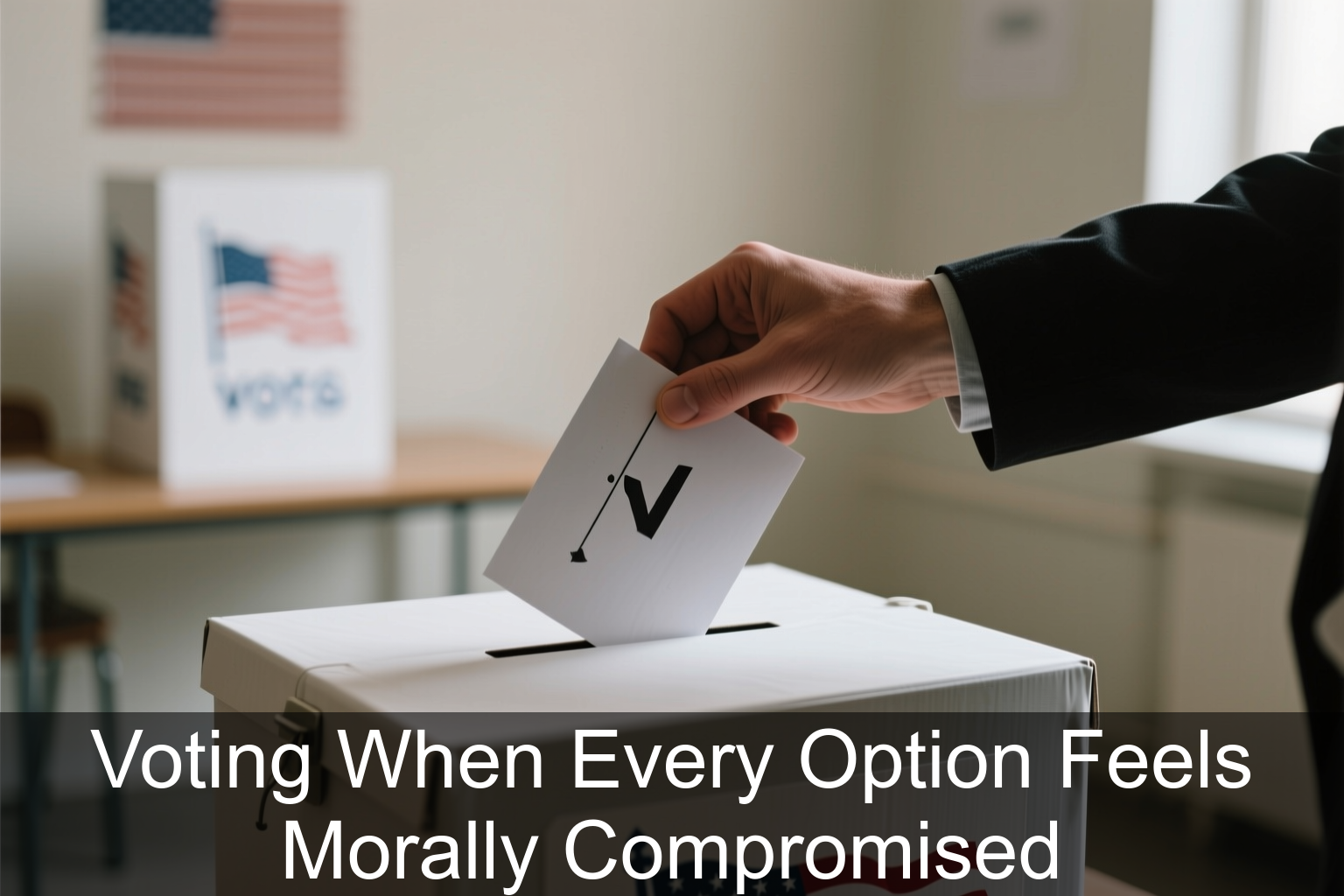

Casting a ballot is often described as a straightforward civic duty, but in practice it can feel like an exercise in moral accounting. When the candidates on offer appear flawed—or even plainly unfit in character—voters are forced to weigh responsibilities that do not fit neatly into slogans. The central difficulty is not whether moral considerations matter in politics, but how to apply them when every available choice carries serious drawbacks.
For many citizens, the hardest part is admitting that elections rarely present a clean test of personal virtue. Voting is not the same as endorsing a person’s private life, nor is it a ceremonial declaration of moral purity. It is a decision made within constraints, aimed at selecting an officeholder who will wield real authority over laws, budgets, and executive power. That reality pushes voters to think in terms of consequences, trade-offs, and the likely results of empowering one candidate over another.
Still, reducing elections to a cold calculation can become its own mistake. Character can affect judgment, self-restraint, and respect for limits—especially in offices that demand discretion. A candidate’s personal conduct, public honesty, and temperament may signal how that person will treat opponents, handle crises, or use the machinery of government. Those concerns are not moral posturing; they are part of evaluating risk, competence, and trustworthiness in someone who seeks power.
From a conservative and libertarian perspective, one practical way to approach these dilemmas is to focus on the scope of authority being granted and the damage that can be done when power is concentrated in the wrong hands. If government were smaller and more constrained, the personal failings of politicians would matter less because their capacity to impose harm would be limited. As long as modern offices carry sweeping leverage, voters must scrutinize not only stated policies but also the likelihood that a flawed individual will abuse discretion, disregard checks, or expand government further.
The moral burden does not end with the vote itself. When voters choose among imperfect options, they may still have duties afterward: to hold leaders accountable, to refuse rationalizations that excuse obvious misconduct, and to support reforms that reduce the stakes of national elections. That includes strengthening institutions, preserving constitutional limits, and prioritizing decentralization—so that fewer decisions are made by a single person and more can be corrected at local levels or through normal democratic processes.
In the end, the uncomfortable truth is that electoral choices can demand hard work of conscience. Voters may have to decide whether they are selecting the least harmful alternative, guarding against a worse outcome, or supporting a platform that better aligns with limited government and ordered liberty—even if the messenger is personally objectionable. These are not decisions that can be outsourced to partisan reflexes or simplified into purity tests. They require clear-eyed judgment about what is being chosen, what is being prevented, and what responsibilities remain once the election is over.
Leave a Reply