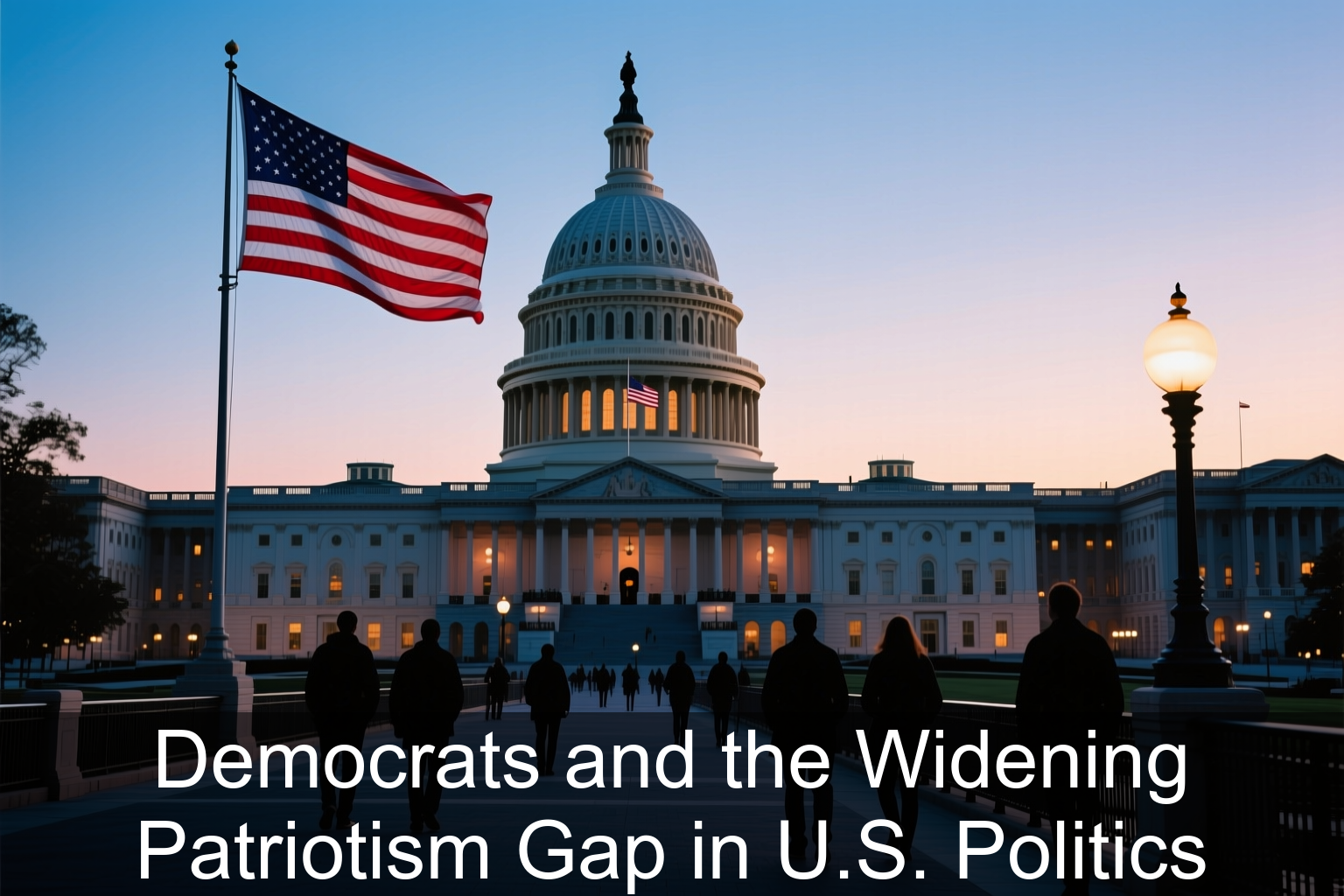
Debates about love of country often get reduced to a single political figure or a single election cycle, but long-running survey patterns suggest something broader. Across recent presidencies, Democrats have consistently reported lower levels of pride in the United States than Republicans. That divide has shown up even in periods when Democrats controlled the White House.
The most common explanation offered in partisan arguments is that dissatisfaction among Democrats is simply a response to Donald Trump. Yet the available trendline described in this discussion points to a more persistent difference: Democrats were less likely than Republicans to say they were proud of the country even during the Obama years, and that same general gap remained during the Biden presidency as well. In other words, the divide cannot be attributed only to one Republican leader.
From a conservative and libertarian perspective, this matters because patriotism is not merely a mood; it shapes how citizens judge institutions, evaluate national history, and respond to calls for reform. When one major party’s coalition is more inclined to express lower national pride regardless of which party holds power, that outlook can influence policy priorities toward skepticism of longstanding civic traditions and a preference for sweeping structural changes.
The persistence of the gap across administrations also suggests that the difference is tied to deeper ideological and cultural currents rather than short-term frustration. If the Democratic base tends to report less pride even when Democratic presidents are in office, then the underlying driver is likely connected to how each party’s voters interpret the country’s past and present—and what they believe the nation represents.
Republicans, by contrast, appear more likely to maintain a higher baseline of national pride across the same time periods. That steadier posture can translate into a stronger emphasis on continuity, national cohesion, and respect for the symbols and narratives that hold a diverse country together, even while still acknowledging flaws that need correction.
Ultimately, the broader point is that the “patriotism gap” is not new and is not dependent on Trump-era politics alone. As the country heads into future electoral battles, this enduring divergence in expressed pride may continue to shape messaging, coalition-building, and how each party defines what it means to be American.