
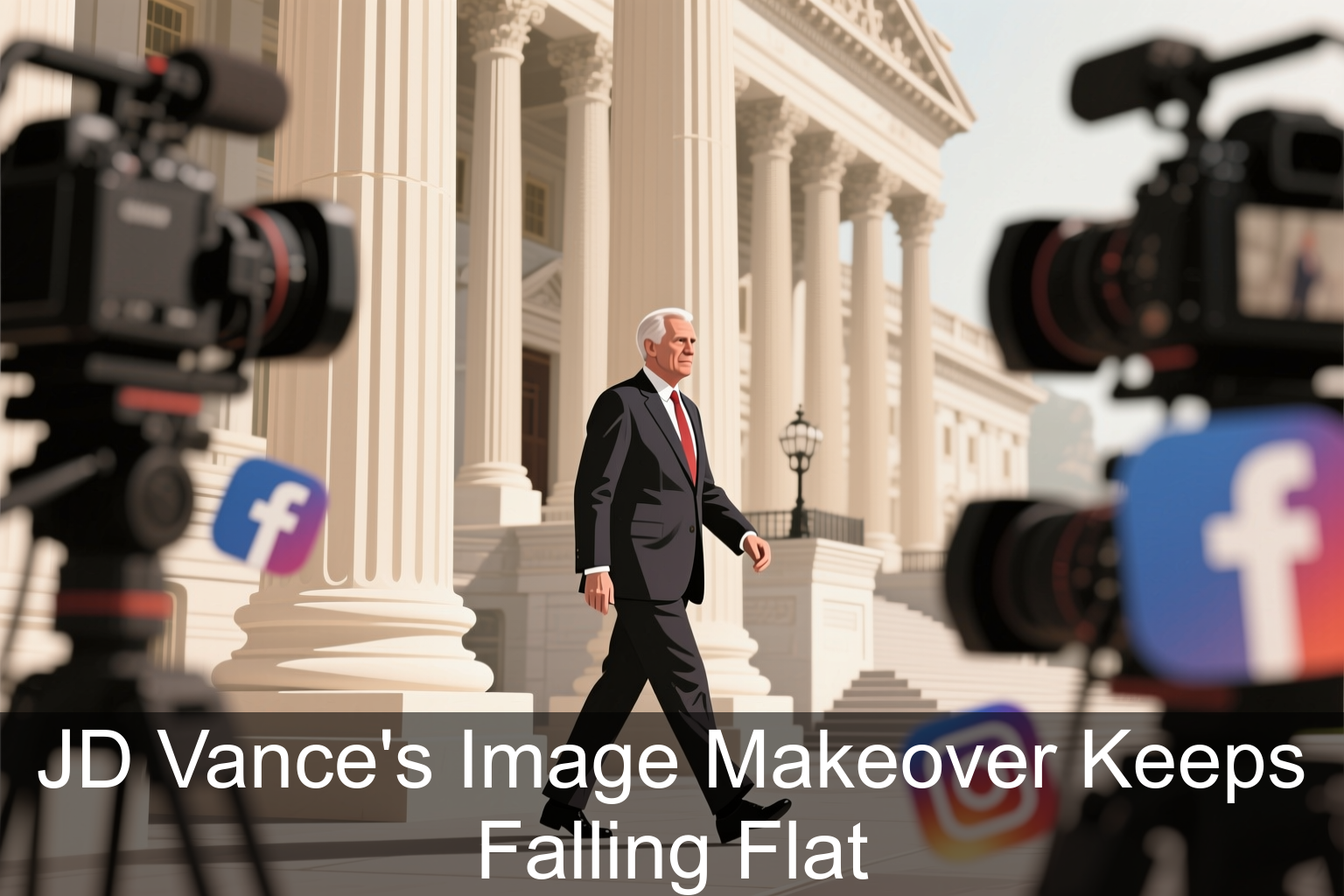

Political figures often try to package themselves as relatable—someone who “gets it” beyond committee rooms and cable hits. In today’s media environment, that effort increasingly includes borrowing cues from pop culture, social media trends, and the aesthetics of “normal guy” authenticity. But there’s a limit to what branding can accomplish when it runs up against a politician’s record and temperament.
Sen. JD Vance has leaned into that modern playbook, making repeated attempts to project an effortlessly appealing persona. The underlying bet is straightforward: if a politician can look comfortable and culturally fluent, it becomes easier to sell voters on bigger claims about leadership, values, and competence. Yet the more Vance seems to try to manufacture that vibe, the more forced it appears—especially to audiences who can tell the difference between organic confidence and a performance built for clips.
From a conservative and libertarian perspective, this dynamic matters for more than gossip or aesthetics. The movement does not need leaders who chase cultural approval or treat politics as a contest in status-signaling. It needs people who can argue clearly for limited government, constitutional boundaries, and realistic foreign and domestic policy—without hiding behind a curated persona meant to distract from hard questions.
There is also a strategic risk for the right when messaging becomes too focused on “coolness.” It can blur priorities and incentivize politicians to optimize for attention rather than outcomes. When style becomes the main event, voters are left with a thin substitute for accountability: a series of poses that may look fine on a screen but offer little guidance on how someone will govern.
Vance’s experience illustrates how difficult it is to reverse-engineer broad appeal through presentation alone. A politician can swap talking points, adjust wardrobe, or adopt the social-media mannerisms of the moment, but public perception tends to harden around consistency, credibility, and character. In the end, the question isn’t whether a senator can win a fleeting cultural moment; it’s whether he can earn trust by being principled and competent when the cameras aren’t rolling.
Leave a Reply