News Updates

  • Garry Trudeau and William F. Buckley Jr.: A Cross-Partisan Yale Connection

    Garry Trudeau and William F. Buckley Jr.: A Cross-Partisan Yale Connection

    Long before political labels hardened into permanent camps, two men with the same alma mater showed that spirited disagreement did not have to rule out mutual regard. Garry Trudeau and William F. Buckley Jr., both Yale alumni, are often associated with very different political instincts and very different eras. Yet their relationship became an example of how people on opposite sides of public debates can still recognize shared interests and values.

    Their differences were real and easy to spot. They came from separate generations, and their public work placed them in contrasting corners of American political life. Even so, their Yale background gave them at least one common reference point—an institutional experience that shaped how each thought about ideas, argument, and culture. That overlap created room for connection even when their broader outlooks diverged.

    What stands out is not that they agreed, but that they continued to find ways to engage. In a time when politics increasingly encourages people to treat opponents as enemies, their willingness to identify common ground reads as a reminder that persuasion and respect can coexist with firm convictions. From a conservative and libertarian vantage point, this kind of engagement matters because a free society depends on pluralism, toleration, and the capacity to argue without resorting to social exile.

    The story also underlines something practical about political life: relationships often outlast individual controversies. Even when public figures symbolize competing camps, personal rapport can keep conversations open and soften the instinct to caricature. That does not require compromise on first principles; it requires confidence that good-faith disagreement is not a threat but a condition of liberty.

    In the end, Trudeau and Buckley illustrate a civic habit that is easy to praise and hard to practice—treating political conflict as an argument to be had rather than a war to be waged. Their example suggests that generational gaps and ideological divides do not automatically foreclose friendship or professional respect. If anything, their shared Yale connection shows how common institutions and common experiences can provide a bridge when politics tries to burn every one.

  • Colorado Lawmakers Move to Curb Civil Asset Forfeiture and “Policing for Profit”

    Colorado Lawmakers Move to Curb Civil Asset Forfeiture and “Policing for Profit”

    Colorado lawmakers have advanced legislation aimed at reducing the financial incentives that can steer law enforcement decisions. The effort focuses on civil asset forfeiture, a process that allows the government to take money or property on suspicion of involvement in wrongdoing, often without requiring a criminal conviction.

    In recent years, reform advocates have argued that forfeiture can function less like targeted crime fighting and more like revenue collection, especially when agencies are permitted to keep what they seize. From a libertarian perspective, that setup risks turning basic property rights into something conditional—dependent on whether a person can afford a long legal fight to get their belongings back.

    The General Assembly’s move is designed to tighten the rules that govern seizures and to reduce the profit motive that can arise when agencies financially benefit from forfeiture activity. Supporters of the change contend that law enforcement should be funded through transparent appropriations, not by taking property and then relying on those proceeds to support operations.

    Civil asset forfeiture has long been criticized for shifting the burden onto ordinary people, who may lose access to cash, vehicles, or other essentials while they attempt to contest a seizure. Even when someone is never convicted, the practical cost and complexity of the process can make recovering property difficult, which can leave innocent owners paying the price.

    By acting now, Colorado legislators are signaling that public safety policies should avoid incentives that erode due process and undermine trust. The debate is ultimately about whether the state should be able to take and keep property without the protections that normally accompany criminal punishment—and whether policing decisions should ever be influenced by the opportunity to generate revenue.

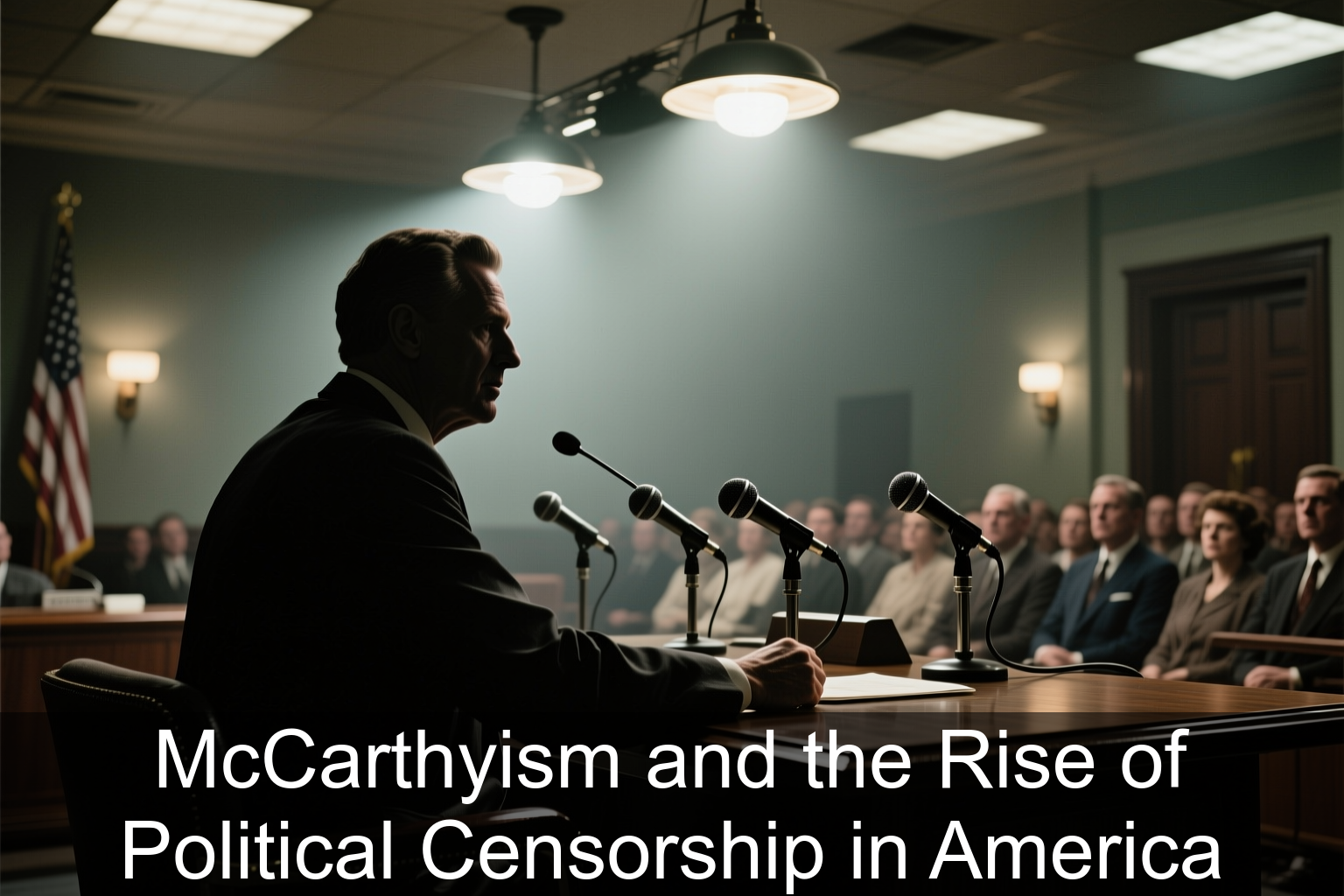
  • McCarthyism and the Rise of Political Censorship in America

    McCarthyism and the Rise of Political Censorship in America

    Long before social media takedowns and speech codes became familiar features of public life, the United States experienced a different kind of speech chill—one driven by fear, official pressure, and public shaming. In the early Cold War years, anxieties about Communist influence blended with political ambition, and the result was a climate where ordinary Americans learned that saying the wrong thing could cost them their job, their reputation, or their future.

    At the center of this period was Sen. Joseph McCarthy, whose accusations and investigations helped turn suspicion into a national habit. Rather than relying on careful evidence and due process, the era became known for guilt by association and the presumption that dissent—or even the wrong acquaintances—could be treated as disloyalty. As institutions scrambled to protect themselves, many chose risk-avoidance over principle, narrowing what could be safely said in workplaces, schools, and civic organizations.

    The effects were not limited to Washington. Employers, universities, unions, and cultural organizations responded to the political pressure by creating rules and practices that rewarded conformity. Loyalty oaths, blacklists, and informal “do not hire” signals became tools that could end careers without a courtroom verdict. Even people who had done nothing unlawful often concluded that silence was safer than speaking openly, especially on controversial topics connected to politics, ideology, or foreign policy.

    This environment also shaped the modern playbook for controlling public debate. Instead of direct criminal bans, the more common tactic was to make certain views professionally toxic and socially dangerous. Once that dynamic takes hold, it doesn’t require constant policing; people begin to monitor themselves, avoiding subjects, softening opinions, or withdrawing from civic life altogether. The net effect is a thinner public discourse and fewer voices willing to challenge prevailing narratives.

    From a libertarian and conservative perspective, the lesson is that free expression can be undermined not only by formal laws, but by coordinated pressure that turns institutions into enforcers. When fear becomes a governing tool, political power expands while individual rights shrink—often with broad public approval at the time. The McCarthy era remains a cautionary example of how quickly a nation can be pushed toward censorship habits, and how long it can take to rebuild a culture that treats open debate as a basic American safeguard.

  • Calls Grow for the New York Times to Withdraw Nicholas Kristof Column on Alleged Israeli Rapes

    Calls Grow for the New York Times to Withdraw Nicholas Kristof Column on Alleged Israeli Rapes

    Pressure is mounting on The New York Times over its continued defense of a Nicholas Kristof opinion column focused on allegations of rape connected to Israel. Critics argue that the paper’s public posture has only deepened concerns about the piece and has left readers with unanswered questions about the standards applied before publication.

    At the center of the dispute is not only the column itself, but how the newspaper has responded since it ran. The criticism holds that the Times has treated objections as something to be managed rather than addressed, even as the topic involves claims serious enough to demand exceptional precision and evidentiary care.

    From a conservative and libertarian vantage point, the controversy is being framed as a credibility problem: when an outlet with enormous influence defends a contested claim without persuading skeptics that the reporting and vetting were sound, it risks weakening public trust. That erosion matters beyond any single issue, because it affects how readers evaluate future coverage on war, human rights, and national security.

    The argument being advanced by opponents is straightforward: if the Times cannot substantiate the column’s key assertions to the level the subject requires, it should retract the piece rather than stand by it with broad assurances. They contend that keeping the column up while offering an inadequate defense sets a precedent that prominent institutions can avoid accountability when errors or unsupported conclusions are alleged.

    The broader implication, critics say, is that elite media organizations should be held to the same—or higher—standards they demand of others. In their view, a retraction would be a necessary step to protect editorial integrity, signal seriousness about accuracy, and reduce the impression that internal institutional loyalty outweighs the obligation to correct the record.

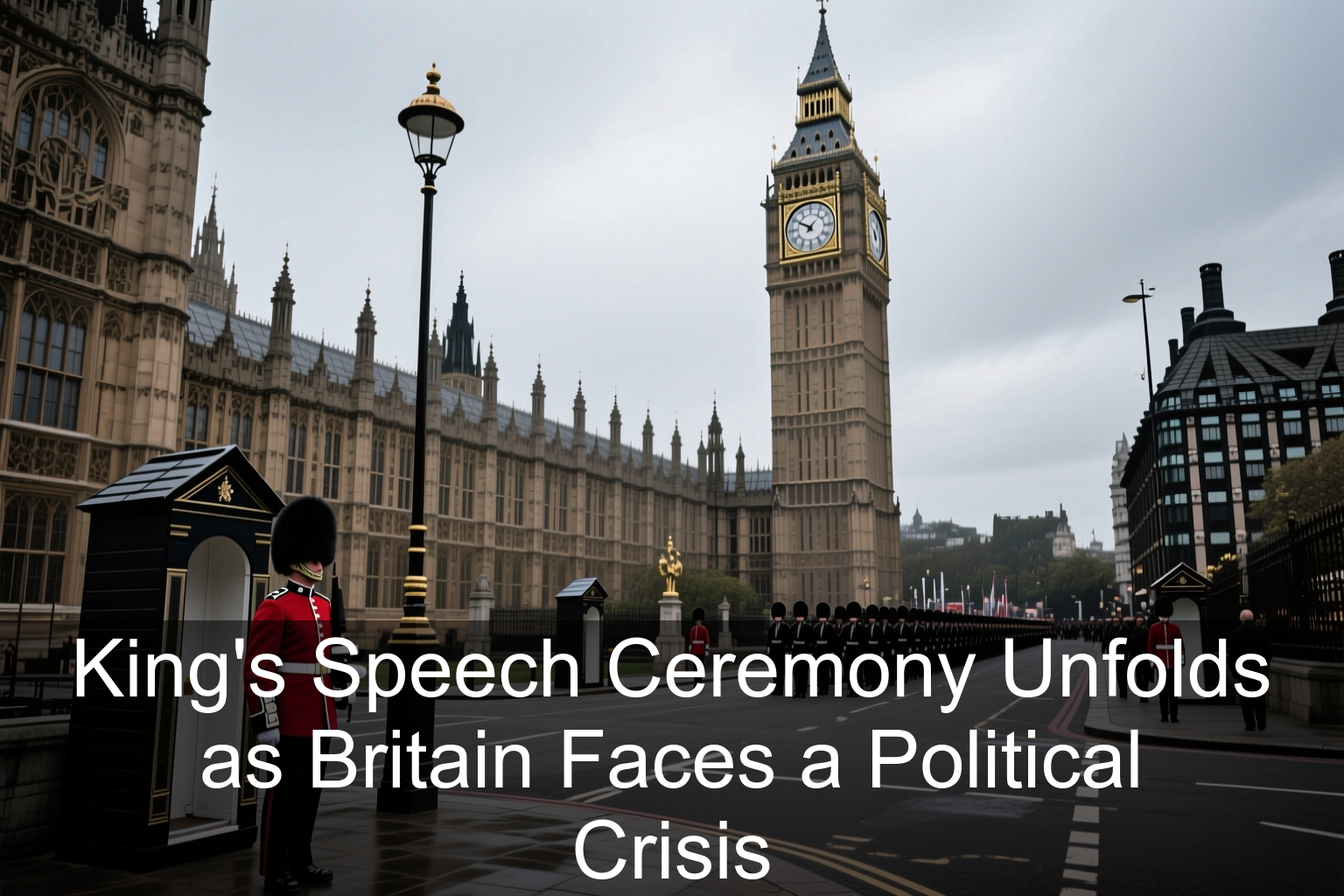
  • King’s Speech Ceremony Unfolds as Britain Faces a Political Crisis

    King’s Speech Ceremony Unfolds as Britain Faces a Political Crisis

    Britain’s annual King’s Speech arrived wrapped in the familiar ritual: formal dress, a carefully staged procession, and the kind of pageantry designed to project continuity and stability. Yet behind the ceremonial polish, the country was confronting a serious political breakdown that the spectacle could not conceal.

    The address, delivered in the traditional setting and style expected of a constitutional monarchy, served its usual function: presenting the government’s legislative agenda. The public-facing message was orderly and scripted, but the broader context was anything but calm. The ceremony’s grandeur stood in sharp contrast to the intensity of the turmoil playing out in British politics.

    From a limited-government perspective, the juxtaposition matters. When governing coalitions or party leaderships falter, the pressure often shifts toward expanding state action, relying on administrative workarounds, or using procedural muscle to force outcomes. The pomp of the event can lend an impression of institutional normalcy, even as the political system struggles to resolve disputes through transparent, accountable decision-making.

    The crisis atmosphere also underscores a recurring tension in modern governance: leaders can be tempted to treat public institutions as instruments for managing headlines rather than as frameworks for protecting liberty, restraining power, and ensuring that major decisions reflect genuine consent. In that environment, citizens may see more emphasis on choreography and less on the hard work of restoring trust, fiscal discipline, and constitutional limits.

    In the end, the King’s Speech provided a striking visual of Britain’s traditions at full display, even as the nation’s elected politics entered a period of acute strain. The ceremony reinforced how effectively pageantry can frame a moment—while also highlighting that stability ultimately depends not on spectacle, but on responsible leadership and a government that remains answerable to the people.

  • Europe’s Rising Crackdown on Populist Speech and Political Dissent

    Across Europe, government institutions and aligned regulators are increasingly treating “populism” less as a viewpoint to contest at the ballot box and more as a problem to be contained through speech controls. The result is a political environment in which dissenting parties and their supporters face mounting pressure from rules that narrow what can be said, who can say it, and where it can be heard.

    Rather than persuading skeptical voters with better arguments, many European leaders have leaned on administrative power to police rhetoric and clamp down on controversial messages. The practical effect is to shift political conflict away from open debate and into enforcement—where decisions are made by agencies, courts, and compliance offices instead of the public. That approach may temporarily blunt the impact of insurgent movements, but it also normalizes restrictions that can be turned on anyone once the machinery is built.

    The underlying logic is often presented as a defense of democracy, social harmony, or public safety. Yet when governments position themselves as arbiters of acceptable political expression, they invite the very abuses liberal societies are supposed to prevent. Populist figures become convenient targets because they are polarizing, but the standards created to constrain them do not remain neatly confined to one faction.

    This trend also encourages a culture of self-censorship. When citizens believe that expressing certain views could bring legal trouble, professional consequences, or platform restrictions, many simply stay quiet. Public discussion then becomes less representative of what people actually think, which can deepen mistrust and push politics into more volatile channels outside mainstream institutions.

    A freer society depends on the premise that bad ideas can be defeated through scrutiny, criticism, and competition—not through suppression. Europe’s current trajectory suggests an expanding willingness to substitute control for persuasion. If that direction continues without a meaningful course correction, the continent may discover that political repression can delay conflict for a time, but it cannot eliminate the underlying grievances that drive voters toward anti-establishment movements.

  • Privacy Protection Act Under Pressure as Government Leak Hunts Target Journalists

    Privacy Protection Act Under Pressure as Government Leak Hunts Target Journalists

    The Privacy Protection Act was created to stop government agencies from treating journalists and other investigators like criminals simply for doing their jobs. It sets limits on when officials can seize or search work materials connected to reporting, aiming to prevent raids that chill scrutiny of people in power. But those protections only matter when they are respected in practice, especially during politically charged “leak” investigations.

    The central concern is what happens when the government treats the hunt for a source as a justification to go after the messenger. When officials act as if “find the leaker” automatically means “search the reporter,” the law designed to defend watchdog work can be reduced to a procedural obstacle rather than a real barrier. That shift matters because aggressive investigative tactics can intimidate reporters, deter sources, and shrink the flow of information the public needs.

    Supporters of strong press protections argue that the point of the Act is not to create special privileges for media organizations, but to safeguard the public’s ability to learn what government is doing. When agencies can raid reporting operations or seize newsgathering materials, the pressure does not land only on a newsroom. It also lands on ordinary citizens who might otherwise speak up about wrongdoing, mismanagement, or abuses of authority.

    From a conservative and libertarian perspective, the stakes are straightforward: government power expands most easily when it can operate with minimal accountability. Leak hunts can be legitimate, but they are also an easy pretext for overreach, particularly if investigators start treating journalistic work product as a convenient shortcut. A system that allows raids on reporters risks turning transparency into a liability and official secrecy into the safer default.

    The Act’s value, then, is measured by whether it functions as a firm limit on state power instead of a mere technicality to work around. If officials can sidestep the spirit of the law whenever an investigation becomes inconvenient, the practical result is fewer watchdog stories, fewer whistleblowers willing to talk, and less oversight of government decision-making. The bigger question is whether public institutions will honor the guardrails that already exist—or continue to test how far they can push without real consequences.

  • AOC’s Case Against Billionaires, and the Free-Market Reply

    AOC’s Case Against Billionaires, and the Free-Market Reply

    Rep. Alexandria Ocasio-Cortez has revived a familiar progressive claim: that the very existence of billionaires is inherently illegitimate. In this framing, extreme personal wealth is treated less as an outcome of voluntary exchange and more as proof that something has gone wrong in the economy. The argument often implies that no one can accumulate that level of wealth without taking it from others.

    From a conservative and libertarian perspective, that premise conflicts with how wealth is typically created in a market economy. Many of the people most commonly associated with large fortunes built companies that delivered goods and services millions of Americans chose to buy. Their net worth largely reflects the value investors assign to the businesses they founded or grew, rather than a pile of cash removed from workers’ pockets.

    Critics on the left frequently suggest that great fortunes must rest on exploitation, sometimes pointing to concepts such as “wage theft” as a kind of catch-all explanation for how entrepreneurs became rich. But attributing the success of the country’s best-known business founders to something like systemic wage theft doesn’t withstand scrutiny. It also ignores the reality that compensation disputes are governed by extensive labor laws, enforcement mechanisms, and litigation pathways that can and do penalize wrongdoing when it occurs.

    The broader issue is that treating billionaires as illegitimate tends to blur the line between wealth and income, and between value creation and misconduct. A founder’s stake in a company can grow dramatically if a product becomes widely adopted and the firm expands. That increase in paper wealth can happen even as employees are paid agreed-upon wages, customers voluntarily purchase products, and shareholders accept risk in exchange for potential returns.

    This doesn’t mean every wealthy person is beyond criticism, or that every large corporation behaves perfectly. It does mean, however, that a blanket condemnation of billionaires assumes facts not in evidence and invites policies aimed at punishment rather than reform. When political debates start from the idea that certain outcomes are impossible without theft, it becomes easier to justify heavy-handed interventions that reduce investment, entrepreneurship, and long-term growth.

    If the policy goal is higher wages and broader prosperity, conservatives and libertarians argue that the most reliable path is a healthy competitive economy: strong job creation, predictable rules, and less regulatory and tax hostility toward building companies. Targeted enforcement against real fraud or labor violations is one thing; declaring that billionaires “can’t” exist without wrongdoing is another. It turns an economic argument into a moral verdict—and risks undermining the conditions that allow new businesses and new opportunities to form in the first place.

  • The Vietnam Lesson: Willpower, Attrition, and America’s Limits

    The Vietnam Lesson: Willpower, Attrition, and America’s Limits

    American debates about war often assume that superior equipment, money, and training will decide the outcome. Vietnam remains the stubborn counterexample. The conflict demonstrated that victory is not simply a matter of battlefield capability, because a determined opponent can keep fighting long after a stronger power expects the contest to end.

    The central difficulty in Vietnam was not a shortage of American firepower. It was the mismatch between what the United States considered an acceptable cost in time, casualties, and domestic political strain and what the enemy was prepared to endure. When one side treats the war as limited and the other treats it as existential, the side with fewer limits can drag the struggle on until the stronger party’s public support and patience collapse.

    That reality creates a strategic trap for a free society. In an open political system, leaders must justify sacrifices to voters, respond to scrutiny, and maintain consent for long campaigns. Authoritarian or revolutionary movements, by contrast, can more easily absorb losses and press forward, especially when driven by ideological intensity. The lesson is not that America lacks courage, but that self-government imposes constraints that fanatical adversaries exploit through endurance rather than direct confrontation.

    For conservatives and libertarians, Vietnam underscores the importance of matching means to achievable ends and defining those ends honestly before committing blood and treasure. If a war’s objectives require an indefinite commitment to outlast an enemy with near-unlimited willingness to suffer, then policymakers should say so upfront—or reconsider the mission. Military power is a tool, not a magic wand, and it cannot compensate for unclear goals or a strategy that assumes the other side will quit on schedule.

    Vietnam also shows why prudence is not isolationism. It is the discipline to recognize that not every conflict can be solved by escalation, and not every opponent can be coerced into surrender by superior force. The United States should reserve large, open-ended interventions for threats that truly justify them, and it should avoid wars where the likely path to “success” depends on a level of national stamina that elected governments, accountable to citizens, are unlikely to sustain.

  • Why Progressives Are Quiet About Misinformation When It Helps Their Side

    Why Progressives Are Quiet About Misinformation When It Helps Their Side

    For years, progressive politicians, major media outlets, and many advocacy groups treated “misinformation” as an urgent public threat that demanded aggressive countermeasures. The idea was straightforward: false claims spread quickly online, so institutions should step in to slow them down, label them, or remove them. That posture, however, appears far less consistent when misleading narratives are useful to the left’s political interests.

    The shift is most visible in how accusations of misinformation are applied unevenly. When dubious claims come from conservatives, they are often presented as proof that tighter content controls are necessary. When similar problems originate from progressive circles, the reaction tends to be softer, more conditional, or redirected toward blaming opponents for “weaponizing” the issue. The result is a public standard that looks less like a principled commitment to accuracy and more like a partisan tool.

    This double standard is particularly striking given how recently many on the left demanded far-reaching action from technology companies. Platforms were urged to police speech more aggressively, and dissenting views were sometimes treated as inherently suspect. Yet in practice, enforcement and public condemnation frequently depend on which coalition benefits. When the messaging aligns with progressive goals, the urgency to correct errors can fade, and the same people who argued that misleading content is intolerable become comparatively reluctant to call it out.

    From a conservative and libertarian viewpoint, this inconsistency matters for two reasons. First, it undermines trust in institutions that claim to arbitrate truth while applying rules selectively. Second, it strengthens the case that centralized “disinformation” regimes are prone to political capture. If misinformation is truly the concern, then accuracy should be defended regardless of who gains from the correction. If the concern disappears whenever the wrong side is inconvenient to criticize, then the campaign was never mainly about truth.

    A more reliable approach is to treat misinformation as a universal human problem rather than a partisan talking point. That means demanding the same scrutiny for claims from any ideological camp, resisting speech controls that can be turned into political enforcement, and focusing on transparency and open debate. If the standard shifts depending on who is speaking, it becomes difficult to argue that the goal is honest information rather than advantage.