
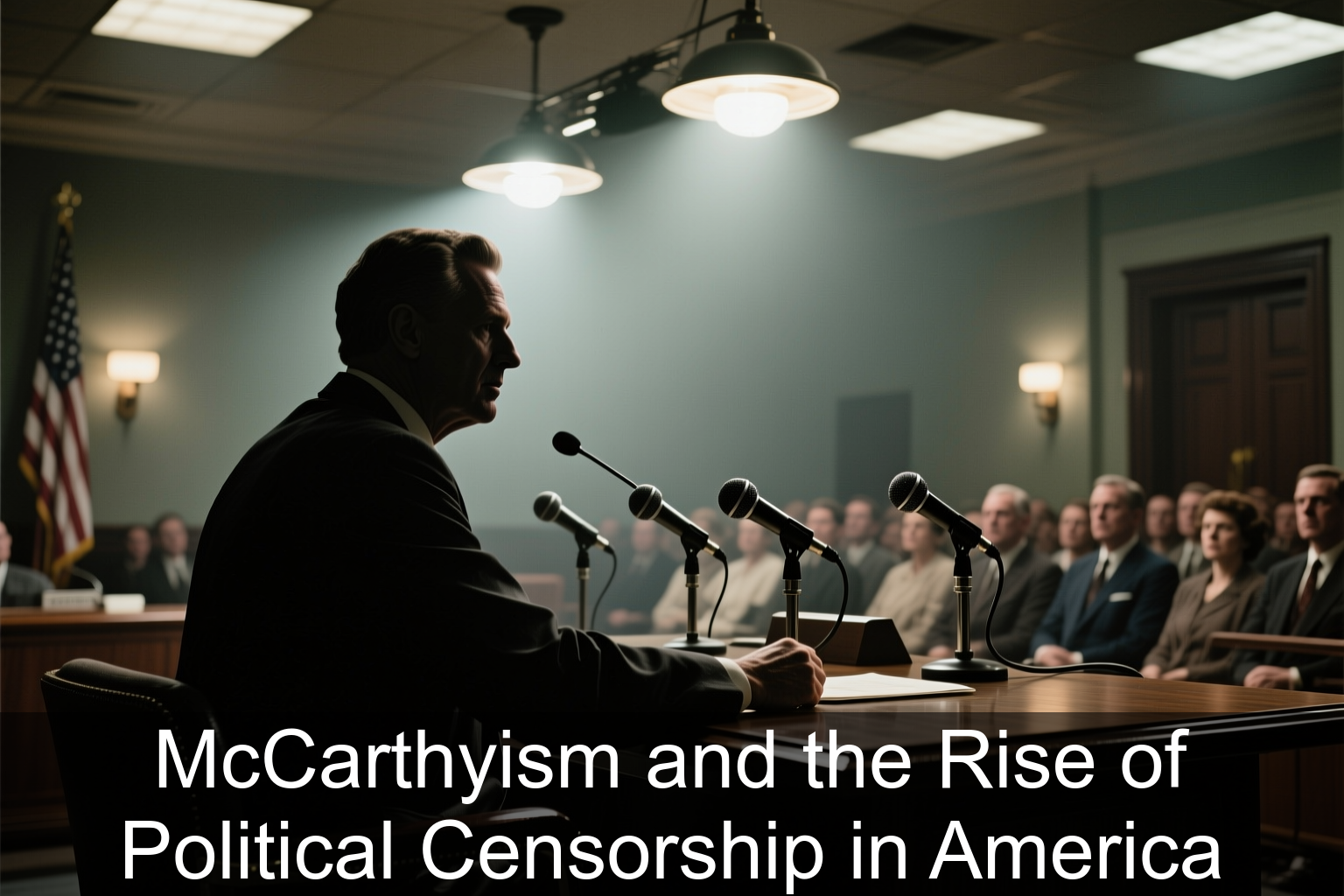

Long before social media takedowns and speech codes became familiar features of public life, the United States experienced a different kind of speech chill—one driven by fear, official pressure, and public shaming. In the early Cold War years, anxieties about Communist influence blended with political ambition, and the result was a climate where ordinary Americans learned that saying the wrong thing could cost them their job, their reputation, or their future.
At the center of this period was Sen. Joseph McCarthy, whose accusations and investigations helped turn suspicion into a national habit. Rather than relying on careful evidence and due process, the era became known for guilt by association and the presumption that dissent—or even the wrong acquaintances—could be treated as disloyalty. As institutions scrambled to protect themselves, many chose risk-avoidance over principle, narrowing what could be safely said in workplaces, schools, and civic organizations.
The effects were not limited to Washington. Employers, universities, unions, and cultural organizations responded to the political pressure by creating rules and practices that rewarded conformity. Loyalty oaths, blacklists, and informal “do not hire” signals became tools that could end careers without a courtroom verdict. Even people who had done nothing unlawful often concluded that silence was safer than speaking openly, especially on controversial topics connected to politics, ideology, or foreign policy.
This environment also shaped the modern playbook for controlling public debate. Instead of direct criminal bans, the more common tactic was to make certain views professionally toxic and socially dangerous. Once that dynamic takes hold, it doesn’t require constant policing; people begin to monitor themselves, avoiding subjects, softening opinions, or withdrawing from civic life altogether. The net effect is a thinner public discourse and fewer voices willing to challenge prevailing narratives.
From a libertarian and conservative perspective, the lesson is that free expression can be undermined not only by formal laws, but by coordinated pressure that turns institutions into enforcers. When fear becomes a governing tool, political power expands while individual rights shrink—often with broad public approval at the time. The McCarthy era remains a cautionary example of how quickly a nation can be pushed toward censorship habits, and how long it can take to rebuild a culture that treats open debate as a basic American safeguard.
Leave a Reply