Tag: civil liberties

  • New Jersey Detention Center Protests Raise Concerns Over Press Freedom and Public Safety

    New Jersey Detention Center Protests Raise Concerns Over Press Freedom and Public Safety

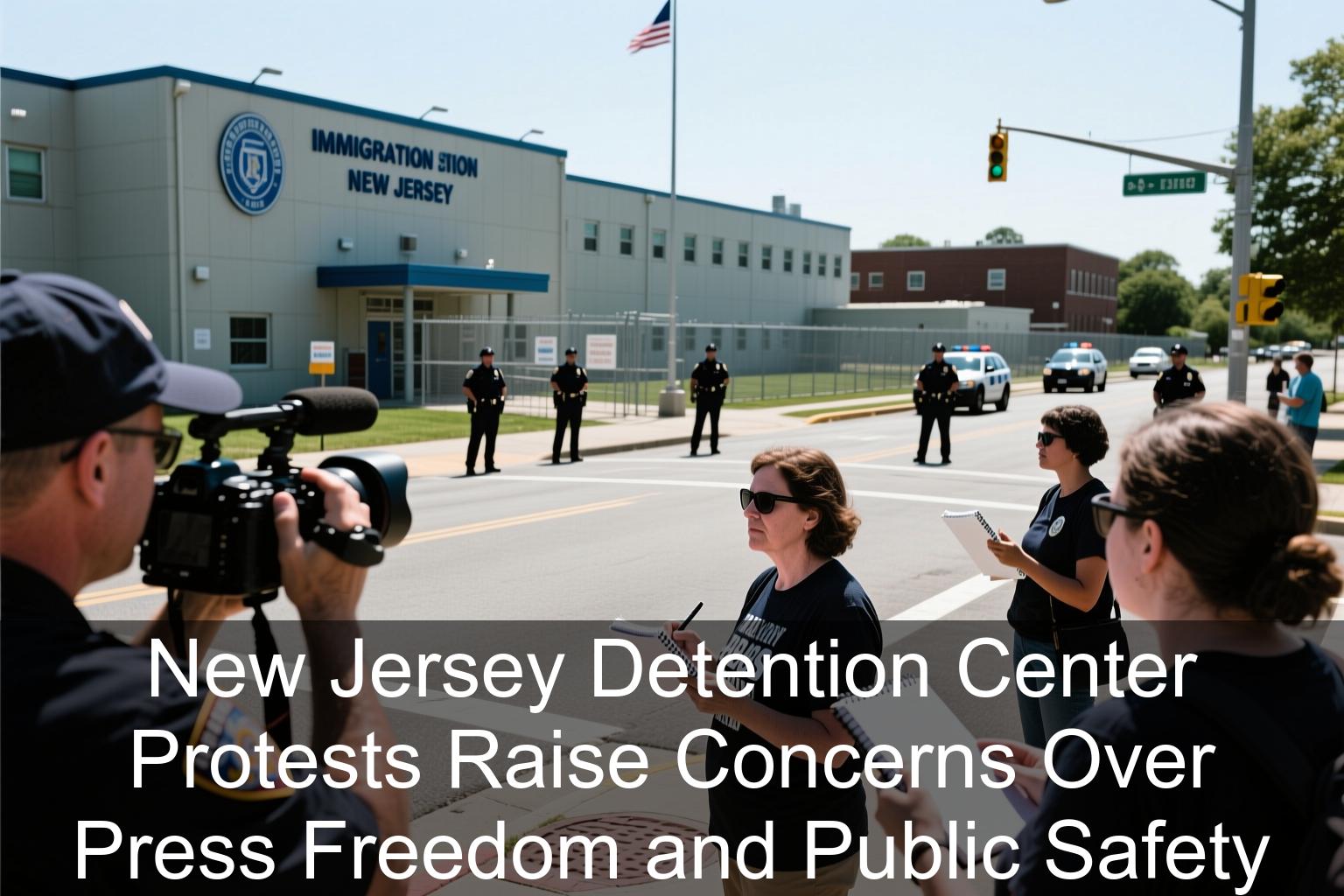
    Reporting from the public streets outside an immigration detention facility in New Jersey has drawn renewed scrutiny after accounts surfaced suggesting that covering nearby demonstrations can carry real physical risk. The episode is being framed by civil-liberties advocates as more than a local dispute, pointing instead to broader questions about whether Americans can observe, record, and report on contentious public events without retaliation.

    The Foundation for Individual Rights and Expression (FIRE) says it is continuing to monitor and document incidents in which protesters and journalists may be penalized for engaging in activity protected by the First Amendment. In its public communications, the organization emphasizes that the same constitutional safeguards that cover political speech also protect newsgathering and the public’s ability to witness government-adjacent activity in open spaces.

    At the center of the concern is the prospect that simply doing the work of journalism at protests near the New Jersey detention center could result in severe harm serious enough to require hospitalization. Civil-liberties advocates argue that when the costs of reporting include potential injury, the public loses access to independent information and government power faces less oversight.

    From a libertarian-leaning civil-rights perspective, the chilling effect matters as much as the incident itself. If individuals believe they could be punished or physically endangered for documenting demonstrations, fewer people will record encounters, fewer journalists will show up, and officials will operate with less accountability—outcomes that run directly against the principles of open government and free expression.

    FIRE says its ongoing effort is aimed at ensuring that neither demonstrators nor members of the press are punished for exercising constitutionally protected rights. The organization’s stated focus is on tracking violations, publicizing them, and pushing back on conduct that undermines peaceful protest, lawful observation, and the ability of journalists to report from public places.

  • Sophie of Dundee Proven Right, Yet Britain’s Establishment Won’t Rethink Its Approach

    Sophie of Dundee Proven Right, Yet Britain’s Establishment Won’t Rethink Its Approach

    In Britain, public disputes often end with a quiet shrug from the people who drove the narrative in the first place. That pattern is resurfacing with the case of “Sophie of Dundee,” the Scottish girl who became a national flashpoint after a widely discussed incident that involved her wielding a hatchet. The controversy drew sharp reactions, loud condemnation, and plenty of confidence from elite voices that they had the story correctly framed.

    Over time, however, the central claims used to attack her have unraveled. The girl who was treated as a symbol of something frightening or intolerable has now been vindicated, while many of the critics who insisted they had the facts and morals on their side have been shown to be wrong. In a healthier civic culture, that would be the moment for prominent commentators and institutions to correct the record in plain language and accept responsibility for how quickly they rushed to judgment.

    Instead, the vindication appears unlikely to lead to meaningful contrition. The same British establishment figures who helped amplify outrage and smear an individual are not expected to offer apologies, and the mechanisms that produced the initial backlash remain intact. In practice, that means the incentives stay the same: punish first, verify later, and move on once the next controversy arrives.

    From a conservative and libertarian perspective, the deeper issue is not simply a single injustice but a governing and cultural class that can be wrong without consequence. When influential institutions can mischaracterize an ordinary person, drive reputational damage, and then refuse to acknowledge error, the lesson is that status protects itself. Accountability becomes a one-way street, applied to the public but rarely to those with platforms, credentials, and social power.

    The episode surrounding Sophie of Dundee illustrates how little changes when vindication arrives after the narrative has already done its work. Even when the facts ultimately cut against the preferred story, Britain’s elite culture has little incentive to reevaluate its habits or to restore what was taken from the people it targeted. For those watching, the takeaway is stark: being proven right does not guarantee fairness, and it rarely forces the establishment to reform.

  • Why Woodrow Wilson Stands Out as a Low Point for American Free Speech

    Why Woodrow Wilson Stands Out as a Low Point for American Free Speech

    Long before modern debates over censorship and dissent, the United States experienced one of its most sweeping federal crackdowns on speech during Woodrow Wilson’s presidency. In the view advanced by the Foundation for Individual Rights and Expression, Wilson’s administration represents an especially damaging chapter for civil liberties because federal power was used aggressively to punish political criticism and suppress antiwar expression.

    Wilson entered office at a moment when the country was moving toward deeper involvement in World War I, and the federal government’s approach to domestic opposition hardened as wartime pressure increased. Instead of treating harsh criticism as part of democratic self-government, the administration helped build a legal and political environment in which dissent was treated as disloyalty, and dissenters were targeted through prosecutions and other forms of government pressure.

    Central to that effort were federal laws and enforcement campaigns aimed at speech. The Espionage Act and the later Sedition Act became tools for pursuing people whose words challenged the war effort or the government itself. Rather than focusing narrowly on genuine espionage, enforcement reached into ordinary political advocacy and criticism, allowing federal authorities to bring criminal cases over statements, pamphlets, and organizing that would normally fall within the bounds of protected political debate.

    The administration’s posture was reinforced by a broader campaign that blended official prosecution with social and institutional coercion. Public dissenters, labor activists, and antiwar voices faced investigations, intimidation, and punishment, creating a climate in which citizens could reasonably fear that speaking openly might bring legal trouble or other serious consequences. In practice, the government’s message was clear: opposition to federal policy, especially in wartime, could be treated as a punishable offense.

    This period is often remembered as a stress test for the First Amendment, and the Wilson years are frequently cited as an example of how quickly basic freedoms can be narrowed when leaders claim extraordinary circumstances. From a libertarian and conservative civil-liberties perspective, the lesson is not limited to history: the same arguments used then to justify suppression—public safety, national unity, emergency—can be repurposed in new forms unless free speech principles are defended consistently, especially when they protect unpopular views.

  • Colorado Ends Perjury-Based Pledge for Lawyers Seeking Court E-Filing Access

    Colorado Ends Perjury-Based Pledge for Lawyers Seeking Court E-Filing Access

    Colorado has removed a controversial barrier that affected how private attorneys accessed the state’s courts. A newly enacted state law eliminates a prior condition tied to the electronic filing system, following significant public backlash.

    Under the former policy, private lawyers who wanted to use Colorado’s e-filing system had to make a specific promise before they could participate. The requirement went beyond ordinary registration rules by demanding an affirmative commitment related to immigration enforcement.

    Specifically, attorneys were required to certify—under penalty of perjury—that they would not assist federal immigration enforcement. In practice, that pledge functioned as a gatekeeping mechanism: without making the sworn statement, a private attorney could be blocked from using the primary digital pathway for filing documents in Colorado’s legal system.

    Critics argued the rule inserted political and ideological testing into basic access to the courts, effectively pressuring attorneys to adopt a state-approved position on cooperation with federal authorities as the price of participating in routine legal processes. From a libertarian perspective, conditioning access to core civic institutions on compelled statements undermines individual conscience and the principle that the legal system should be open on equal terms.

    After the public outcry, Colorado lawmakers moved to repeal the requirement, and the new law now removes the pledge from the e-filing process. The change restores a more neutral standard for court access by ending the perjury-backed certification as a prerequisite for private attorneys who need to file documents electronically.

  • Ohio Blogger Jailed After Sending Crude Shrek Meme to State Senator, Raising First Amendment Questions

    Ohio Blogger Jailed After Sending Crude Shrek Meme to State Senator, Raising First Amendment Questions

    An unusual political speech dispute in Ohio has drawn national attention after a blogger was arrested and briefly jailed over a text message sent to a state senator. The message included a vulgar meme involving the character Shrek, and the incident has sparked debate about when, if ever, offensive political mockery can be treated as a crime.

    According to the account, the blogger texted the senator a crude Shrek image that depicted explicit male anatomy. The episode quickly moved beyond embarrassment and into the criminal justice system, with the sender taken into custody and held for nearly a full day.

    In total, the Ohio man spent about 23 hours in jail stemming from the single text. The case has become a test of how far government officials can go when they attempt to punish citizens for coarse or insulting commentary directed at elected representatives.

    The central issue raised by the incident is whether political ridicule—especially when it is immature, graphic, or offensive—can be prosecuted without violating constitutional protections. The First Amendment generally protects speech, including sharp criticism of public officials, and controversies like this tend to turn on whether the message is treated as protected expression or as something outside the bounds of constitutional coverage.

    Beyond the specifics of one meme, the situation highlights a broader concern for civil liberties advocates: allowing the state to use criminal penalties against people for crude political messages can create a chilling effect, discouraging citizens from speaking freely when the target is a powerful government figure. Even when the expression is in poor taste, the line between punishing a perceived insult and suppressing political dissent is one many argue the government should not be allowed to blur.

  • UK Blocks Cenk Uygur and Hasan Piker From Entry, Raising New Free Speech Concerns

    UK Blocks Cenk Uygur and Hasan Piker From Entry, Raising New Free Speech Concerns

    The United Kingdom has denied entry to two prominent U.S.-based political commentators, Cenk Uygur and Hasan Piker, a move that is drawing renewed attention to how British authorities are using immigration powers in politically sensitive cases. The decision effectively prevents both men from traveling to the UK.

    Uygur is widely known as a political host and media figure, while Piker is a high-profile online commentator. Although the ban is an immigration action rather than a criminal proceeding, the practical result is the same: they are barred from appearing in person for events, interviews, or public discussions inside the country.

    Supporters of open debate argue that such exclusions resemble viewpoint-based gatekeeping, where unpopular or controversial speech becomes a reason to restrict access. From a libertarian-leaning free expression perspective, the concern is less about whether any particular speaker is agreeable and more about the precedent: once the state normalizes using border control to filter lawful political commentary, the target list can expand quickly.

    The episode has also prompted the question of effectiveness. If limiting attention was part of the purpose, the outcome may be the reverse, as the ban itself amplifies public interest and drives more coverage and online conversation than an ordinary visit would have generated. In the modern media environment, attempting to suppress speech often gives it a larger platform.

    More broadly, the decision fits into growing criticism that the UK is moving away from a robust culture of free expression. Critics say the country’s recent trajectory encourages officials to treat contentious political speech as a problem to be managed rather than a liberty to be protected, with immigration enforcement becoming one more tool that can be applied selectively.

  • Anthony Comstock and the Rise of Federal Censorship in America

    Anthony Comstock and the Rise of Federal Censorship in America

    Anthony Comstock’s name is inseparable from a moment in American history when fear about changing culture hardened into national policy. In an era shaped by Victorian-era moral anxieties, he emerged as a determined crusader who insisted that certain ideas and materials were not merely distasteful, but dangerous enough to warrant federal intervention.

    What made Comstock unusually influential was not only his intensity, but his success in converting private moral alarm into government power. He helped push the idea that “obscene” expression should be treated as a crime, expanding the reach of public authority into what Americans could read, share, and discuss. That shift gave censorship a legal framework, rather than leaving it to social pressure or voluntary restraint.

    The result was a system aimed at enforcing a particular vision of public virtue. Comstock became a central figure in efforts to monitor and restrict speech and materials labeled “obscene,” using law as a tool to police morality. His approach treated personal conduct and expression as legitimate targets for federal control, reflecting a belief that national institutions should actively shape the moral character of society.

    From a libertarian-leaning perspective, Comstock’s story illustrates how quickly government can be empowered when public panic is channeled into legislation. Once the state is authorized to punish “obscene” speech, the key question becomes who gets to define the boundary—and how broadly that definition can be applied. Comstock’s rise shows how censorship can be normalized when it is framed as protection rather than suppression.

    His legacy is therefore more than a biographical curiosity. It is an example of how a single, motivated actor can harness cultural fears to build durable enforcement mechanisms, with long-term consequences for free expression. Comstock turned a moral campaign into federal censorship, helping criminalize targeted forms of speech and creating a model for using state power to regulate what people are allowed to say, publish, and circulate.

  • Lawsuit Alleges Nevada School Expelled Student Over Pro-ICE Stickers in Viewpoint Dispute

    Lawsuit Alleges Nevada School Expelled Student Over Pro-ICE Stickers in Viewpoint Dispute

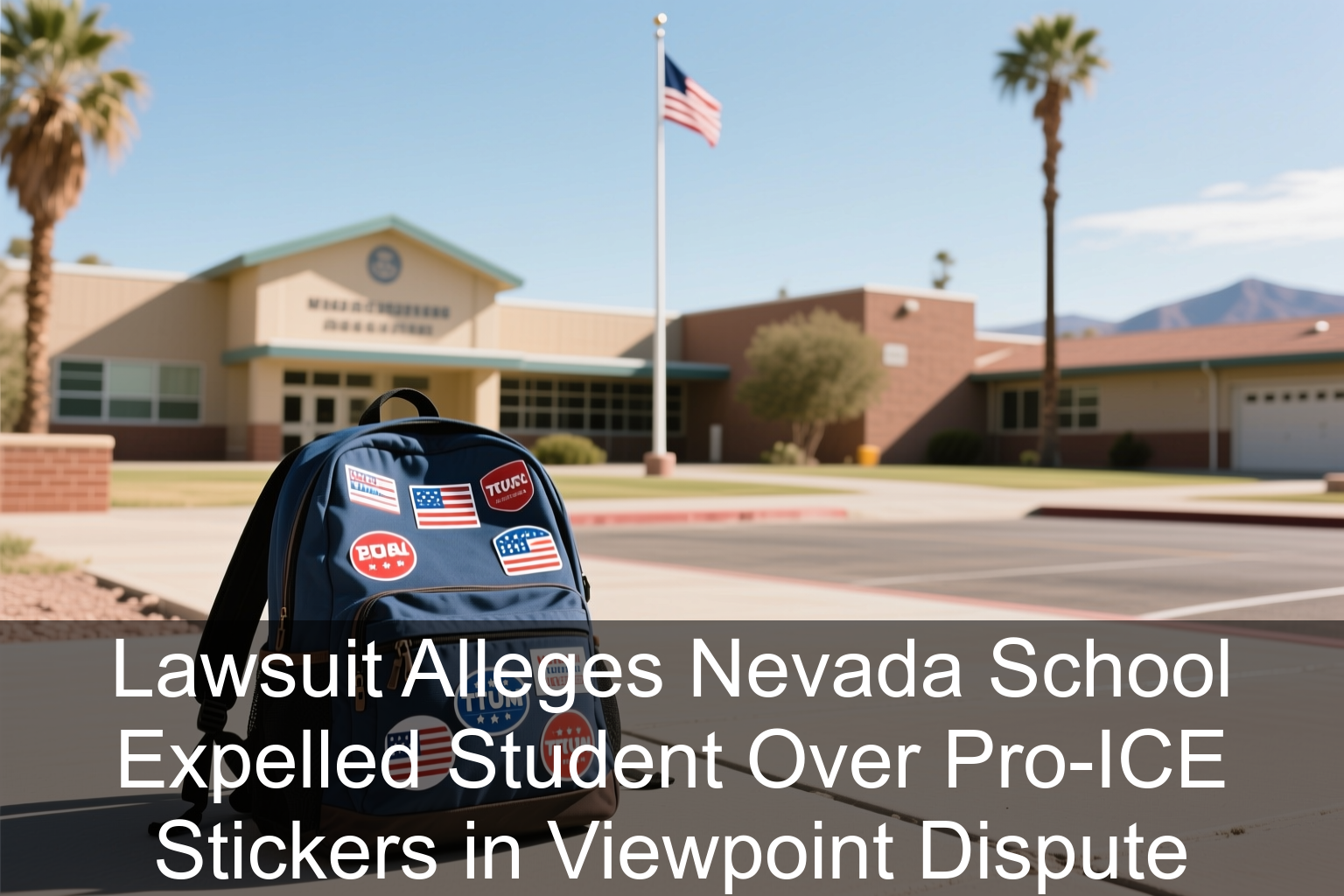
    A newly filed lawsuit says a Nevada school removed a student from campus because of stickers expressing support for Immigration and Customs Enforcement, raising a fresh dispute over whether schools are policing opinions rather than behavior. The complaint frames the discipline as punishment for a political message, not a response to any concrete disruption.

    According to the suit, the student displayed emblems described as “pro-ICE” and was expelled after school officials objected to the viewpoint those stickers conveyed. The legal filing characterizes the school’s response as discrimination based on the student’s perspective, arguing that the punishment targeted the student’s stance rather than any rule applied evenly across differing views.

    The case comes amid ongoing national debates about how far school authority reaches when student expression touches on contentious public issues. Supporters of broad free-speech protections argue that political messages, including unpopular ones, are precisely the kind of expression that should be safeguarded in educational settings, absent specific, demonstrable interference with school operations.

    From a civil-liberties and limited-government perspective, the allegations highlight a familiar concern: institutions with coercive power can be tempted to regulate speech by labeling certain opinions as unacceptable. If the lawsuit’s claims are accurate, the dispute is less about stickers than about whether students are allowed to hold and express lawful political positions without being singled out for punishment.

    The lawsuit asks the court to treat the expulsion as an unlawful act of viewpoint-based discipline. As the case proceeds, the central question will be whether the school can justify its actions on neutral, consistently applied grounds, or whether the record supports the claim that the student was expelled specifically because of the pro-ICE message.

  • McCarthyism and the Rise of Political Censorship in America

    McCarthyism and the Rise of Political Censorship in America

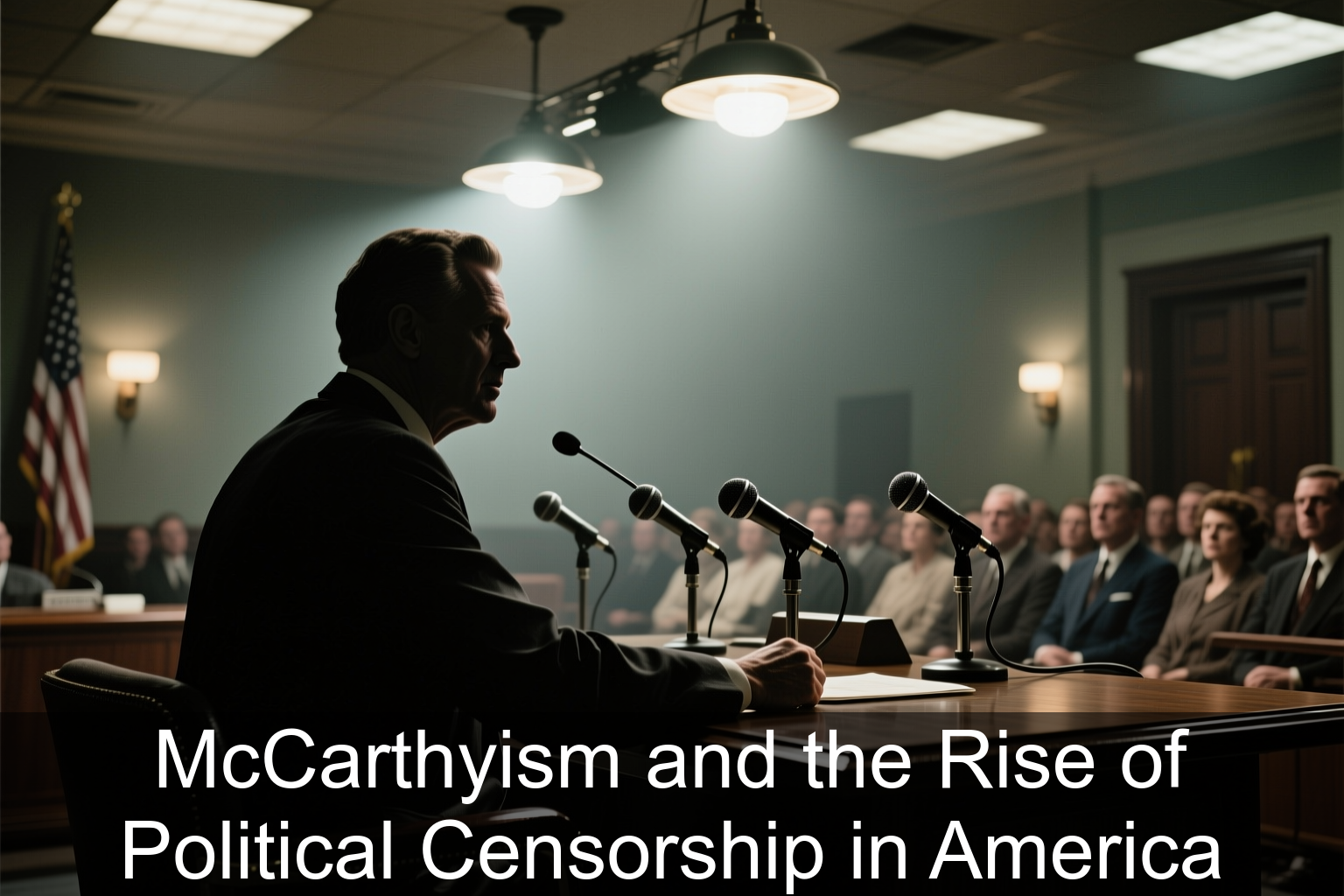
    Long before social media takedowns and speech codes became familiar features of public life, the United States experienced a different kind of speech chill—one driven by fear, official pressure, and public shaming. In the early Cold War years, anxieties about Communist influence blended with political ambition, and the result was a climate where ordinary Americans learned that saying the wrong thing could cost them their job, their reputation, or their future.

    At the center of this period was Sen. Joseph McCarthy, whose accusations and investigations helped turn suspicion into a national habit. Rather than relying on careful evidence and due process, the era became known for guilt by association and the presumption that dissent—or even the wrong acquaintances—could be treated as disloyalty. As institutions scrambled to protect themselves, many chose risk-avoidance over principle, narrowing what could be safely said in workplaces, schools, and civic organizations.

    The effects were not limited to Washington. Employers, universities, unions, and cultural organizations responded to the political pressure by creating rules and practices that rewarded conformity. Loyalty oaths, blacklists, and informal “do not hire” signals became tools that could end careers without a courtroom verdict. Even people who had done nothing unlawful often concluded that silence was safer than speaking openly, especially on controversial topics connected to politics, ideology, or foreign policy.

    This environment also shaped the modern playbook for controlling public debate. Instead of direct criminal bans, the more common tactic was to make certain views professionally toxic and socially dangerous. Once that dynamic takes hold, it doesn’t require constant policing; people begin to monitor themselves, avoiding subjects, softening opinions, or withdrawing from civic life altogether. The net effect is a thinner public discourse and fewer voices willing to challenge prevailing narratives.

    From a libertarian and conservative perspective, the lesson is that free expression can be undermined not only by formal laws, but by coordinated pressure that turns institutions into enforcers. When fear becomes a governing tool, political power expands while individual rights shrink—often with broad public approval at the time. The McCarthy era remains a cautionary example of how quickly a nation can be pushed toward censorship habits, and how long it can take to rebuild a culture that treats open debate as a basic American safeguard.

  • Europe’s Rising Crackdown on Populist Speech and Political Dissent

    Across Europe, government institutions and aligned regulators are increasingly treating “populism” less as a viewpoint to contest at the ballot box and more as a problem to be contained through speech controls. The result is a political environment in which dissenting parties and their supporters face mounting pressure from rules that narrow what can be said, who can say it, and where it can be heard.

    Rather than persuading skeptical voters with better arguments, many European leaders have leaned on administrative power to police rhetoric and clamp down on controversial messages. The practical effect is to shift political conflict away from open debate and into enforcement—where decisions are made by agencies, courts, and compliance offices instead of the public. That approach may temporarily blunt the impact of insurgent movements, but it also normalizes restrictions that can be turned on anyone once the machinery is built.

    The underlying logic is often presented as a defense of democracy, social harmony, or public safety. Yet when governments position themselves as arbiters of acceptable political expression, they invite the very abuses liberal societies are supposed to prevent. Populist figures become convenient targets because they are polarizing, but the standards created to constrain them do not remain neatly confined to one faction.

    This trend also encourages a culture of self-censorship. When citizens believe that expressing certain views could bring legal trouble, professional consequences, or platform restrictions, many simply stay quiet. Public discussion then becomes less representative of what people actually think, which can deepen mistrust and push politics into more volatile channels outside mainstream institutions.

    A freer society depends on the premise that bad ideas can be defeated through scrutiny, criticism, and competition—not through suppression. Europe’s current trajectory suggests an expanding willingness to substitute control for persuasion. If that direction continues without a meaningful course correction, the continent may discover that political repression can delay conflict for a time, but it cannot eliminate the underlying grievances that drive voters toward anti-establishment movements.