Tag: civil liberties

  • Privacy Protection Act Under Pressure as Government Leak Hunts Target Journalists

    Privacy Protection Act Under Pressure as Government Leak Hunts Target Journalists

    The Privacy Protection Act was created to stop government agencies from treating journalists and other investigators like criminals simply for doing their jobs. It sets limits on when officials can seize or search work materials connected to reporting, aiming to prevent raids that chill scrutiny of people in power. But those protections only matter when they are respected in practice, especially during politically charged “leak” investigations.

    The central concern is what happens when the government treats the hunt for a source as a justification to go after the messenger. When officials act as if “find the leaker” automatically means “search the reporter,” the law designed to defend watchdog work can be reduced to a procedural obstacle rather than a real barrier. That shift matters because aggressive investigative tactics can intimidate reporters, deter sources, and shrink the flow of information the public needs.

    Supporters of strong press protections argue that the point of the Act is not to create special privileges for media organizations, but to safeguard the public’s ability to learn what government is doing. When agencies can raid reporting operations or seize newsgathering materials, the pressure does not land only on a newsroom. It also lands on ordinary citizens who might otherwise speak up about wrongdoing, mismanagement, or abuses of authority.

    From a conservative and libertarian perspective, the stakes are straightforward: government power expands most easily when it can operate with minimal accountability. Leak hunts can be legitimate, but they are also an easy pretext for overreach, particularly if investigators start treating journalistic work product as a convenient shortcut. A system that allows raids on reporters risks turning transparency into a liability and official secrecy into the safer default.

    The Act’s value, then, is measured by whether it functions as a firm limit on state power instead of a mere technicality to work around. If officials can sidestep the spirit of the law whenever an investigation becomes inconvenient, the practical result is fewer watchdog stories, fewer whistleblowers willing to talk, and less oversight of government decision-making. The bigger question is whether public institutions will honor the guardrails that already exist—or continue to test how far they can push without real consequences.
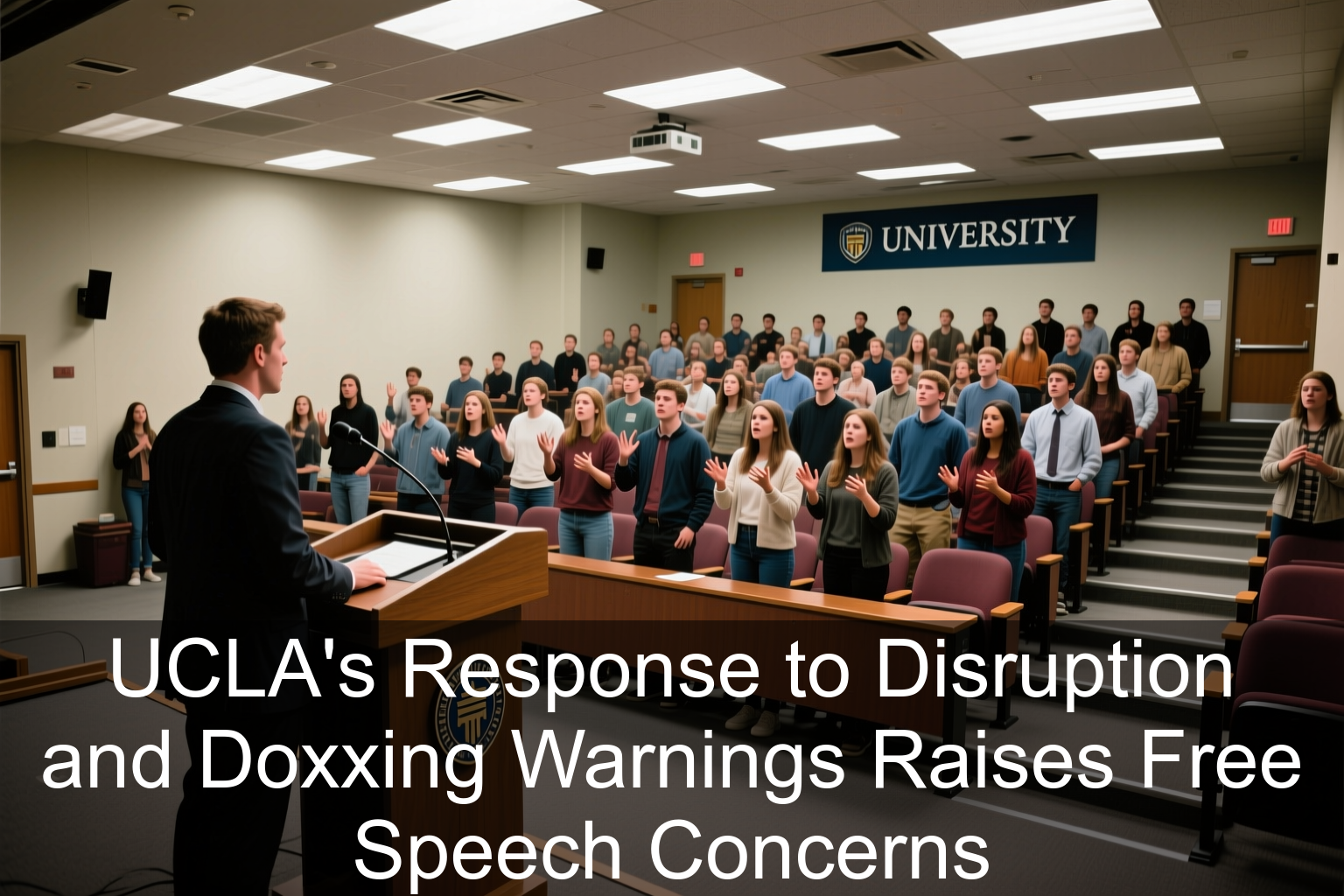
  • UCLA’s Response to Disruption and Doxxing Warnings Raises Free Speech Concerns

    UCLA’s Response to Disruption and Doxxing Warnings Raises Free Speech Concerns

    A recent incident at UCLA’s law school has reignited a familiar debate about campus speech rules: when protesters prevent a speaker from being heard, do administrators treat it as misconduct or as protected expression? The flashpoint involved a Department of Homeland Security official who appeared at the law school and was met with loud, coordinated interruptions from law students that stopped the event from proceeding normally.

    After the disruption, attention shifted from the conduct inside the room to what happened online afterward. Video of the incident began circulating, and with it came attempts by some observers to identify the students involved. Rather than emphasizing accountability for those who shut down the event, UCLA administrators issued a warning aimed at critics, advising against naming or identifying the disruptors based on the footage.

    That administrative response drew criticism because it appeared to prioritize shielding the interrupters from public identification over defending the basic expectation that invited speakers can deliver remarks without being drowned out. From a civil-liberties perspective, a university has an obligation to protect open inquiry and viewpoint diversity, especially at a public institution where First Amendment principles and due process norms carry particular weight.

    The controversy also highlights a broader pattern in higher education: rules are often enforced unevenly depending on who is speaking and who is protesting. When disruptive tactics succeed, the practical result is a veto over campus events, encouraging future activists to replace debate with noise—an outcome that undermines the exchange of ideas a law school is supposed to model.

    The episode at UCLA is now being discussed not only as a single case of protest crossing into disruption, but also as a test of administrative priorities. If the institution’s main message after an event is shut down is a caution to critics about identifying participants on video, many will see that as an inversion of responsibilities—one that risks normalizing “shout-down” tactics while discouraging public scrutiny of those who use them.

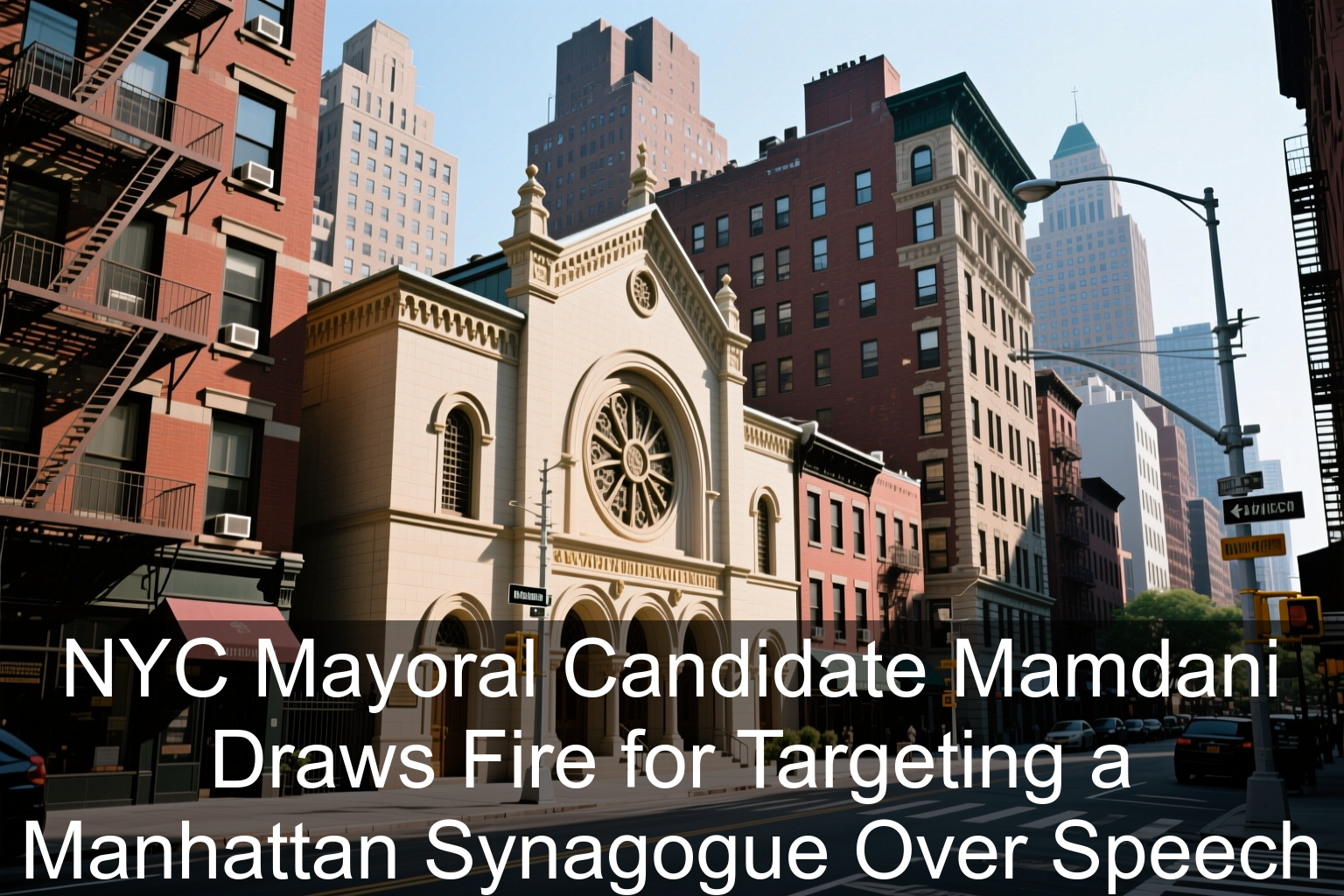
  • NYC Mayoral Candidate Mamdani Draws Fire for Targeting a Manhattan Synagogue Over Speech

    NYC Mayoral Candidate Mamdani Draws Fire for Targeting a Manhattan Synagogue Over Speech

    A new dispute over free expression in New York City politics has centered on remarks directed at a Manhattan synagogue, raising questions about whether constitutional protections are being treated as contingent on political approval. The argument has unfolded in the context of a mayoral campaign, where candidates’ stated commitments to civil liberties are being tested by contentious cultural and ideological fights.

    At the heart of the controversy is mayoral candidate Zohran Mamdani’s public condemnation of the synagogue. Critics say the episode reflects a broader tendency in city politics to treat speech rights as something that must be “earned” by adopting the “right” views, rather than protected as a baseline principle for everyone, including those whose opinions are unpopular.

    From a conservative and libertarian perspective, the larger issue is not whether one agrees with the synagogue’s message or the event that prompted criticism, but whether political leaders are willing to defend free-speech protections consistently. When elected officials or candidates imply that protected expression becomes illegitimate when it clashes with their ideology, they create a framework that can be applied against any group once the political winds shift.

    The dispute also highlights how institutions that serve religious communities can become targets in broader political struggles. Synagogues, like other houses of worship, operate not only as religious spaces but also as community institutions; when political figures single them out for condemnation connected to speech-related controversies, it can chill open debate and encourage the public to view constitutionally protected activity through a partisan filter.

    As the mayoral race continues, the episode is likely to sharpen divisions over whether New York City’s political leadership will treat free speech as a universal right or as a privilege granted only to approved viewpoints. For voters focused on civil liberties, the key question is whether candidates will defend the principle even when it is politically inconvenient—and whether they will apply it evenly rather than making protections depend on ideological alignment.

  • Poll Finds Americans Prefer Parents Over Washington to Manage Kids’ Social Media

    Poll Finds Americans Prefer Parents Over Washington to Manage Kids’ Social Media

    Questions about how minors should use social media have become a flashpoint in the broader debate over online speech, privacy, and family authority. A new poll highlighted a clear theme: Americans are wary of handing responsibility for kids’ social media habits to large institutions, whether those institutions are Silicon Valley platforms or federal regulators.

    The survey’s central takeaway is that the public does not place much confidence in technology companies to appropriately handle minors’ social media use. Respondents signaled skepticism that platforms can be relied upon to set and enforce rules that protect children without creating new problems, such as intrusive monitoring or uneven enforcement.

    At the same time, the poll indicates that Americans are also reluctant to empower the federal government as the primary overseer of minors’ social media activity. Even among people who want children better protected online, there is limited trust that Washington would regulate in a way that stays narrowly focused, avoids overreach, and respects constitutional boundaries.

    Instead, the strongest preference reflected in the results is for parents to be the main decision-makers. That aligns with a view that families are best positioned to weigh maturity levels, household values, and individual circumstances—choices that are difficult to translate into one-size-fits-all mandates from either corporate policy teams or federal agencies.

    The findings land in the middle of a growing push for age checks, content restrictions, and other top-down approaches aimed at minors online. But the poll suggests many Americans would rather see solutions that keep authority closer to home than rules written by federal officials or enforced by tech giants.

  • Federal Pre-Release Reviews of AI Models Raise New Questions About Speech Control

    Federal Pre-Release Reviews of AI Models Raise New Questions About Speech Control

    A new set of federal ideas aimed at artificial intelligence is drawing attention not because of flashy announcements, but because of how quietly it could expand government influence over what AI systems are allowed to say. At the center of the debate is the notion that certain AI models may need to be examined by regulators before they are released to the public.

    Supporters frame these proposals as a safety measure: check powerful models in advance to reduce the risk of misuse and prevent harmful outcomes. But a pre-release review regime also changes the default posture of innovation in the United States. Instead of building and launching a product and then being held accountable for concrete wrongdoing, developers could face an approval-style process that effectively decides what may be deployed in the first place.

    That distinction matters for speech. When the technology in question generates text, answers questions, or assists with writing, the line between “oversight” and viewpoint-based control can get thin fast. A system designed to keep AI “safe” can end up steering outputs away from controversial topics, disfavored opinions, or politically sensitive discussions, even when the user is seeking lawful information or legitimate debate.

    From a civil-liberties and limited-government perspective, the risk is not only overreach but normalization. Once a federal mechanism exists to review models before release, it can become a standing gatekeeping structure—one that future administrations may use more aggressively, with standards that shift depending on political priorities. What begins as a narrowly described effort to prevent abuse can evolve into a broader tool that pressures developers to preemptively censor lawful speech to satisfy regulators.

    These concerns are heightened by the practical reality that AI development moves quickly, while federal review processes tend to move slowly and become bureaucratic. If permission is required before launch, smaller firms and open-source projects could be hit hardest, because they typically lack the legal budgets and compliance departments needed to navigate a complex approval pipeline. The result could be fewer competitors, less experimentation, and a technology landscape shaped by the companies best equipped to negotiate with government agencies.

    The push for advance review of AI models is therefore about more than technical risk management. It touches fundamental questions about whether speech-enabled tools should be treated like something the public can access by default, or something that must be filtered through federal scrutiny first. And as policymakers debate where guardrails belong, the country faces a choice between a tradition of open inquiry and a system that quietly conditions what AI is permitted to discuss.

  • Attorney General Independence Matters: Why the DOJ Shouldn’t Serve as a President’s Personal Shield

    Attorney General Independence Matters: Why the DOJ Shouldn’t Serve as a President’s Personal Shield

    The Justice Department’s legitimacy depends on a simple premise: federal law enforcement is supposed to pursue cases based on evidence and the rule of law, not on who holds power. When Americans come to believe that prosecutions are driven by political advantage, the damage goes far beyond any single case or administration. Restoring trust requires rejecting the idea that the attorney general exists to protect a president’s personal interests.

    That point is especially relevant as President Trump faces renewed debate over how his administration should approach the Department of Justice. The argument is not that the president lacks authority over executive-branch officials, but that turning the DOJ into an instrument of political payback or personal defense undermines equal justice. A functioning constitutional system depends on a clear separation between political leadership and prosecutorial decision-making.

    Calls for an attorney general to operate as the president’s “fixer” often arise in reaction to perceived abuses by prior administrations. But answering one round of politicization with another does not correct the problem; it entrenches it. If each side treats the DOJ as a tool to punish opponents and protect allies, the country ends up with a permanent cycle of retaliation that weakens civil liberties and makes ordinary citizens less confident that the law applies evenly.

    A more durable approach is for President Trump to insist that the department be run with professional distance from White House political goals. That means emphasizing standard investigative procedures, resisting pressure to open or close cases for partisan reasons, and making it clear that prosecution decisions are not campaign tactics. The attorney general’s duty is to the Constitution and the public interest, not to the personal legal needs of the president.

    Breaking the pattern of “weaponization” requires restraint, transparency within lawful limits, and a commitment to consistent standards. In practice, that means refusing to treat political opponents as automatic targets and refusing to treat political allies as untouchable. If the administration wants to strengthen public confidence and protect limited-government principles, it should prioritize impartial justice over short-term political satisfaction.

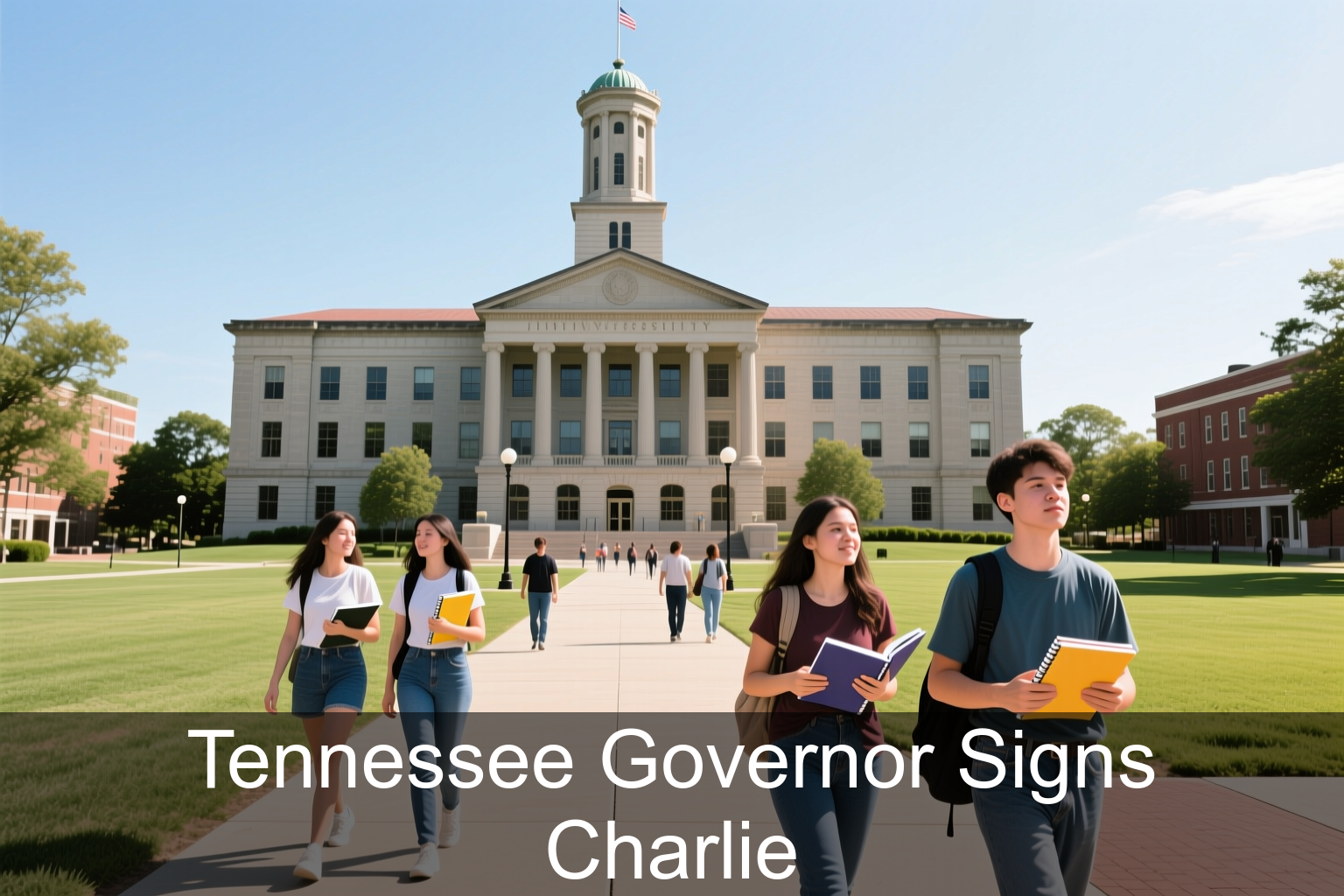
  • Tennessee Governor Signs “Charlie Kirk Act,” Expanding Campus Free Speech Protections

    Tennessee Governor Signs “Charlie Kirk Act,” Expanding Campus Free Speech Protections

    Tennessee has enacted a new law aimed at bolstering free expression on public college and university campuses. Gov. Bill Lee has signed the measure, which is known as the “Charlie Kirk Act,” adding another layer of state-level protection for students and faculty.

    The legislation is described as strengthening safeguards for speech and expressive activity in higher education settings. Supporters argue that campus policies and administrative enforcement can sometimes chill lawful viewpoints, and they contend that clearer protections help ensure students and professors can speak openly without undue institutional pressure.

    The Foundation for Individual Rights and Expression (FIRE) backed the bill and highlighted its passage as a significant win for campus speech rights. From a limited-government perspective, the law is framed as a check on bureaucratic overreach and an affirmation that public institutions should not act as arbiters of permissible viewpoints.

    With the governor’s signature, Tennessee joins a growing number of states that have moved to address disputes over speech, protest rules, and acceptable expression on campus. The new statute is presented as part of a broader effort to set firm standards that apply across public higher education rather than leaving the boundaries of speech to shifting campus codes.

    Advocates say the law’s practical impact will depend on how institutions implement it and how consistently they respect protected expression in day-to-day campus life. Even so, the signing marks a clear policy choice by state leaders: public colleges and universities in Tennessee are expected to provide stronger protections for the speech rights of students and faculty.

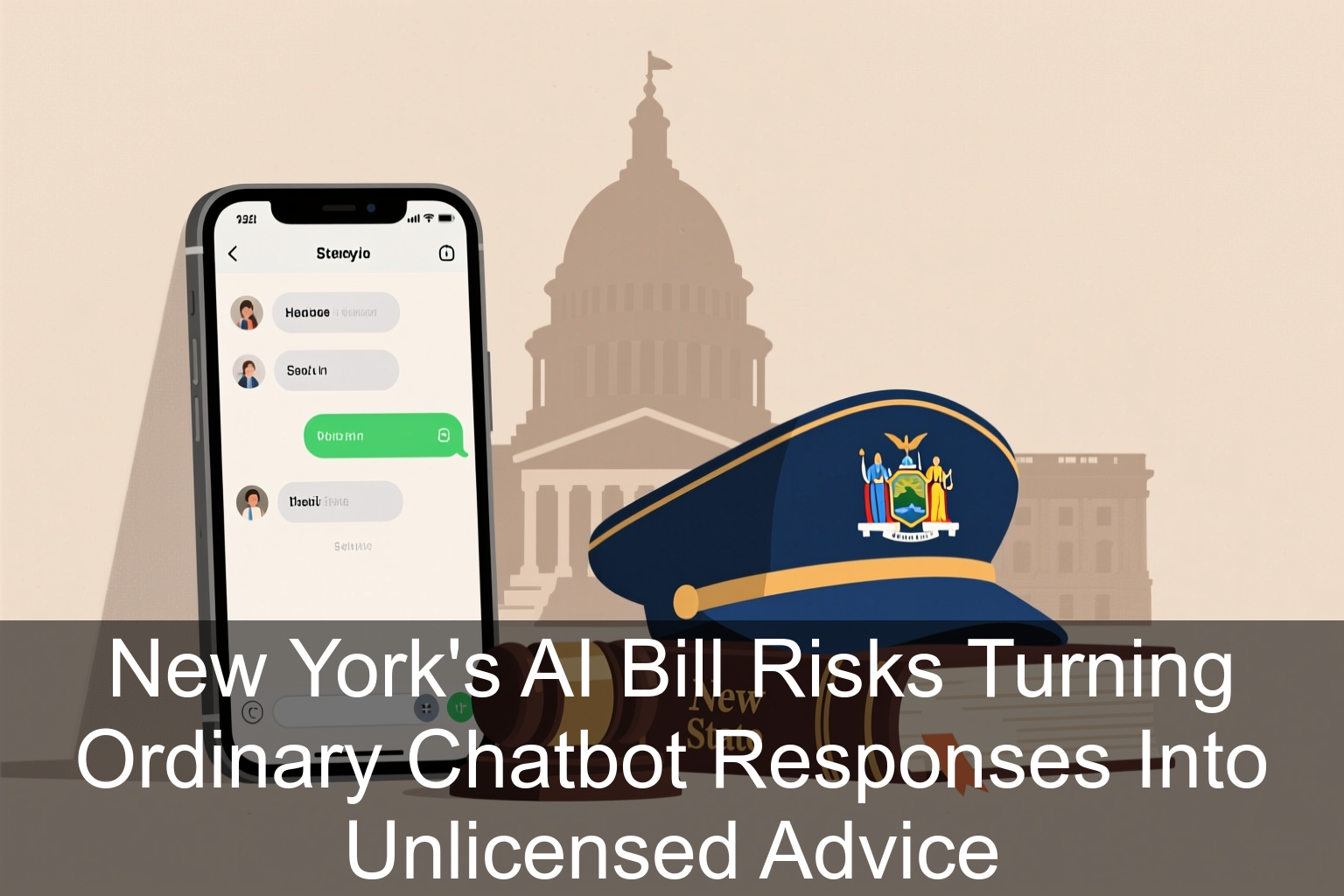
  • New York’s AI Bill Risks Turning Ordinary Chatbot Responses Into “Unlicensed” Advice

    New York’s AI Bill Risks Turning Ordinary Chatbot Responses Into “Unlicensed” Advice

    New York lawmakers are considering an artificial intelligence proposal that, as written, could sweep far beyond high-stakes professional services and into the everyday exchange of information. The concern is that the bill’s framework may effectively treat routine chatbot outputs as regulated “advice,” setting the stage for restrictions that resemble licensing requirements for speech.

    At the center of the debate is the bill’s tendency to blur the line between speech and conduct. In many contexts, a chatbot is doing what search engines, libraries, and reference materials have always done: presenting information in response to a question. If the state starts treating those informational responses as the equivalent of practicing a licensed profession, then the act of communicating ideas and general guidance risks being reclassified as something that requires government permission.

    That approach could chill access to information for ordinary New Yorkers. People regularly use AI tools to ask simple, non-specialized questions, compare options, and understand unfamiliar topics before deciding whether to consult a credentialed professional. If providers fear liability or enforcement for letting a chatbot answer questions that might be interpreted as “advice,” the predictable response will be to restrict what these tools can say, who can access them, or what topics they can address.

    From a libertarian and conservative perspective, the broader problem is the precedent: treating a conversational tool as a regulated service simply because it can speak in complete sentences. When the state expands regulatory logic into general-purpose communication, it empowers bureaucratic gatekeeping over what individuals can hear, read, and discuss—especially in emerging technologies where definitions are easy to stretch and hard to contain.

    New York’s AI bill, as critics argue, risks creating a regime where everyday Q&A becomes suspect, and compliance pressure drives platforms toward over-censorship and cautious silence. If the goal is to protect consumers, lawmakers can target demonstrably fraudulent claims and clearly defined high-risk conduct without converting commonplace information sharing into “unlicensed” activity that restricts speech and limits public access to knowledge.

  • Police Misuse License Plate Readers for Personal Pursuits Reported in at Least 14 Cases

    Police Misuse License Plate Readers for Personal Pursuits Reported in at Least 14 Cases

    License plate reader systems are often sold to the public as tools for finding stolen cars or helping investigators locate suspects. Yet recent reporting has raised a different concern: officers have reportedly tapped into these databases for private reasons, including tracking people they were romantically interested in.

    Across recent years, at least 14 incidents have been reported in which police allegedly used automated license plate reader data to monitor or locate a romantic interest. In these cases, the technology that logs where a vehicle has been seen was not being used to solve a crime, but to follow someone’s movements for personal advantage.

    That pattern highlights a core civil-liberties problem with large-scale surveillance tools: once a system exists and collects location information routinely, access becomes the key vulnerability. Even if a department’s stated mission is legitimate, broad access and weak oversight can turn a public-safety database into a convenient mechanism for stalking.

    From a conservative and libertarian perspective, this is the predictable result of building expansive tracking infrastructure first and asking hard governance questions later. Systems that make it easy for government employees to query people’s movements create incentives for misuse, and internal rules are often a thin substitute for structural limits, meaningful auditing, and real consequences.

    The reported cases also underscore why “trust us” is not a privacy policy. When location data is collected at scale, the harm is not limited to the immediate target; it also erodes confidence that law enforcement will use powerful tools narrowly and constitutionally. Limiting collection, narrowing access, and strengthening accountability are not anti-police measures—they are pro-rule-of-law safeguards meant to keep public power from being turned into personal leverage.

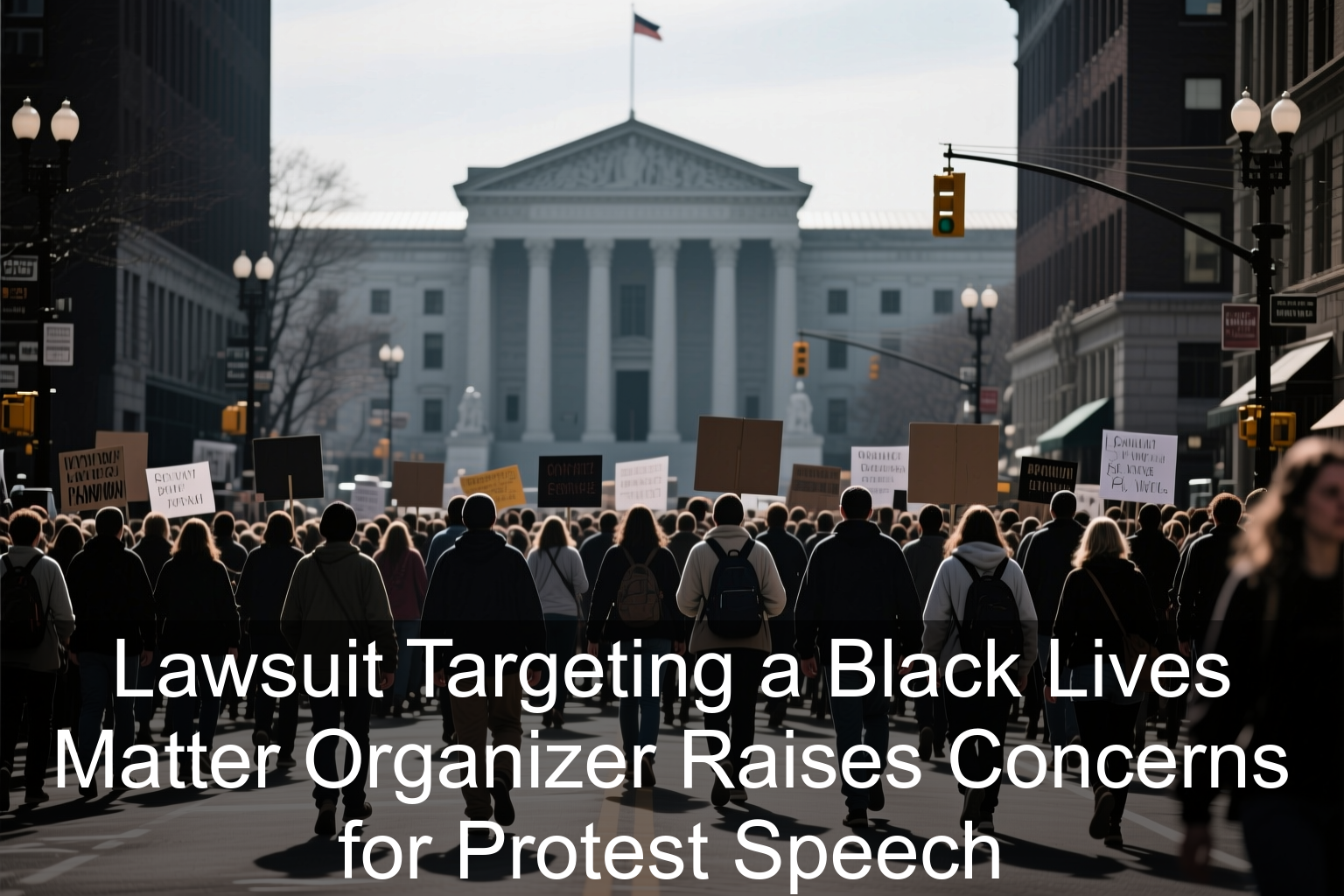
  • Lawsuit Targeting a Black Lives Matter Organizer Raises Concerns for Protest Speech

    Lawsuit Targeting a Black Lives Matter Organizer Raises Concerns for Protest Speech

    A legal complaint aimed at a Black Lives Matter organizer is drawing attention because of what it could mean for the future of protest in the United States. At the center of the dispute is a theory of responsibility that would treat a protest leader as legally accountable for violent acts carried out by other people.

    Critics of this approach warn that it could reshape how public demonstrations are organized. If courts accept the idea that a person who helps plan or lead a protest can be held liable for someone else’s violence, organizers may feel pressured to avoid public events altogether or limit participation to reduce legal risk.

    The concern is not limited to any single cause or political viewpoint. The ability to speak out, assemble, and advocate in public often depends on people being willing to coordinate marches, rallies, and other collective action. A rule that expands liability in this way, opponents argue, could discourage those efforts and weaken core protections for speech and assembly.

    Supporters of free expression say the broader consequence is a chilling effect: when legal exposure becomes unpredictable or sweeping, people may self-censor or avoid association with lawful protest activity out of fear of being blamed for conduct they did not commit. In that scenario, the lawsuit’s impact would extend far beyond the individual organizer involved, influencing how safely and confidently Americans can engage in public dissent.