
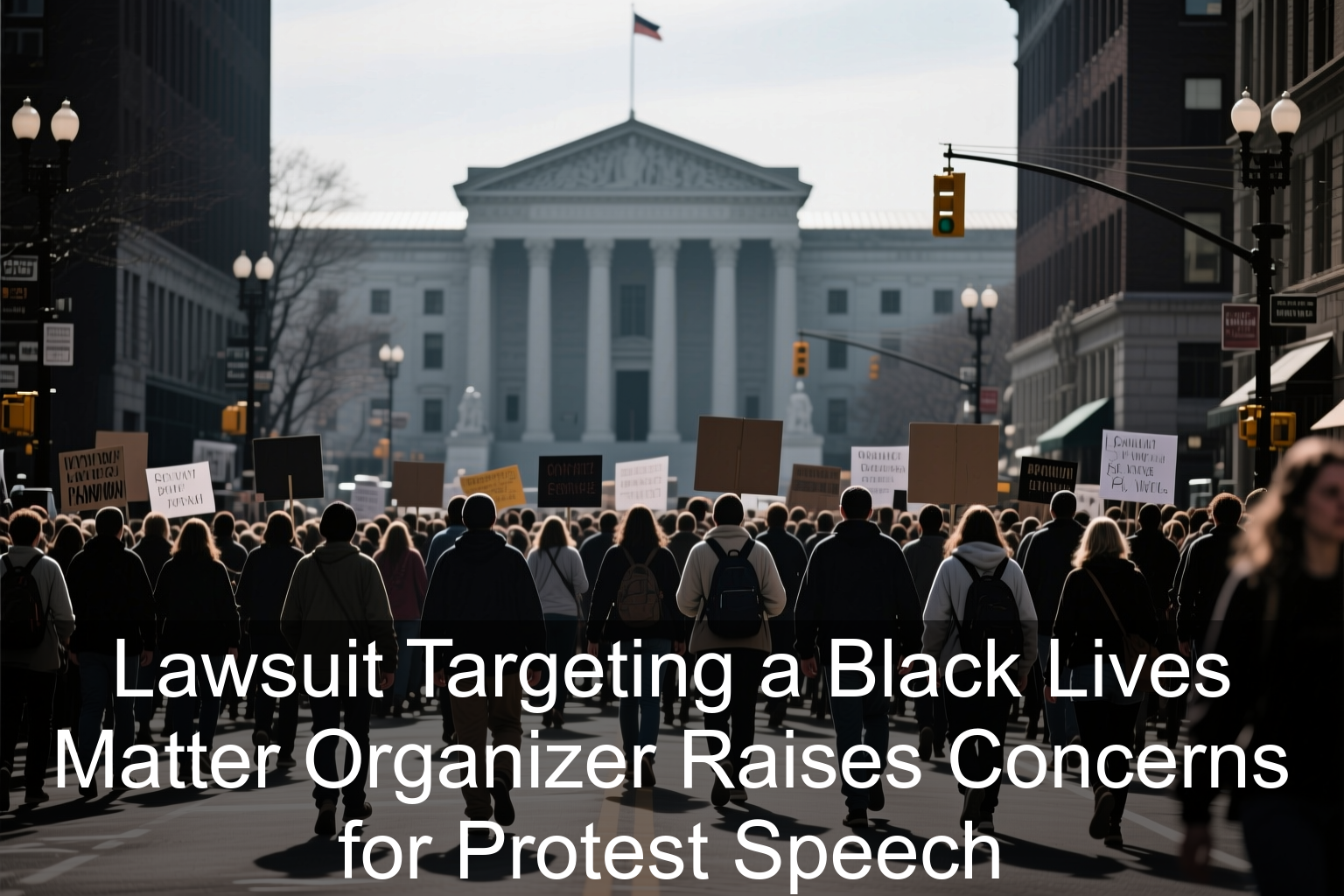

A legal complaint aimed at a Black Lives Matter organizer is drawing attention because of what it could mean for the future of protest in the United States. At the center of the dispute is a theory of responsibility that would treat a protest leader as legally accountable for violent acts carried out by other people.
Critics of this approach warn that it could reshape how public demonstrations are organized. If courts accept the idea that a person who helps plan or lead a protest can be held liable for someone else’s violence, organizers may feel pressured to avoid public events altogether or limit participation to reduce legal risk.
The concern is not limited to any single cause or political viewpoint. The ability to speak out, assemble, and advocate in public often depends on people being willing to coordinate marches, rallies, and other collective action. A rule that expands liability in this way, opponents argue, could discourage those efforts and weaken core protections for speech and assembly.
Supporters of free expression say the broader consequence is a chilling effect: when legal exposure becomes unpredictable or sweeping, people may self-censor or avoid association with lawful protest activity out of fear of being blamed for conduct they did not commit. In that scenario, the lawsuit’s impact would extend far beyond the individual organizer involved, influencing how safely and confidently Americans can engage in public dissent.
Leave a Reply