

Questions about how minors should use social media have become a flashpoint in the broader debate over online speech, privacy, and family authority. A new poll highlighted a clear theme: Americans are wary of handing responsibility for kids’ social media habits to large institutions, whether those institutions are Silicon Valley platforms or federal regulators.
The survey’s central takeaway is that the public does not place much confidence in technology companies to appropriately handle minors’ social media use. Respondents signaled skepticism that platforms can be relied upon to set and enforce rules that protect children without creating new problems, such as intrusive monitoring or uneven enforcement.
At the same time, the poll indicates that Americans are also reluctant to empower the federal government as the primary overseer of minors’ social media activity. Even among people who want children better protected online, there is limited trust that Washington would regulate in a way that stays narrowly focused, avoids overreach, and respects constitutional boundaries.
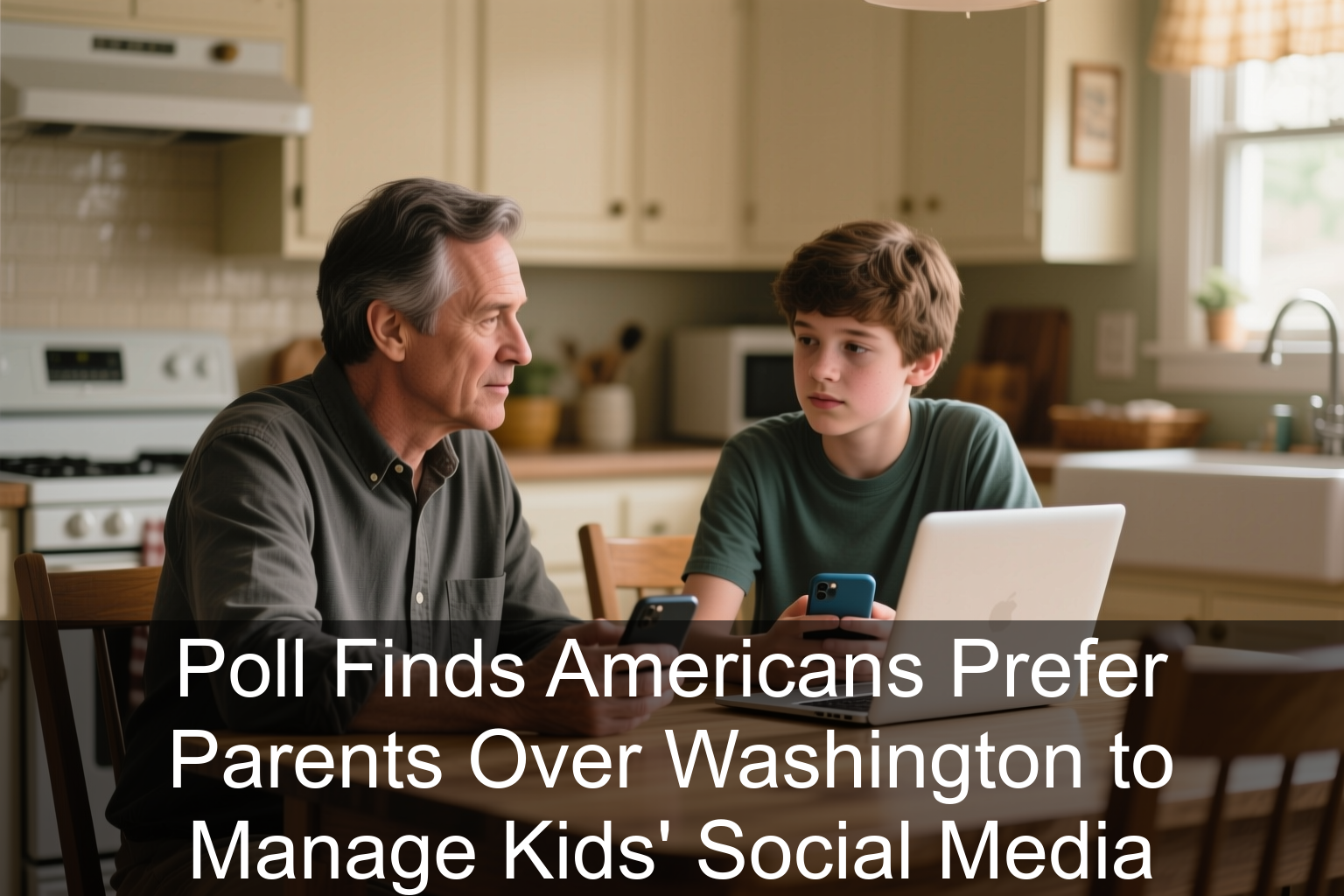
Instead, the strongest preference reflected in the results is for parents to be the main decision-makers. That aligns with a view that families are best positioned to weigh maturity levels, household values, and individual circumstances—choices that are difficult to translate into one-size-fits-all mandates from either corporate policy teams or federal agencies.
The findings land in the middle of a growing push for age checks, content restrictions, and other top-down approaches aimed at minors online. But the poll suggests many Americans would rather see solutions that keep authority closer to home than rules written by federal officials or enforced by tech giants.
Leave a Reply