
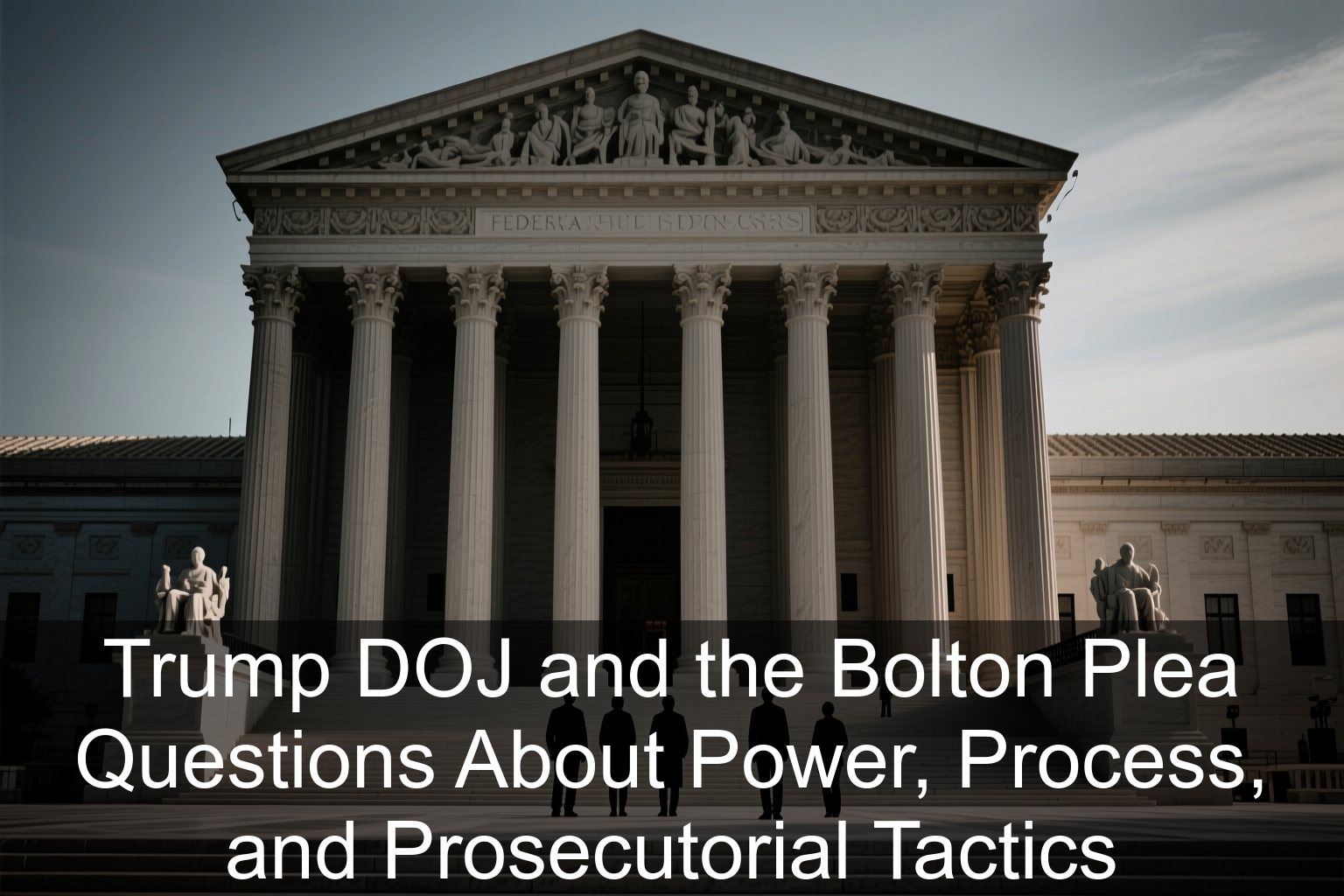

John Bolton’s guilty plea has become a flashpoint in a broader argument about how federal power is used when politics and prosecution collide. The case has drawn attention not only because of Bolton’s national profile, but because it raises competing concerns that conservatives and libertarians often weigh heavily: whether the justice system is being weaponized for political ends, and whether questionable conduct can occur even when officials claim they are fighting “lawfare.”
The National Review piece frames the dispute around a basic tension: the existence of political hardball does not automatically excuse improper behavior by government actors. In that telling, it is possible for prosecutors or political leadership to justify aggressive legal moves as a response to perceived partisan attacks while still engaging in actions that deserve scrutiny on their own merits. The article’s summary line captures that theme by arguing that “lawfare” and misconduct can both be present in the same episode.
At the center of the story is the claim that the Department of Justice under President Donald Trump used its leverage to secure Bolton’s plea. The article presents this as an extraction rather than a routine resolution, emphasizing the imbalance of power between an individual defendant and the federal government. From a limited-government perspective, that imbalance is always relevant, because the state’s ability to threaten charges, expand investigations, and impose crippling legal costs can push even well-resourced targets toward concessions.
The piece also treats the matter as a cautionary example of how “ends justify the means” thinking can seep into institutions that should be constrained by rules and norms. Even among readers sympathetic to tough responses against politicized prosecutions, the article argues that the proper remedy is not to adopt tactics that undermine due process or ethical boundaries. The concern is that once those boundaries are crossed, the precedent does not stay confined to one administration or one high-profile defendant.
By focusing on Bolton’s plea as the outcome, the article highlights the practical effect of prosecutorial decision-making: the government does not need to win a full public trial to achieve a decisive result. A plea can conclude a case quickly, but it can also leave lingering doubts about whether the process was primarily about justice or about leverage. For conservatives skeptical of expanding federal authority, that dynamic reinforces the argument for tighter limits on prosecutorial discretion and stronger protections for defendants.
In the end, the article uses the Bolton episode to press a broader point about institutional integrity. If the public comes to believe that prosecutions are driven by politics, confidence in the rule of law erodes—regardless of which party benefits in the short term. The National Review framing suggests that the right should be able to condemn politically motivated “lawfare” while still demanding that federal prosecutors and political appointees follow the law and avoid misconduct.
Leave a Reply