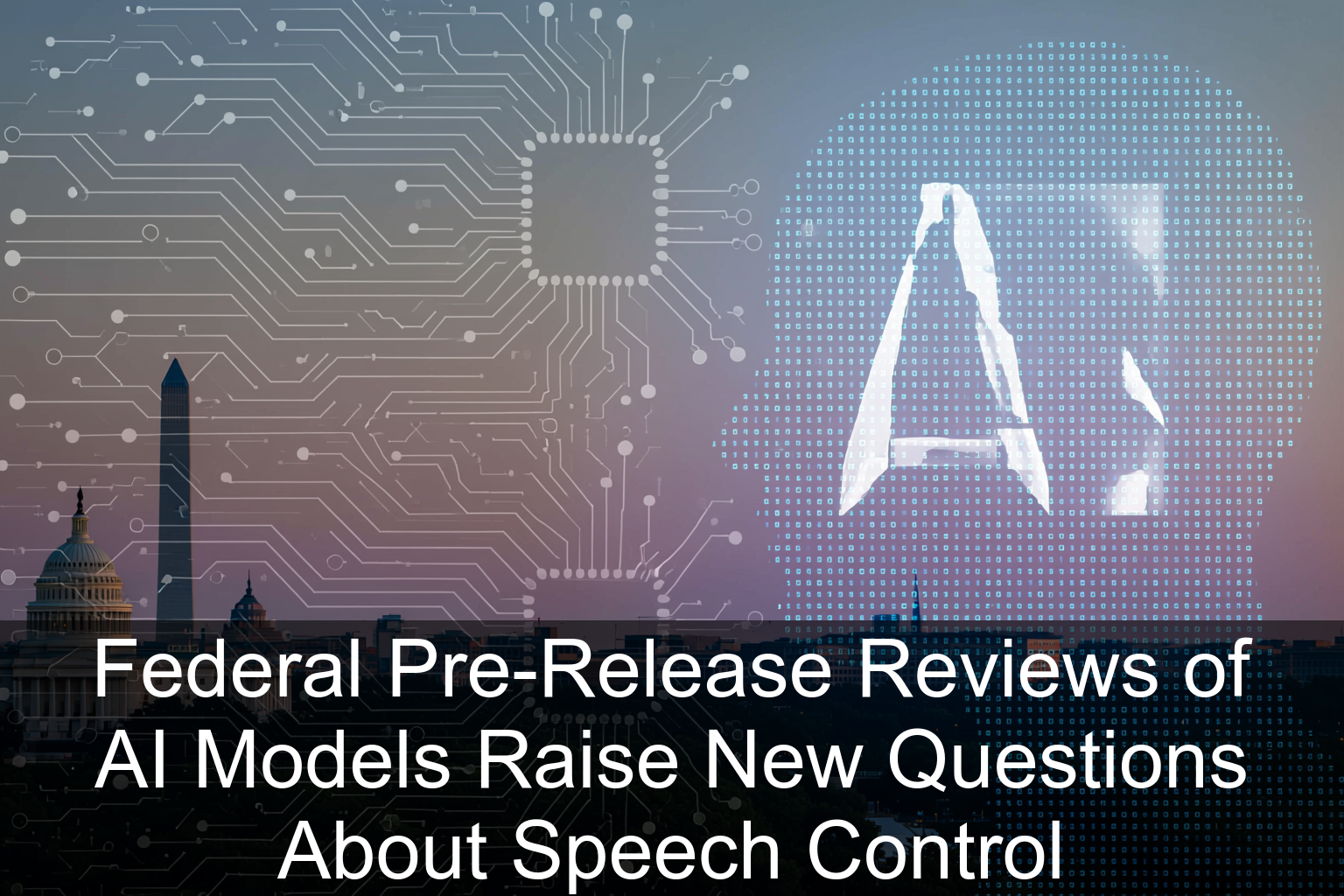
A new set of federal ideas aimed at artificial intelligence is drawing attention not because of flashy announcements, but because of how quietly it could expand government influence over what AI systems are allowed to say. At the center of the debate is the notion that certain AI models may need to be examined by regulators before they are released to the public.
Supporters frame these proposals as a safety measure: check powerful models in advance to reduce the risk of misuse and prevent harmful outcomes. But a pre-release review regime also changes the default posture of innovation in the United States. Instead of building and launching a product and then being held accountable for concrete wrongdoing, developers could face an approval-style process that effectively decides what may be deployed in the first place.
That distinction matters for speech. When the technology in question generates text, answers questions, or assists with writing, the line between “oversight” and viewpoint-based control can get thin fast. A system designed to keep AI “safe” can end up steering outputs away from controversial topics, disfavored opinions, or politically sensitive discussions, even when the user is seeking lawful information or legitimate debate.
From a civil-liberties and limited-government perspective, the risk is not only overreach but normalization. Once a federal mechanism exists to review models before release, it can become a standing gatekeeping structure—one that future administrations may use more aggressively, with standards that shift depending on political priorities. What begins as a narrowly described effort to prevent abuse can evolve into a broader tool that pressures developers to preemptively censor lawful speech to satisfy regulators.
These concerns are heightened by the practical reality that AI development moves quickly, while federal review processes tend to move slowly and become bureaucratic. If permission is required before launch, smaller firms and open-source projects could be hit hardest, because they typically lack the legal budgets and compliance departments needed to navigate a complex approval pipeline. The result could be fewer competitors, less experimentation, and a technology landscape shaped by the companies best equipped to negotiate with government agencies.
The push for advance review of AI models is therefore about more than technical risk management. It touches fundamental questions about whether speech-enabled tools should be treated like something the public can access by default, or something that must be filtered through federal scrutiny first. And as policymakers debate where guardrails belong, the country faces a choice between a tradition of open inquiry and a system that quietly conditions what AI is permitted to discuss.