Tag: FIRE

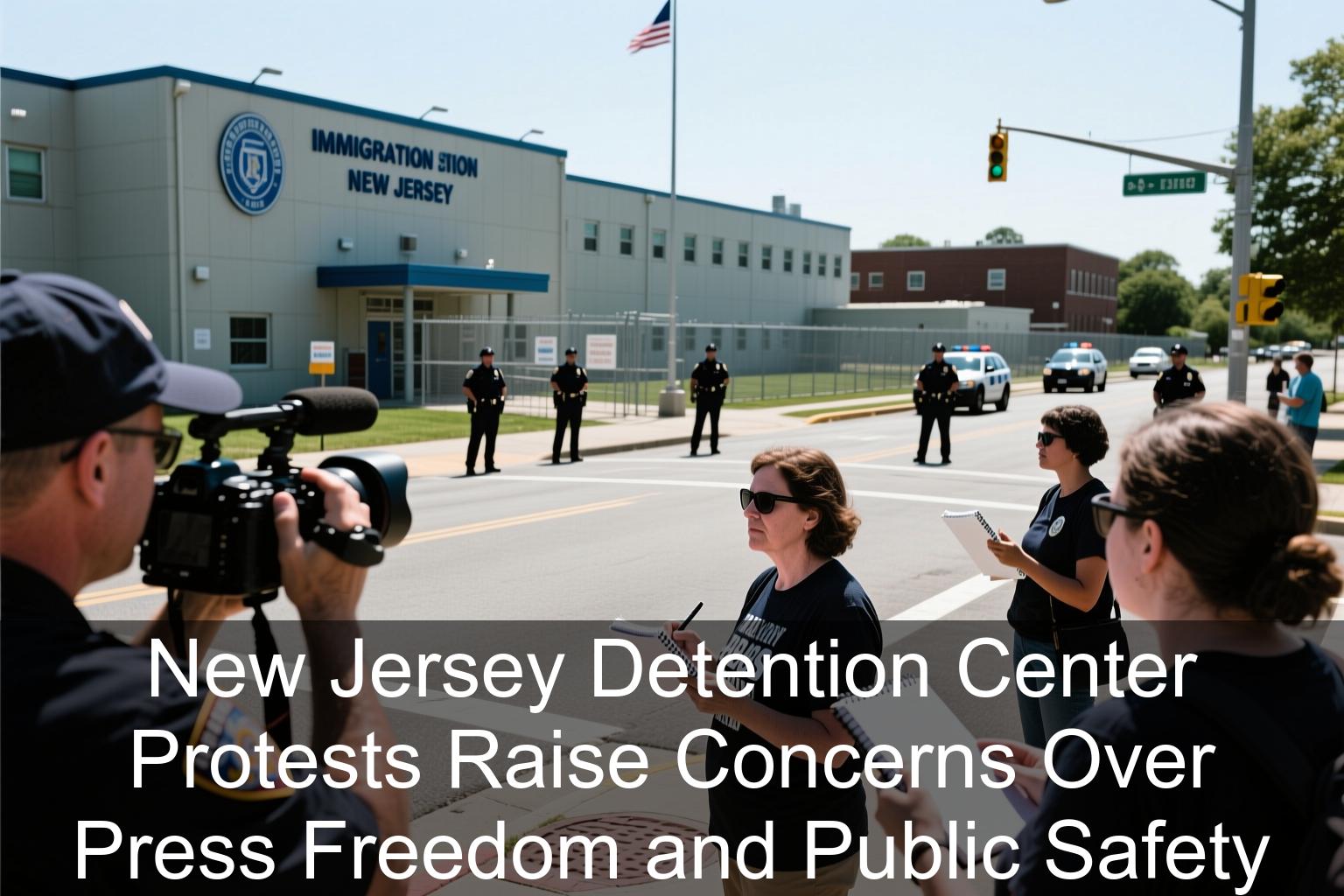
  • New Jersey Detention Center Protests Raise Concerns Over Press Freedom and Public Safety

    New Jersey Detention Center Protests Raise Concerns Over Press Freedom and Public Safety

    Reporting from the public streets outside an immigration detention facility in New Jersey has drawn renewed scrutiny after accounts surfaced suggesting that covering nearby demonstrations can carry real physical risk. The episode is being framed by civil-liberties advocates as more than a local dispute, pointing instead to broader questions about whether Americans can observe, record, and report on contentious public events without retaliation.

    The Foundation for Individual Rights and Expression (FIRE) says it is continuing to monitor and document incidents in which protesters and journalists may be penalized for engaging in activity protected by the First Amendment. In its public communications, the organization emphasizes that the same constitutional safeguards that cover political speech also protect newsgathering and the public’s ability to witness government-adjacent activity in open spaces.

    At the center of the concern is the prospect that simply doing the work of journalism at protests near the New Jersey detention center could result in severe harm serious enough to require hospitalization. Civil-liberties advocates argue that when the costs of reporting include potential injury, the public loses access to independent information and government power faces less oversight.

    From a libertarian-leaning civil-rights perspective, the chilling effect matters as much as the incident itself. If individuals believe they could be punished or physically endangered for documenting demonstrations, fewer people will record encounters, fewer journalists will show up, and officials will operate with less accountability—outcomes that run directly against the principles of open government and free expression.

    FIRE says its ongoing effort is aimed at ensuring that neither demonstrators nor members of the press are punished for exercising constitutionally protected rights. The organization’s stated focus is on tracking violations, publicizing them, and pushing back on conduct that undermines peaceful protest, lawful observation, and the ability of journalists to report from public places.
  • Illinois Push to Tax Social Media Runs Into First Amendment Roadblocks

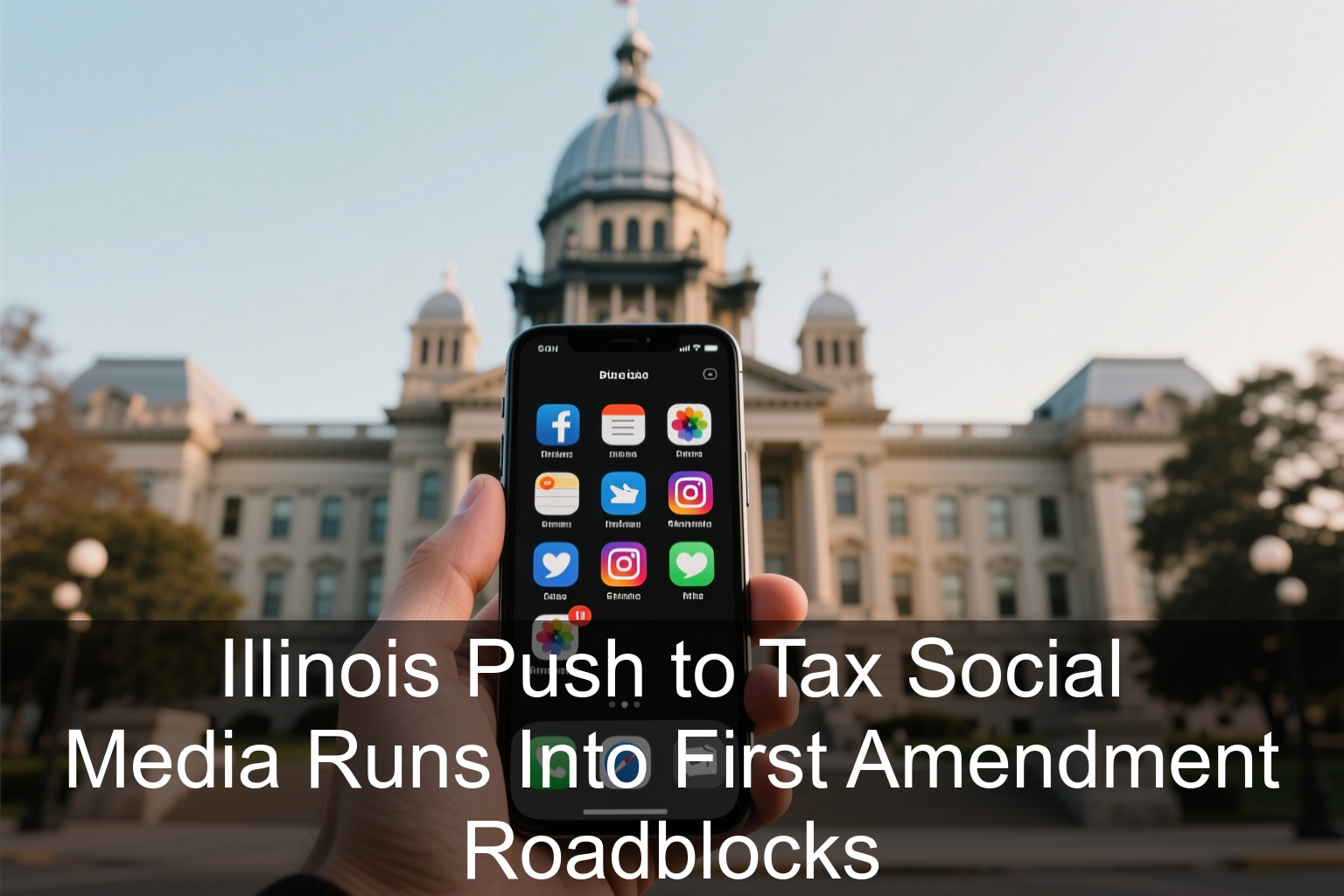
    Illinois Push to Tax Social Media Runs Into First Amendment Roadblocks

    Illinois lawmakers are floating a new way to raise revenue: impose a fee aimed specifically at social media companies. The idea sounds like a straightforward tax proposal on the surface, but it quickly becomes something else when you look at what triggers the charge.

    The central problem is that the proposed assessment is tied to the content users post and share on these platforms. Instead of focusing on ordinary measures of business activity, it effectively singles out services because they host and transmit other people’s expression. That distinction matters because, under the First Amendment, government has far less room to burden speech than it does to tax general income or routine commerce.

    From a libertarian and conservative perspective, this kind of targeted levy is an invitation for political abuse. Once the state normalizes special financial penalties aimed at a particular communications medium, officials gain a powerful tool to pressure companies that carry unpopular viewpoints or refuse to cooperate with preferred narratives. Even if today’s sponsors claim benign intentions, the structure creates a blueprint that can be repurposed by future administrations with different goals.

    The plan also sets the state up for a predictable constitutional collision. Taxes are generally permissible when they are neutral and broadly applied, but a charge that is triggered by the existence of user speech is likely to be challenged as a penalty on expression. By crafting a revenue scheme that is so closely connected to what people say online, Illinois risks transforming a budget measure into a lawsuit over basic free-speech protections.

    If Illinois wants more revenue, it has legitimate options that do not entangle the government in policing or monetizing expression. The safer route is to rely on general taxation that treats businesses evenly, rather than creating a special fee that targets platforms because they facilitate public discourse. A state can tax earnings; it cannot make speech itself the taxable event.

  • Why Woodrow Wilson Stands Out as a Low Point for American Free Speech

    Why Woodrow Wilson Stands Out as a Low Point for American Free Speech

    Long before modern debates over censorship and dissent, the United States experienced one of its most sweeping federal crackdowns on speech during Woodrow Wilson’s presidency. In the view advanced by the Foundation for Individual Rights and Expression, Wilson’s administration represents an especially damaging chapter for civil liberties because federal power was used aggressively to punish political criticism and suppress antiwar expression.

    Wilson entered office at a moment when the country was moving toward deeper involvement in World War I, and the federal government’s approach to domestic opposition hardened as wartime pressure increased. Instead of treating harsh criticism as part of democratic self-government, the administration helped build a legal and political environment in which dissent was treated as disloyalty, and dissenters were targeted through prosecutions and other forms of government pressure.

    Central to that effort were federal laws and enforcement campaigns aimed at speech. The Espionage Act and the later Sedition Act became tools for pursuing people whose words challenged the war effort or the government itself. Rather than focusing narrowly on genuine espionage, enforcement reached into ordinary political advocacy and criticism, allowing federal authorities to bring criminal cases over statements, pamphlets, and organizing that would normally fall within the bounds of protected political debate.

    The administration’s posture was reinforced by a broader campaign that blended official prosecution with social and institutional coercion. Public dissenters, labor activists, and antiwar voices faced investigations, intimidation, and punishment, creating a climate in which citizens could reasonably fear that speaking openly might bring legal trouble or other serious consequences. In practice, the government’s message was clear: opposition to federal policy, especially in wartime, could be treated as a punishable offense.

    This period is often remembered as a stress test for the First Amendment, and the Wilson years are frequently cited as an example of how quickly basic freedoms can be narrowed when leaders claim extraordinary circumstances. From a libertarian and conservative civil-liberties perspective, the lesson is not limited to history: the same arguments used then to justify suppression—public safety, national unity, emergency—can be repurposed in new forms unless free speech principles are defended consistently, especially when they protect unpopular views.

  • ADA Removes Researchers From Diabetes Conference After They Distributed Its Own Journal Editorial

    ADA Removes Researchers From Diabetes Conference After They Distributed Its Own Journal Editorial

    The American Diabetes Association (ADA) removed researchers from one of its conferences after they shared a printed editorial that had appeared in an ADA-published journal. The incident has drawn attention because the material in question was not an outside pamphlet or unrelated advocacy flyer, but content originating from the organization’s own publication.

    According to an account from the Foundation for Individual Rights and Expression (FIRE), the researchers were ejected for handing out the editorial to other attendees. FIRE characterized the episode as raising concerns about whether the ADA is living up to principles of open scientific discussion, particularly in a professional setting built around research and clinical exchange.

    The dispute centers on how a major medical association manages disagreement and debate within its own ecosystem of conferences and journals. If distributing an internal editorial is treated as grounds for removal, critics argue that researchers may reasonably question what kinds of viewpoints are permitted on site and whether conference policies are being used to narrow discussion rather than facilitate it.

    From a free-speech and limited-institutional-power perspective, the situation also highlights a broader pattern in which professional gatekeepers can restrict the circulation of ideas even when those ideas are published through approved channels. Conferences often function as critical venues for challenging assumptions, testing arguments, and comparing evidence; restricting the sharing of a journal editorial can be seen as undermining that role.

    FIRE says it has questions for the ADA about what happened and what it suggests about the organization’s commitment to open debate in science. The episode is likely to keep drawing interest as observers look for clarity on what rules were applied, how they were enforced, and what protections exist for researchers who circulate legally published material at professional meetings.

  • Ohio Blogger Jailed After Sending Crude Shrek Meme to State Senator, Raising First Amendment Questions

    Ohio Blogger Jailed After Sending Crude Shrek Meme to State Senator, Raising First Amendment Questions

    An unusual political speech dispute in Ohio has drawn national attention after a blogger was arrested and briefly jailed over a text message sent to a state senator. The message included a vulgar meme involving the character Shrek, and the incident has sparked debate about when, if ever, offensive political mockery can be treated as a crime.

    According to the account, the blogger texted the senator a crude Shrek image that depicted explicit male anatomy. The episode quickly moved beyond embarrassment and into the criminal justice system, with the sender taken into custody and held for nearly a full day.

    In total, the Ohio man spent about 23 hours in jail stemming from the single text. The case has become a test of how far government officials can go when they attempt to punish citizens for coarse or insulting commentary directed at elected representatives.

    The central issue raised by the incident is whether political ridicule—especially when it is immature, graphic, or offensive—can be prosecuted without violating constitutional protections. The First Amendment generally protects speech, including sharp criticism of public officials, and controversies like this tend to turn on whether the message is treated as protected expression or as something outside the bounds of constitutional coverage.

    Beyond the specifics of one meme, the situation highlights a broader concern for civil liberties advocates: allowing the state to use criminal penalties against people for crude political messages can create a chilling effect, discouraging citizens from speaking freely when the target is a powerful government figure. Even when the expression is in poor taste, the line between punishing a perceived insult and suppressing political dissent is one many argue the government should not be allowed to blur.

  • Harvard Alumni Stay and Fight for Free Speech Through HAFFS

    Harvard Alumni Stay and Fight for Free Speech Through HAFFS

    Some graduates respond to a university’s decline by cutting ties, withholding donations, and distancing themselves from campus life. In recent years, a number of Harvard alumni have taken that route, saying they no longer recognize the institution they once supported. But one group of graduates has chosen an approach rooted in persistence rather than retreat: remaining involved and pressing for institutional change from within the alumni community.

    That effort is being carried out by HAFFS, a Harvard alumni organization focused on reviving free speech and academic freedom at the university. Instead of walking away “in disgust,” the group’s members argue that abandoning the school guarantees that the trends they oppose will continue unchecked. Their aim is to stay engaged and use alumni networks and influence to push Harvard back toward open inquiry and viewpoint diversity.

    The group’s mission is framed around a belief that universities function best when students and faculty can speak freely, debate controversial issues, and pursue scholarship without ideological pressure. From a libertarian and conservative perspective, HAFFS positions itself as a counterweight to campus climates where dissent can be punished informally, where accepted opinion narrows, and where institutional incentives reward conformity over candid discussion.

    HAFFS’ strategy, as described, is not about severing relationships with Harvard but about leveraging the unique role alumni can play in a university’s public reputation and long-term trajectory. The organization’s approach treats alumni involvement as an accountability mechanism: graduates can keep attention on policies and cultural norms that affect expression, and they can encourage reforms aimed at restoring academic standards tied to free exchange of ideas.

    The broader story is a contrast between two impulses among disillusioned alumni. One is to disengage entirely, signaling disapproval through absence. The other, embodied by HAFFS, is to remain present and organized, betting that sustained pressure and consistent advocacy can help redirect the institution toward stronger protections for speech and academic freedom.

  • Anthony Comstock and the Rise of Federal Censorship in America

    Anthony Comstock and the Rise of Federal Censorship in America

    Anthony Comstock’s name is inseparable from a moment in American history when fear about changing culture hardened into national policy. In an era shaped by Victorian-era moral anxieties, he emerged as a determined crusader who insisted that certain ideas and materials were not merely distasteful, but dangerous enough to warrant federal intervention.

    What made Comstock unusually influential was not only his intensity, but his success in converting private moral alarm into government power. He helped push the idea that “obscene” expression should be treated as a crime, expanding the reach of public authority into what Americans could read, share, and discuss. That shift gave censorship a legal framework, rather than leaving it to social pressure or voluntary restraint.

    The result was a system aimed at enforcing a particular vision of public virtue. Comstock became a central figure in efforts to monitor and restrict speech and materials labeled “obscene,” using law as a tool to police morality. His approach treated personal conduct and expression as legitimate targets for federal control, reflecting a belief that national institutions should actively shape the moral character of society.

    From a libertarian-leaning perspective, Comstock’s story illustrates how quickly government can be empowered when public panic is channeled into legislation. Once the state is authorized to punish “obscene” speech, the key question becomes who gets to define the boundary—and how broadly that definition can be applied. Comstock’s rise shows how censorship can be normalized when it is framed as protection rather than suppression.

    His legacy is therefore more than a biographical curiosity. It is an example of how a single, motivated actor can harness cultural fears to build durable enforcement mechanisms, with long-term consequences for free expression. Comstock turned a moral campaign into federal censorship, helping criminalize targeted forms of speech and creating a model for using state power to regulate what people are allowed to say, publish, and circulate.

  • Privacy Protection Act Under Pressure as Government Leak Hunts Target Journalists

    Privacy Protection Act Under Pressure as Government Leak Hunts Target Journalists

    The Privacy Protection Act was created to stop government agencies from treating journalists and other investigators like criminals simply for doing their jobs. It sets limits on when officials can seize or search work materials connected to reporting, aiming to prevent raids that chill scrutiny of people in power. But those protections only matter when they are respected in practice, especially during politically charged “leak” investigations.

    The central concern is what happens when the government treats the hunt for a source as a justification to go after the messenger. When officials act as if “find the leaker” automatically means “search the reporter,” the law designed to defend watchdog work can be reduced to a procedural obstacle rather than a real barrier. That shift matters because aggressive investigative tactics can intimidate reporters, deter sources, and shrink the flow of information the public needs.

    Supporters of strong press protections argue that the point of the Act is not to create special privileges for media organizations, but to safeguard the public’s ability to learn what government is doing. When agencies can raid reporting operations or seize newsgathering materials, the pressure does not land only on a newsroom. It also lands on ordinary citizens who might otherwise speak up about wrongdoing, mismanagement, or abuses of authority.

    From a conservative and libertarian perspective, the stakes are straightforward: government power expands most easily when it can operate with minimal accountability. Leak hunts can be legitimate, but they are also an easy pretext for overreach, particularly if investigators start treating journalistic work product as a convenient shortcut. A system that allows raids on reporters risks turning transparency into a liability and official secrecy into the safer default.

    The Act’s value, then, is measured by whether it functions as a firm limit on state power instead of a mere technicality to work around. If officials can sidestep the spirit of the law whenever an investigation becomes inconvenient, the practical result is fewer watchdog stories, fewer whistleblowers willing to talk, and less oversight of government decision-making. The bigger question is whether public institutions will honor the guardrails that already exist—or continue to test how far they can push without real consequences.

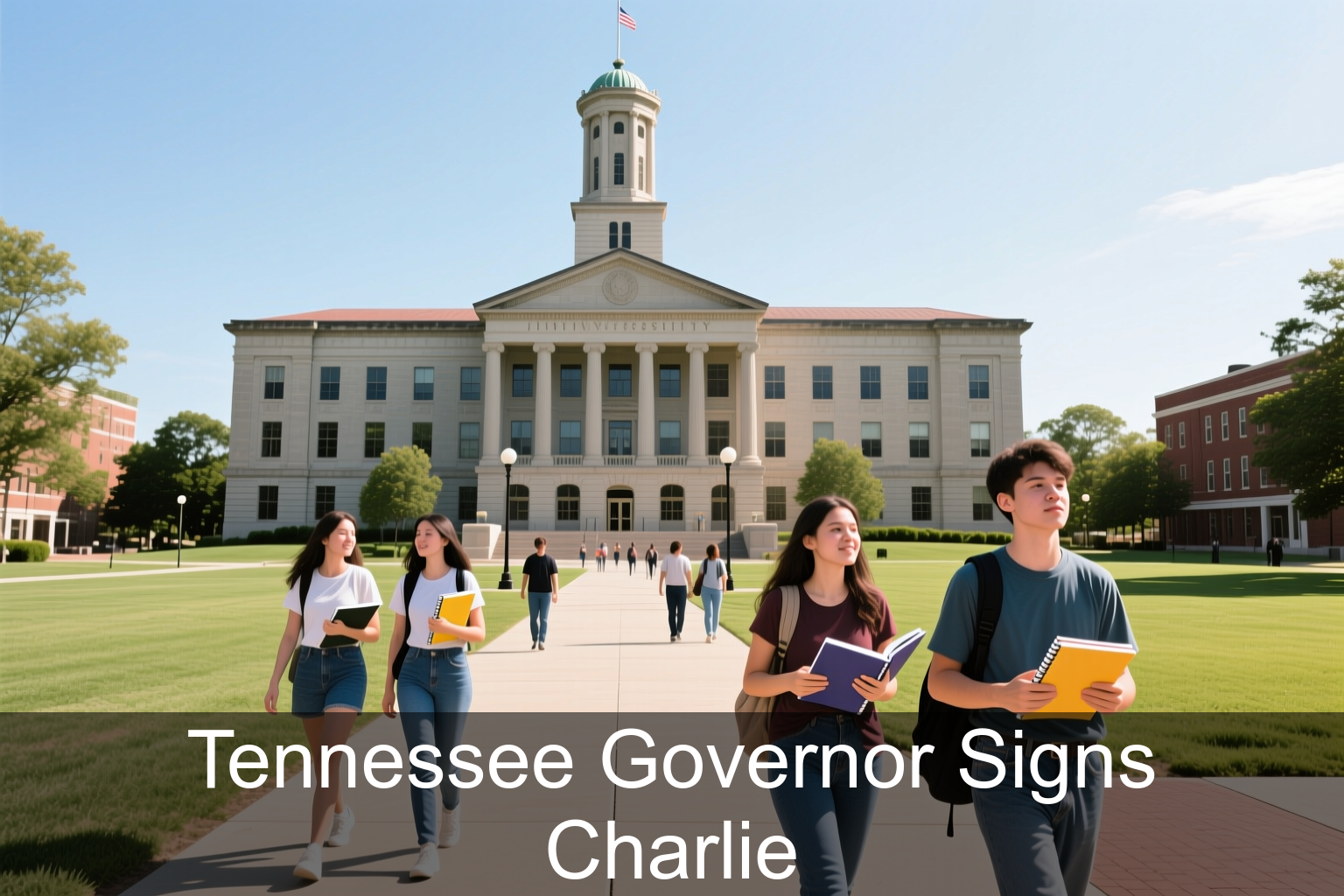
  • Tennessee Governor Signs “Charlie Kirk Act,” Expanding Campus Free Speech Protections

    Tennessee Governor Signs “Charlie Kirk Act,” Expanding Campus Free Speech Protections

    Tennessee has enacted a new law aimed at bolstering free expression on public college and university campuses. Gov. Bill Lee has signed the measure, which is known as the “Charlie Kirk Act,” adding another layer of state-level protection for students and faculty.

    The legislation is described as strengthening safeguards for speech and expressive activity in higher education settings. Supporters argue that campus policies and administrative enforcement can sometimes chill lawful viewpoints, and they contend that clearer protections help ensure students and professors can speak openly without undue institutional pressure.

    The Foundation for Individual Rights and Expression (FIRE) backed the bill and highlighted its passage as a significant win for campus speech rights. From a limited-government perspective, the law is framed as a check on bureaucratic overreach and an affirmation that public institutions should not act as arbiters of permissible viewpoints.

    With the governor’s signature, Tennessee joins a growing number of states that have moved to address disputes over speech, protest rules, and acceptable expression on campus. The new statute is presented as part of a broader effort to set firm standards that apply across public higher education rather than leaving the boundaries of speech to shifting campus codes.

    Advocates say the law’s practical impact will depend on how institutions implement it and how consistently they respect protected expression in day-to-day campus life. Even so, the signing marks a clear policy choice by state leaders: public colleges and universities in Tennessee are expected to provide stronger protections for the speech rights of students and faculty.