
Tag: conservative analysis

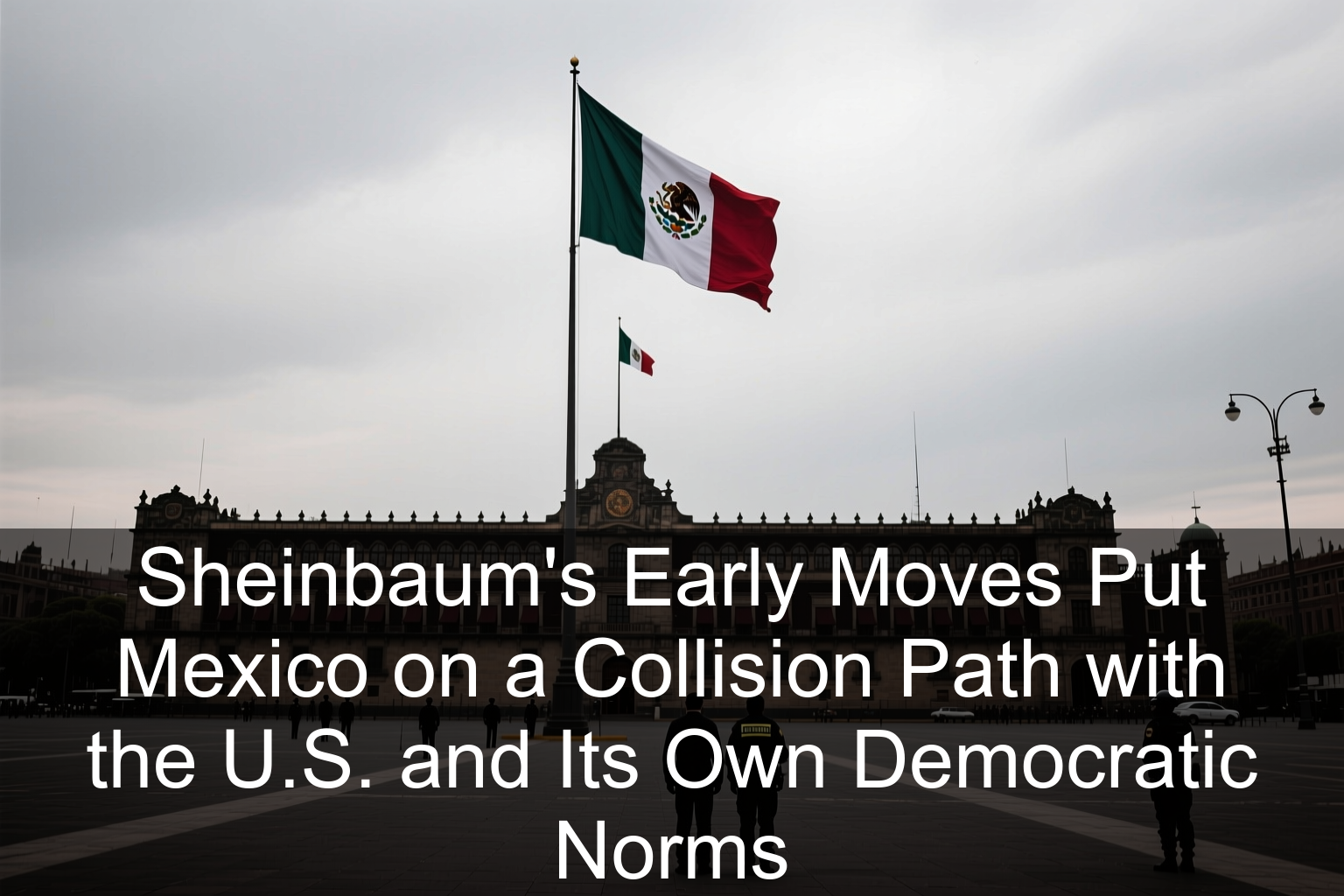
  • Sheinbaum’s Early Moves Put Mexico on a Collision Path with the U.S. and Its Own Democratic Norms

    Sheinbaum’s Early Moves Put Mexico on a Collision Path with the U.S. and Its Own Democratic Norms

    Mexico’s new president, Claudia Sheinbaum, is steering her administration into a confrontational posture that is reverberating beyond the country’s borders. The direction of travel, as her government takes shape, suggests a growing willingness to test limits both in Mexico’s democratic framework and in its relationship with the United States.

    In Washington, the immediate concern is not only policy disagreement but the broader trajectory of Mexico’s governance. When a neighboring country with deep economic ties to the U.S. signals a readiness to challenge established rules and institutions, the fallout rarely stays contained. The friction is emerging early, before the normal rhythms of bilateral problem-solving can settle in.

    At home, the more serious issue is institutional. The Sheinbaum government is being described as moving away from basic civic expectations in a democratic system—standards that rely on restraints, predictable rules, and respect for the structures that keep political power from becoming arbitrary. From a limited-government perspective, those guardrails are not abstract ideals; they are the practical protections that allow civil society, markets, and individual rights to function without constant political interference.

    Taken together, these developments point to a governing approach that invites confrontation rather than compromise. A strategy that elevates conflict with external partners while straining domestic democratic norms risks narrowing Mexico’s room to maneuver. It can also make ordinary cooperation—on trade, security, and cross-border challenges—harder to sustain, because the underlying trust in stable governance starts to erode.

    For Mexico and the United States alike, the stakes are structural, not merely partisan. If the new administration continues down a path that collides with U.S. interests while also weakening the civic foundations of Mexican democracy, the result could be a longer period of tension with consequences that reach into economic confidence, institutional legitimacy, and the day-to-day predictability that citizens and businesses depend on.

  • King’s Speech Ceremony Unfolds as Britain Faces a Political Crisis

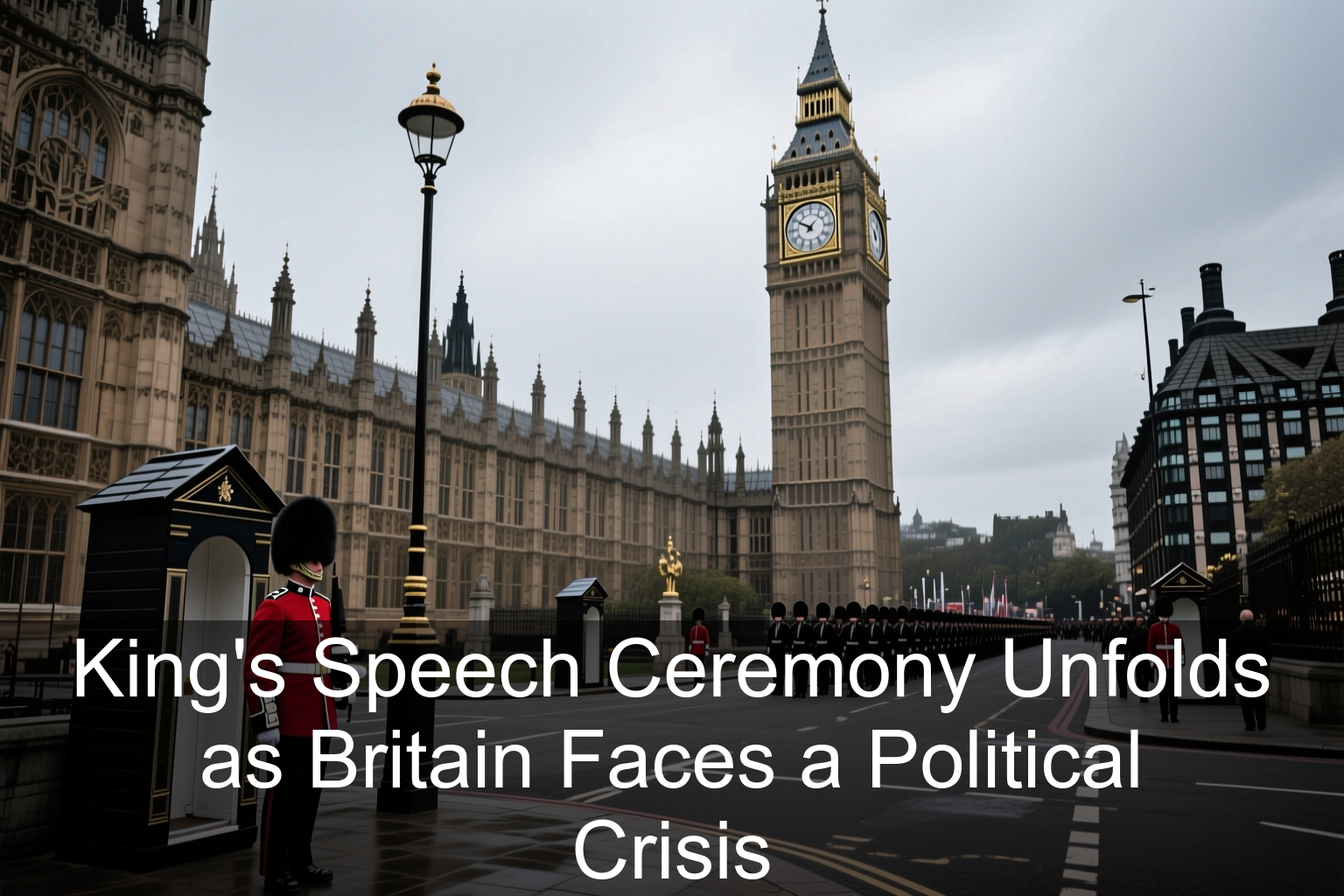
    King’s Speech Ceremony Unfolds as Britain Faces a Political Crisis

    Britain’s annual King’s Speech arrived wrapped in the familiar ritual: formal dress, a carefully staged procession, and the kind of pageantry designed to project continuity and stability. Yet behind the ceremonial polish, the country was confronting a serious political breakdown that the spectacle could not conceal.

    The address, delivered in the traditional setting and style expected of a constitutional monarchy, served its usual function: presenting the government’s legislative agenda. The public-facing message was orderly and scripted, but the broader context was anything but calm. The ceremony’s grandeur stood in sharp contrast to the intensity of the turmoil playing out in British politics.

    From a limited-government perspective, the juxtaposition matters. When governing coalitions or party leaderships falter, the pressure often shifts toward expanding state action, relying on administrative workarounds, or using procedural muscle to force outcomes. The pomp of the event can lend an impression of institutional normalcy, even as the political system struggles to resolve disputes through transparent, accountable decision-making.

    The crisis atmosphere also underscores a recurring tension in modern governance: leaders can be tempted to treat public institutions as instruments for managing headlines rather than as frameworks for protecting liberty, restraining power, and ensuring that major decisions reflect genuine consent. In that environment, citizens may see more emphasis on choreography and less on the hard work of restoring trust, fiscal discipline, and constitutional limits.

    In the end, the King’s Speech provided a striking visual of Britain’s traditions at full display, even as the nation’s elected politics entered a period of acute strain. The ceremony reinforced how effectively pageantry can frame a moment—while also highlighting that stability ultimately depends not on spectacle, but on responsible leadership and a government that remains answerable to the people.

  • The Vietnam Lesson: Willpower, Attrition, and America’s Limits

    The Vietnam Lesson: Willpower, Attrition, and America’s Limits

    American debates about war often assume that superior equipment, money, and training will decide the outcome. Vietnam remains the stubborn counterexample. The conflict demonstrated that victory is not simply a matter of battlefield capability, because a determined opponent can keep fighting long after a stronger power expects the contest to end.

    The central difficulty in Vietnam was not a shortage of American firepower. It was the mismatch between what the United States considered an acceptable cost in time, casualties, and domestic political strain and what the enemy was prepared to endure. When one side treats the war as limited and the other treats it as existential, the side with fewer limits can drag the struggle on until the stronger party’s public support and patience collapse.

    That reality creates a strategic trap for a free society. In an open political system, leaders must justify sacrifices to voters, respond to scrutiny, and maintain consent for long campaigns. Authoritarian or revolutionary movements, by contrast, can more easily absorb losses and press forward, especially when driven by ideological intensity. The lesson is not that America lacks courage, but that self-government imposes constraints that fanatical adversaries exploit through endurance rather than direct confrontation.

    For conservatives and libertarians, Vietnam underscores the importance of matching means to achievable ends and defining those ends honestly before committing blood and treasure. If a war’s objectives require an indefinite commitment to outlast an enemy with near-unlimited willingness to suffer, then policymakers should say so upfront—or reconsider the mission. Military power is a tool, not a magic wand, and it cannot compensate for unclear goals or a strategy that assumes the other side will quit on schedule.

    Vietnam also shows why prudence is not isolationism. It is the discipline to recognize that not every conflict can be solved by escalation, and not every opponent can be coerced into surrender by superior force. The United States should reserve large, open-ended interventions for threats that truly justify them, and it should avoid wars where the likely path to “success” depends on a level of national stamina that elected governments, accountable to citizens, are unlikely to sustain.