
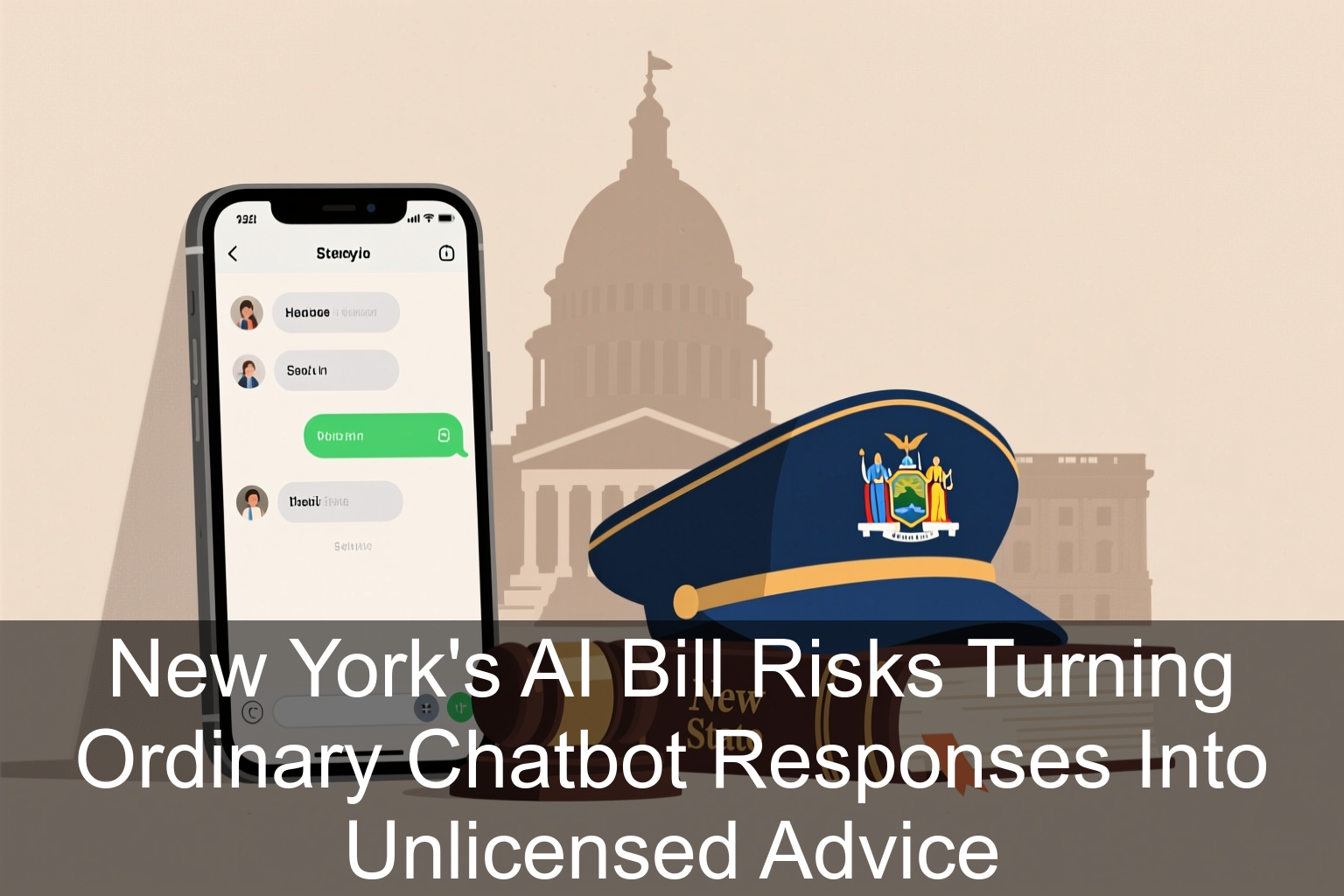

New York lawmakers are considering an artificial intelligence proposal that, as written, could sweep far beyond high-stakes professional services and into the everyday exchange of information. The concern is that the bill’s framework may effectively treat routine chatbot outputs as regulated “advice,” setting the stage for restrictions that resemble licensing requirements for speech.
At the center of the debate is the bill’s tendency to blur the line between speech and conduct. In many contexts, a chatbot is doing what search engines, libraries, and reference materials have always done: presenting information in response to a question. If the state starts treating those informational responses as the equivalent of practicing a licensed profession, then the act of communicating ideas and general guidance risks being reclassified as something that requires government permission.
That approach could chill access to information for ordinary New Yorkers. People regularly use AI tools to ask simple, non-specialized questions, compare options, and understand unfamiliar topics before deciding whether to consult a credentialed professional. If providers fear liability or enforcement for letting a chatbot answer questions that might be interpreted as “advice,” the predictable response will be to restrict what these tools can say, who can access them, or what topics they can address.
From a libertarian and conservative perspective, the broader problem is the precedent: treating a conversational tool as a regulated service simply because it can speak in complete sentences. When the state expands regulatory logic into general-purpose communication, it empowers bureaucratic gatekeeping over what individuals can hear, read, and discuss—especially in emerging technologies where definitions are easy to stretch and hard to contain.
New York’s AI bill, as critics argue, risks creating a regime where everyday Q&A becomes suspect, and compliance pressure drives platforms toward over-censorship and cautious silence. If the goal is to protect consumers, lawmakers can target demonstrably fraudulent claims and clearly defined high-risk conduct without converting commonplace information sharing into “unlicensed” activity that restricts speech and limits public access to knowledge.
Leave a Reply