
Tag: US foreign policy

  • Obama, Iran, and a Possible Return to a JCPOA-Style Deal

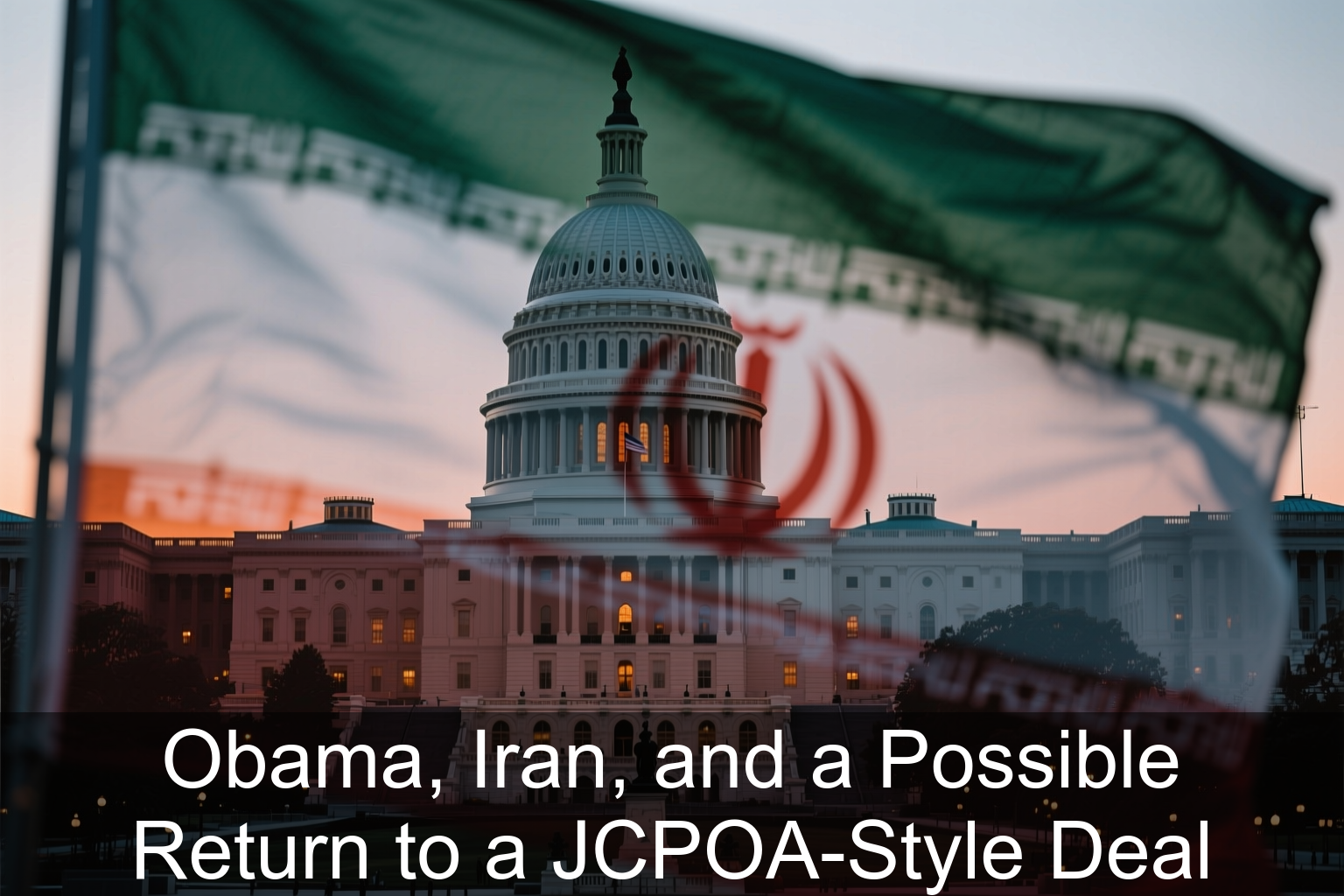
    Obama, Iran, and a Possible Return to a JCPOA-Style Deal

    Questions are resurfacing in Washington about whether U.S. policy toward Iran is drifting back toward the kind of arrangement associated with the Obama administration. While the specifics remain uncertain, early signals have led some analysts to argue that the outlines of a new understanding resemble elements of the Joint Comprehensive Plan of Action (JCPOA).

    The available information is incomplete, and key components of any potential agreement have not been publicly nailed down. Even so, observers who have tracked prior negotiations say the emerging shape of discussions is familiar: a diplomatic framework that may trade certain constraints or assurances for sanctions-related relief or other concessions.

    That perceived similarity is fueling debate over the broader meaning of any new deal. For critics of the earlier approach, the concern is that returning to a JCPOA-like model would repeat what they view as flawed assumptions about Tehran’s incentives and long-term intentions. From a conservative and libertarian standpoint, skepticism is heightened by the risks of empowering an adversarial regime while relying on complex compliance mechanisms that can be difficult to verify and enforce.

    Supporters of diplomacy, by contrast, tend to emphasize the utility of negotiated limits as preferable to open-ended escalation. Yet even in that framing, the lack of clear details leaves the public and Congress largely in the dark about what is being offered, what is being demanded, and what enforcement tools would exist if Iran violates commitments.

    For now, the most concrete takeaway is the uncertainty itself: the contours of a possible deal are being discussed, but the public record does not clearly define them. Still, the fact that some informed watchers see “shades of the JCPOA” is enough to reignite the political argument over whether the Obama-era strategy is making a return—and whether, in the end, it will be judged as vindicated or misguided.


  • Why Buying the Chagos Islands Sounds Smart but Won’t Work in Practice

    Why Buying the Chagos Islands Sounds Smart but Won’t Work in Practice

    Reports of a White House idea involving the Chagos Islands have revived an old strategic question: what is the most durable way to secure long-term access to a remote but important island chain in the Indian Ocean. The suggestion circulating publicly is that Washington might try to purchase the islands, a concept that can sound straightforward in theory but runs into serious practical barriers once the real-world constraints are considered.

    From a conservative and libertarian standpoint, the attraction of a purchase is easy to understand. A clean, negotiated transfer of ownership would typically be clearer than open-ended arrangements that invite political pressure, legal fights, or shifting obligations. If a stable deal could be struck, it could reduce uncertainty and help protect U.S. interests without relying on perpetual diplomatic improvisation.

    The problem is that the specific proposal attributed to the White House is not a realistic path, even if the underlying instinct—seeking a more permanent solution—points in a sensible direction. Turning a complicated sovereignty dispute into a simple commercial transaction is not something governments can reliably do, especially when the territory in question carries heavy geopolitical and historical baggage.

    That mismatch between the appeal of “just buy it” and the difficulty of executing such a plan is the central issue. In practice, a purchase would require conditions and agreements that go well beyond writing a check, and those demands make the reported approach unworkable as described. The gap between what sounds tidy on paper and what is achievable diplomatically is precisely why the notion is being criticized as impractical.

    A better approach starts by acknowledging that strategic goals must be pursued with methods that can actually be implemented and sustained. Rather than betting on a headline-grabbing but infeasible transaction, policymakers should focus on workable, lawful, and durable arrangements that protect U.S. interests while avoiding new commitments that cannot be maintained. The right answer is not to chase an elegant-sounding shortcut, but to choose a solution that can survive political change and international scrutiny.

  • Saudi Arabia and the UAE: Washington’s Key Gulf Partners Drift Toward Rivalry

    For years, American strategy in the Middle East has leaned heavily on two pillars in the Gulf: Saudi Arabia and the United Arab Emirates. Both governments are central to U.S. security cooperation, energy interests, and regional diplomacy. Yet their relationship is increasingly defined not only by coordination, but by competition that could complicate Washington’s approach to the region.

    The shifting dynamic matters because Riyadh and Abu Dhabi are not peripheral players. They have the resources, influence, and ambition to steer outcomes far beyond their borders. When their interests align, they can amplify stability and deter common threats. When they diverge, their rivalry can reshape alliances, policy choices, and the balance of power across the Middle East.

    At the heart of the issue is a growing Saudi–UAE rivalry that is poised to influence the region’s next chapter. These two partners have demonstrated they can work together, but they are also pursuing distinct national priorities and competing visions for leadership in the Gulf. That tension, rather than any single dispute, is what raises the question of whether they are moving toward a more direct strategic collision.

    From a conservative and libertarian vantage point, the trend is a reminder of the limits of outsourcing U.S. regional goals to even the closest partners. The United States benefits when allies share burdens, but it also pays a price when allied competition pulls Washington into arbitrating disputes or choosing sides. A sounder approach emphasizes clear, narrowly defined U.S. interests, disciplined commitments, and a refusal to treat any partnership as a blank check.

    How this rivalry evolves will help determine the future Middle East. If Saudi Arabia and the UAE manage their competition responsibly, the region could see more predictable cooperation among key states. If the contest intensifies, it may generate new friction points that test U.S. diplomacy and expose the risks of assuming that shared partnerships automatically translate into shared priorities.