
Tag: Trump

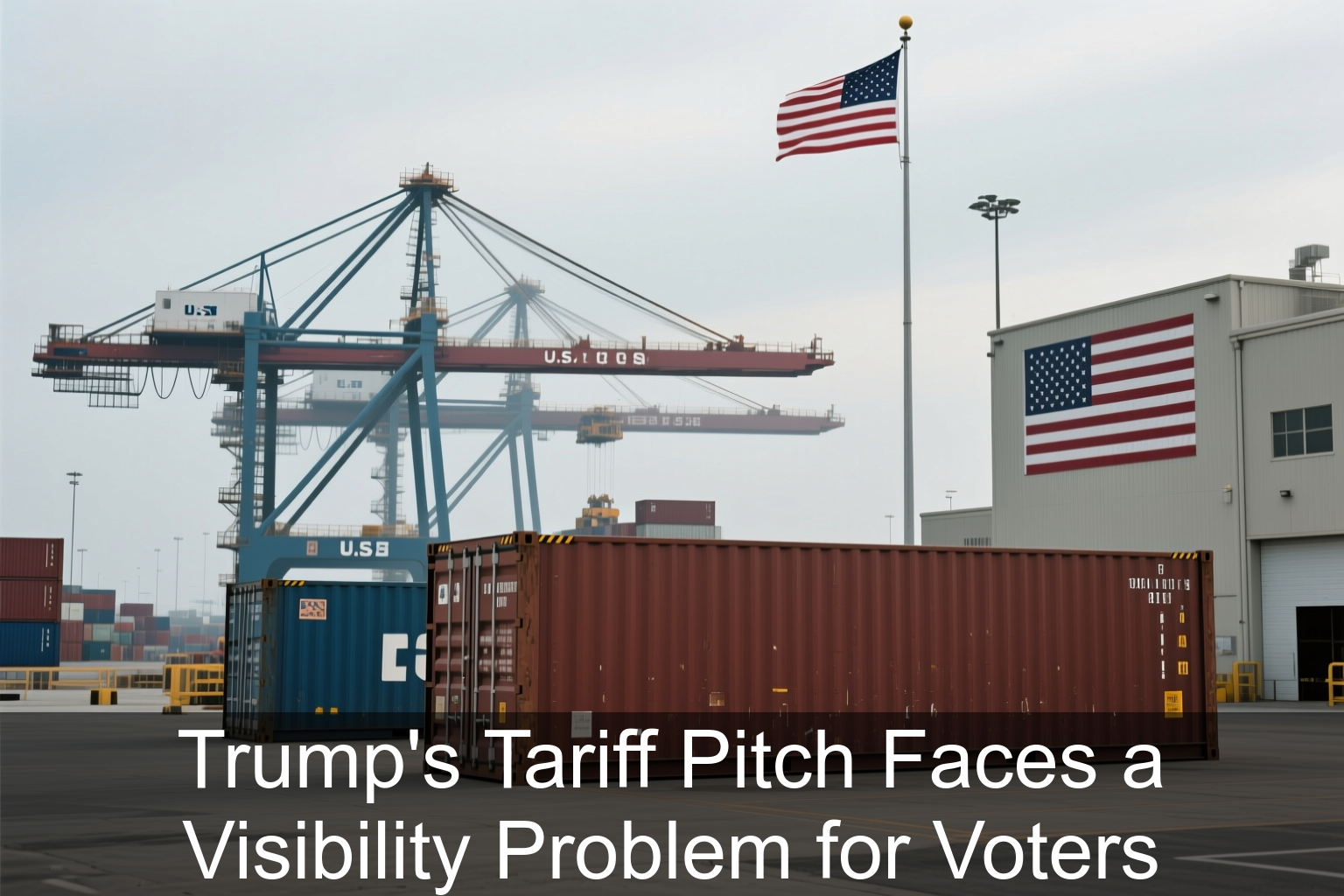
  • Trump’s Tariff Pitch Faces a Visibility Problem for Voters

    Trump’s Tariff Pitch Faces a Visibility Problem for Voters

    Tariffs can be sold as a way to protect domestic industry and pressure trading partners, but the political challenge is that the promised upside tends to arrive slowly and indirectly. In practice, the case for higher import duties often rests on outcomes that are hard for ordinary voters to see or to connect to a specific policy choice. That makes tariffs a difficult tool to market as an immediate improvement in people’s lives.

    By contrast, tax cuts are typically easier to communicate because the benefit can be felt quickly and personally. When taxes are reduced, many households notice the change in their paychecks or their annual tax bill without needing an explanation of supply chains, manufacturing capacity, or long-term industrial adjustments. Politically, that difference in visibility matters: a voter who can immediately point to more take-home pay is more likely to credit the policy than one who is asked to wait for broad economic shifts.

    This creates a “trickle-down” problem for tariff advocates, including President Trump, because the argument depends on distant, second-order effects. Supporters may claim that tariffs will eventually encourage investment, shift production back to the United States, or strengthen bargaining leverage. Even if those outcomes materialize, they can be dispersed across time and sectors, making them less obvious to the public than a straightforward change in tax policy.

    The timing and clarity gap can also affect how voters interpret trade policy while decisions are being debated. Costs associated with trade barriers can be easier to identify in the short run than the intended gains, because they can show up as price changes or disruptions in established purchasing patterns. Meanwhile, any broader reconfiguration of production networks or industrial planning is usually gradual, technical, and not easily captured in a simple campaign message.

    From a conservative and libertarian viewpoint, this imbalance reinforces a basic caution about relying on tariffs as a go-to economic strategy. If the strongest political selling point of a policy is an abstract promise that may pay off later, the policy is more likely to be driven by messaging needs than by sound economics. The more direct and transparent approach is to focus on policies that reduce burdens immediately, protect consumer choice, and avoid substituting government-directed trade barriers for competitive markets.

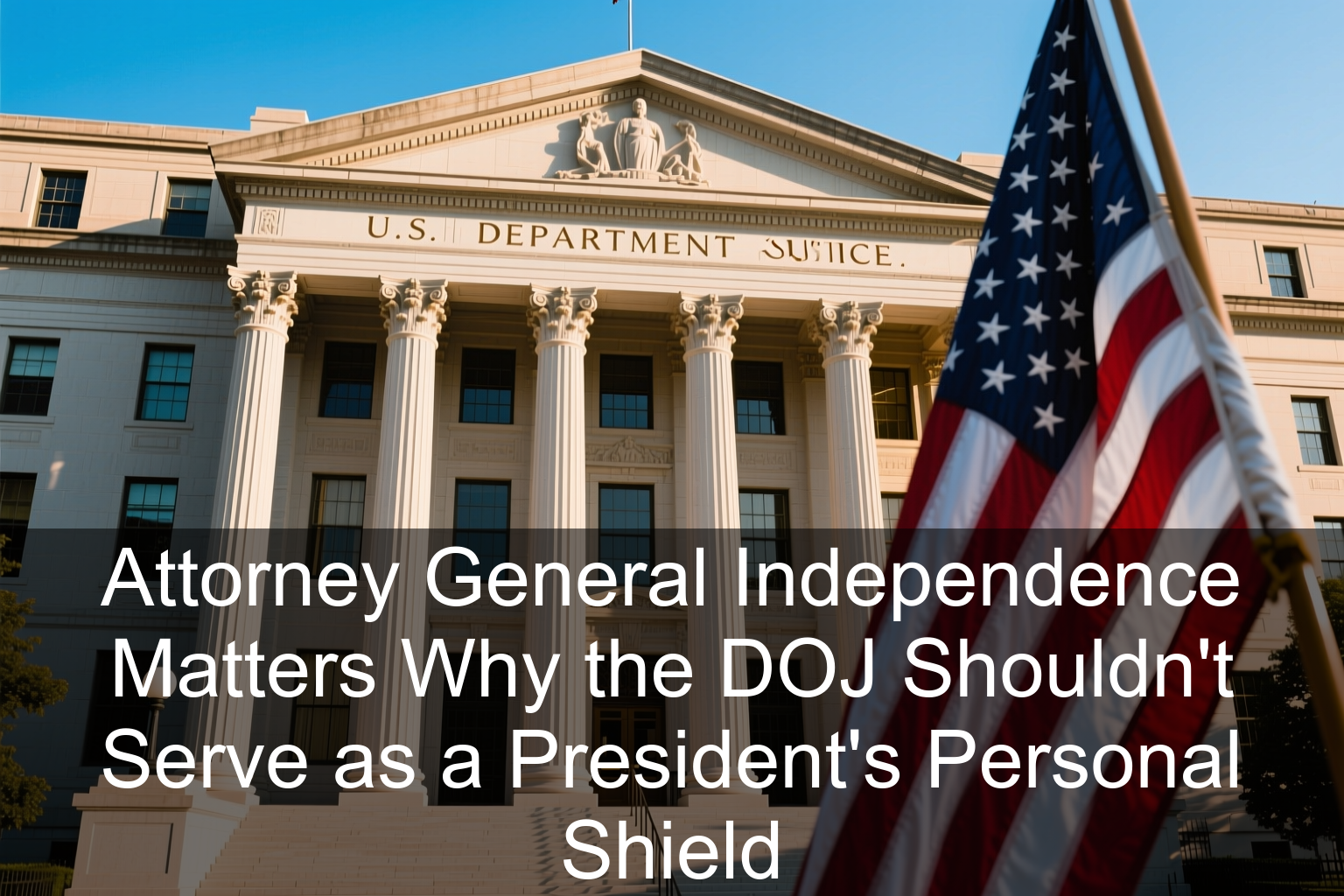
  • Attorney General Independence Matters: Why the DOJ Shouldn’t Serve as a President’s Personal Shield

    Attorney General Independence Matters: Why the DOJ Shouldn’t Serve as a President’s Personal Shield

    The Justice Department’s legitimacy depends on a simple premise: federal law enforcement is supposed to pursue cases based on evidence and the rule of law, not on who holds power. When Americans come to believe that prosecutions are driven by political advantage, the damage goes far beyond any single case or administration. Restoring trust requires rejecting the idea that the attorney general exists to protect a president’s personal interests.

    That point is especially relevant as President Trump faces renewed debate over how his administration should approach the Department of Justice. The argument is not that the president lacks authority over executive-branch officials, but that turning the DOJ into an instrument of political payback or personal defense undermines equal justice. A functioning constitutional system depends on a clear separation between political leadership and prosecutorial decision-making.

    Calls for an attorney general to operate as the president’s “fixer” often arise in reaction to perceived abuses by prior administrations. But answering one round of politicization with another does not correct the problem; it entrenches it. If each side treats the DOJ as a tool to punish opponents and protect allies, the country ends up with a permanent cycle of retaliation that weakens civil liberties and makes ordinary citizens less confident that the law applies evenly.

    A more durable approach is for President Trump to insist that the department be run with professional distance from White House political goals. That means emphasizing standard investigative procedures, resisting pressure to open or close cases for partisan reasons, and making it clear that prosecution decisions are not campaign tactics. The attorney general’s duty is to the Constitution and the public interest, not to the personal legal needs of the president.

    Breaking the pattern of “weaponization” requires restraint, transparency within lawful limits, and a commitment to consistent standards. In practice, that means refusing to treat political opponents as automatic targets and refusing to treat political allies as untouchable. If the administration wants to strengthen public confidence and protect limited-government principles, it should prioritize impartial justice over short-term political satisfaction.