
Tag: taxes

  • Vince Fong Targets California’s Spending Surge and Business Burdens

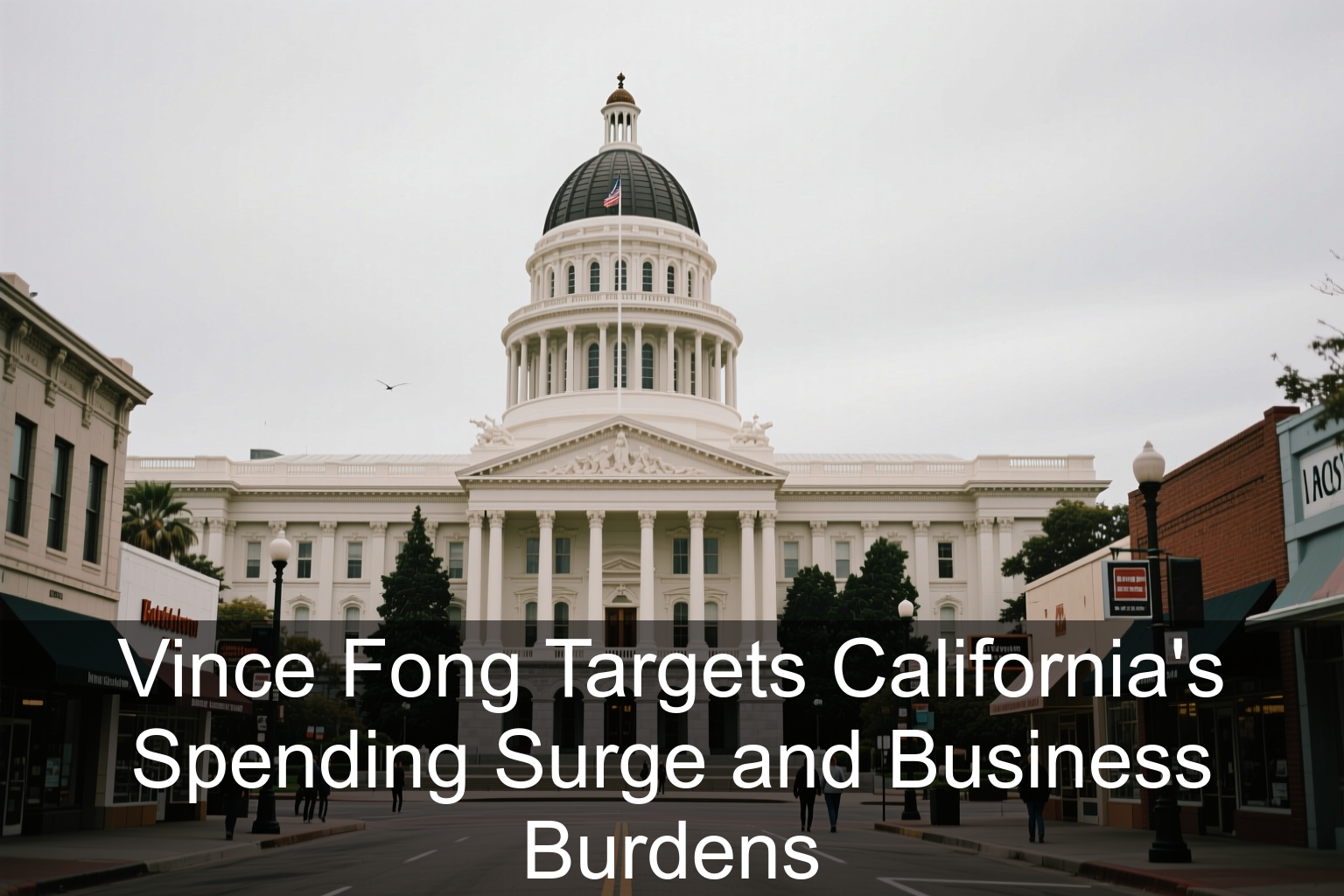
    Vince Fong Targets California’s Spending Surge and Business Burdens

    Washington lawmakers are again colliding with Sacramento over money, taxes, and the cost of running a business in California. The latest flashpoint centers on how the state’s budget choices affect employers, investors, and workers—especially when government spending expands while the private sector absorbs higher costs.

    At the center of the new push is Representative Vince Fong, who is advancing an effort aimed at curbing what he views as California’s habit of overspending. His approach is framed as both a fiscal reset and a practical step to ease pressure on business owners who have had to navigate rising expenses and an increasingly complex policy environment.

    The dispute is also being cast as a response to Governor Gavin Newsom’s fiscal record. Critics argue that Sacramento’s spending trajectory has encouraged waste and reduced accountability, leaving taxpayers exposed when revenues cool or priorities shift. From a conservative and libertarian perspective, the concern is straightforward: when the state grows faster than the economy that funds it, the result is instability, heavier tax burdens, and fewer resources left for families and entrepreneurs to make their own choices.

    Fong’s effort is presented as a way to impose tighter limits and clearer discipline on California’s public finances, while also delivering relief to the people who create jobs and take risks in the marketplace. Supporters say that reducing government profligacy is not just a bookkeeping matter; it can translate into a healthier climate for investment and hiring, particularly for smaller firms that feel regulatory and tax increases most sharply.

    The broader argument behind the initiative is that California’s long-term competitiveness depends on restraining government’s appetite and returning more control to the private sector. Advocates for the plan contend that stable budgets and a lighter burden on employers offer a more reliable path to prosperity than large-scale spending commitments that depend on optimistic projections and ever-expanding revenue demands.

  • Trump’s Tariff Pitch Faces a Visibility Problem for Voters

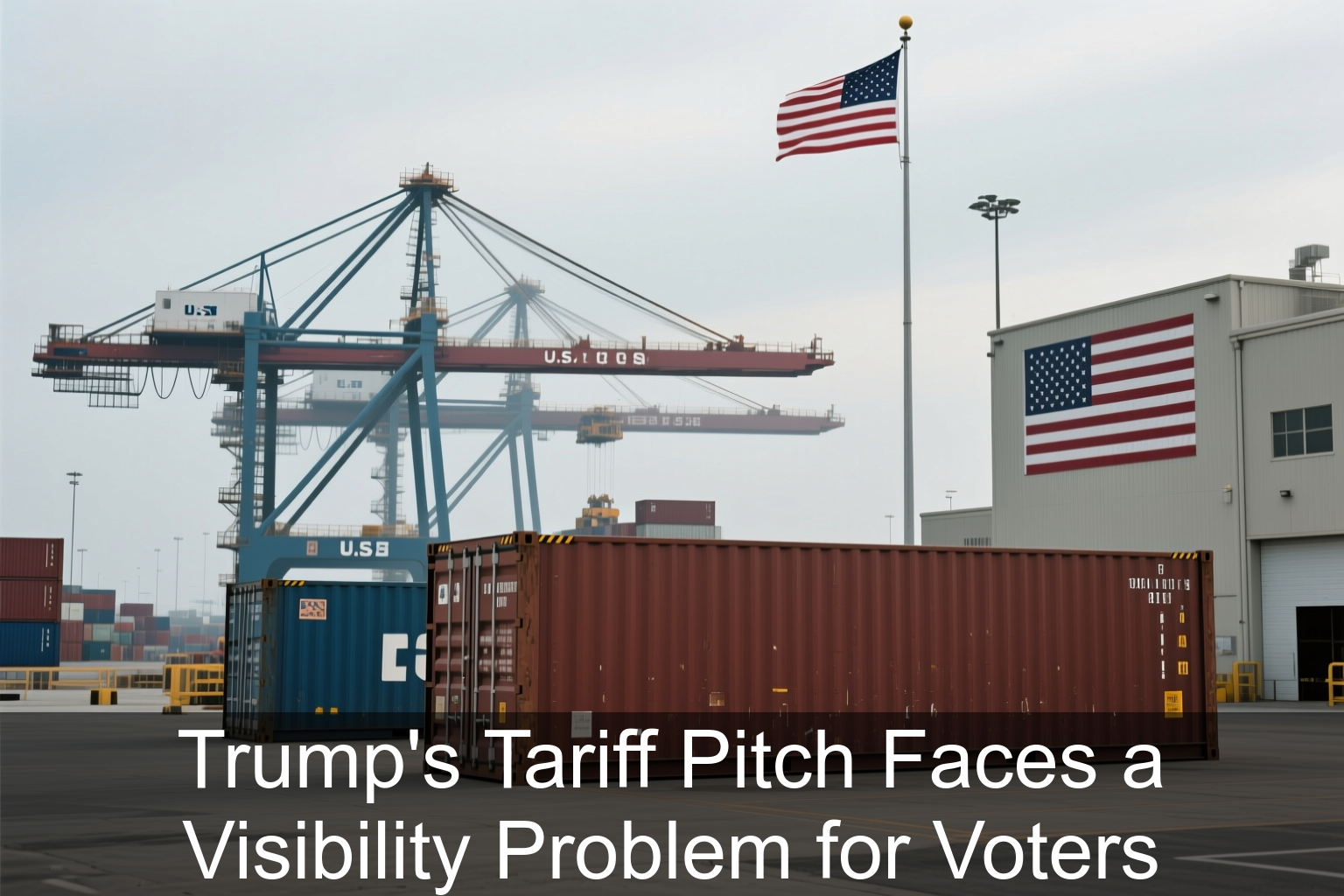
    Trump’s Tariff Pitch Faces a Visibility Problem for Voters

    Tariffs can be sold as a way to protect domestic industry and pressure trading partners, but the political challenge is that the promised upside tends to arrive slowly and indirectly. In practice, the case for higher import duties often rests on outcomes that are hard for ordinary voters to see or to connect to a specific policy choice. That makes tariffs a difficult tool to market as an immediate improvement in people’s lives.

    By contrast, tax cuts are typically easier to communicate because the benefit can be felt quickly and personally. When taxes are reduced, many households notice the change in their paychecks or their annual tax bill without needing an explanation of supply chains, manufacturing capacity, or long-term industrial adjustments. Politically, that difference in visibility matters: a voter who can immediately point to more take-home pay is more likely to credit the policy than one who is asked to wait for broad economic shifts.

    This creates a “trickle-down” problem for tariff advocates, including President Trump, because the argument depends on distant, second-order effects. Supporters may claim that tariffs will eventually encourage investment, shift production back to the United States, or strengthen bargaining leverage. Even if those outcomes materialize, they can be dispersed across time and sectors, making them less obvious to the public than a straightforward change in tax policy.

    The timing and clarity gap can also affect how voters interpret trade policy while decisions are being debated. Costs associated with trade barriers can be easier to identify in the short run than the intended gains, because they can show up as price changes or disruptions in established purchasing patterns. Meanwhile, any broader reconfiguration of production networks or industrial planning is usually gradual, technical, and not easily captured in a simple campaign message.

    From a conservative and libertarian viewpoint, this imbalance reinforces a basic caution about relying on tariffs as a go-to economic strategy. If the strongest political selling point of a policy is an abstract promise that may pay off later, the policy is more likely to be driven by messaging needs than by sound economics. The more direct and transparent approach is to focus on policies that reduce burdens immediately, protect consumer choice, and avoid substituting government-directed trade barriers for competitive markets.