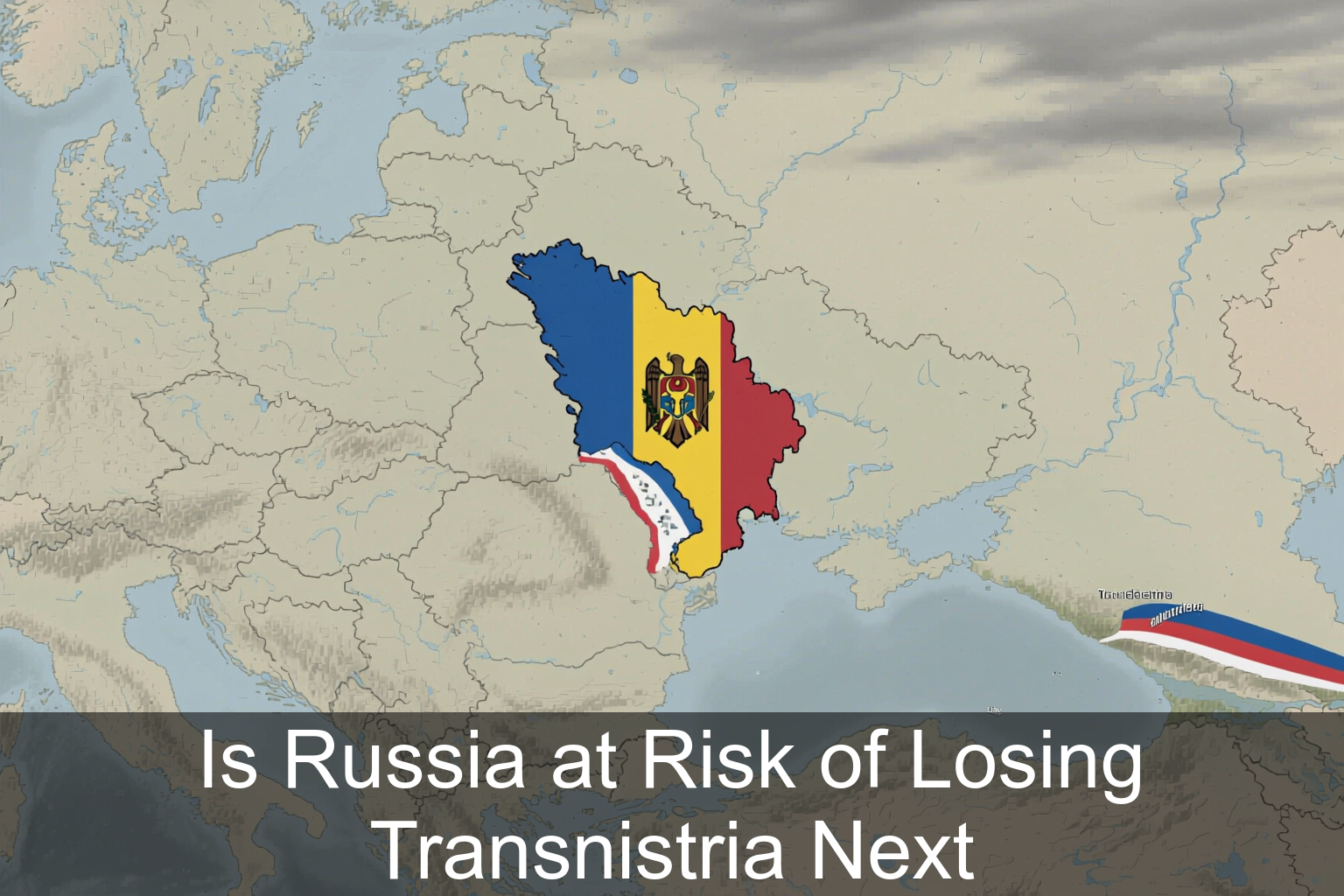
Russia’s geopolitical position has been eroding in multiple places, and the small breakaway region of Transnistria is increasingly part of that conversation. The question is not only about Moscow’s influence in Eastern Europe, but also about whether a long-frozen dispute on Moldova’s eastern edge could shift in ways the Kremlin cannot easily control.
Transnistria is a narrow strip of territory along the Dniester River that has operated outside the Moldovan government’s authority since the early 1990s. It functions with its own de facto institutions and has long relied on Moscow’s political backing. For years, Russia’s role there has been a symbol of its ability to project power and keep leverage over neighboring states without direct annexation.
That leverage depends on practical realities as much as rhetoric. With Russia’s resources and attention pulled toward other priorities, maintaining influence over a distant enclave becomes harder, especially when geography and regional politics limit Moscow’s options. Transnistria sits between Moldova and Ukraine, and any disruption to Russia’s access, logistics, or political channels can quickly reduce the credibility of its security guarantees and its ability to shape outcomes on the ground.
For Moldova, the existence of a separatist enclave has been a persistent constraint on sovereignty and national decision-making. A weakening Russian position would matter not because it automatically resolves the dispute, but because it could change what is negotiable and what is enforceable. In practical terms, if Moscow’s capacity to sustain its position declines, Moldovan authorities and their partners may see more room to press for a settlement that strengthens Moldova’s territorial integrity.
From a conservative and libertarian perspective, these developments underscore a broader pattern: centralized authoritarian regimes often overextend, and the costs eventually show up in places that once looked permanently locked into their orbit. Countries on Russia’s periphery have their own interests, and they tend to move toward arrangements that promise more security, self-determination, and economic opportunity when Moscow’s coercive reach weakens. Whether Transnistria follows that trajectory will depend on regional coordination, local dynamics, and the hard constraints of power—rather than on slogans from any capital.