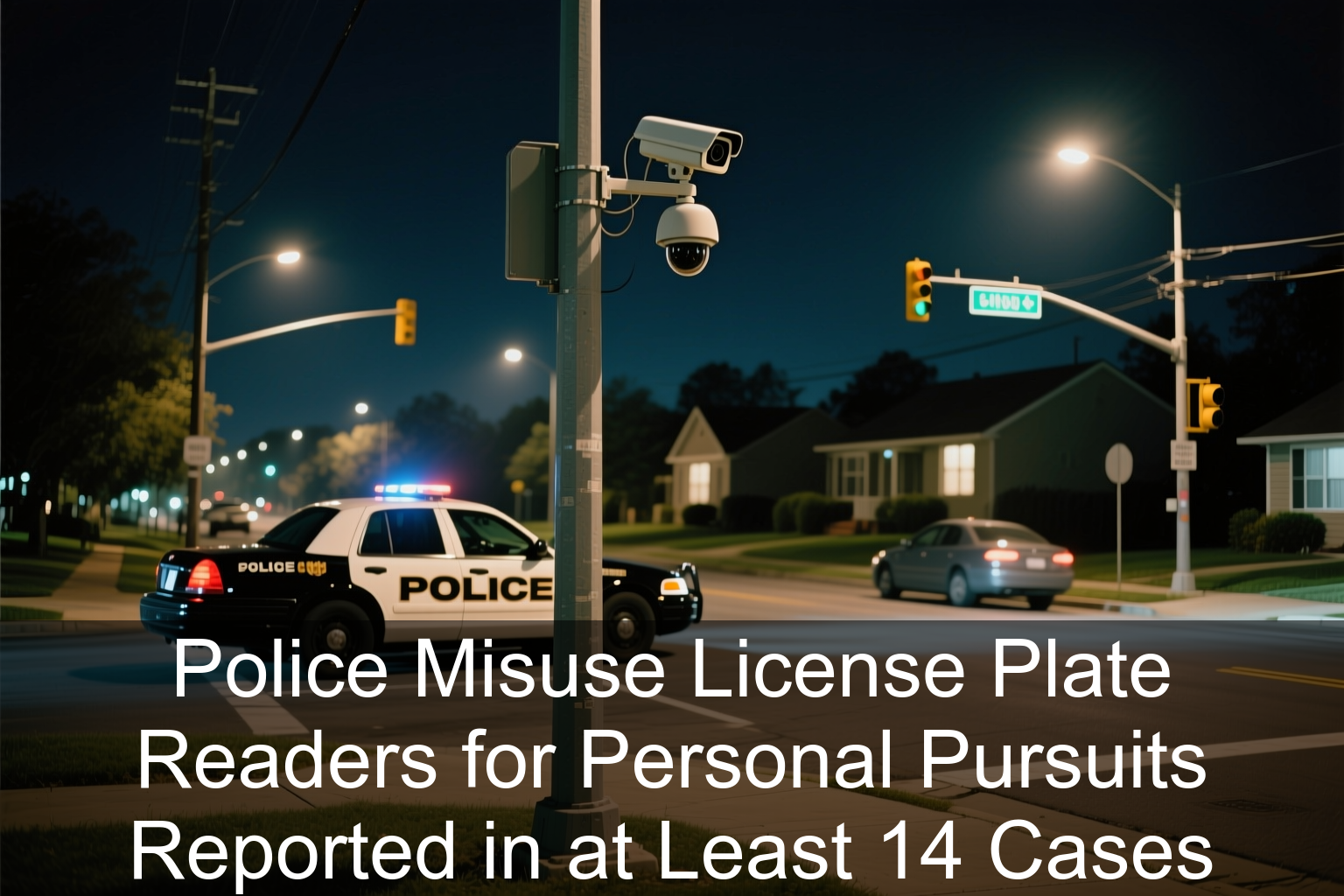
License plate reader systems are often sold to the public as tools for finding stolen cars or helping investigators locate suspects. Yet recent reporting has raised a different concern: officers have reportedly tapped into these databases for private reasons, including tracking people they were romantically interested in.
Across recent years, at least 14 incidents have been reported in which police allegedly used automated license plate reader data to monitor or locate a romantic interest. In these cases, the technology that logs where a vehicle has been seen was not being used to solve a crime, but to follow someone’s movements for personal advantage.
That pattern highlights a core civil-liberties problem with large-scale surveillance tools: once a system exists and collects location information routinely, access becomes the key vulnerability. Even if a department’s stated mission is legitimate, broad access and weak oversight can turn a public-safety database into a convenient mechanism for stalking.
From a conservative and libertarian perspective, this is the predictable result of building expansive tracking infrastructure first and asking hard governance questions later. Systems that make it easy for government employees to query people’s movements create incentives for misuse, and internal rules are often a thin substitute for structural limits, meaningful auditing, and real consequences.
The reported cases also underscore why “trust us” is not a privacy policy. When location data is collected at scale, the harm is not limited to the immediate target; it also erodes confidence that law enforcement will use powerful tools narrowly and constitutionally. Limiting collection, narrowing access, and strengthening accountability are not anti-police measures—they are pro-rule-of-law safeguards meant to keep public power from being turned into personal leverage.