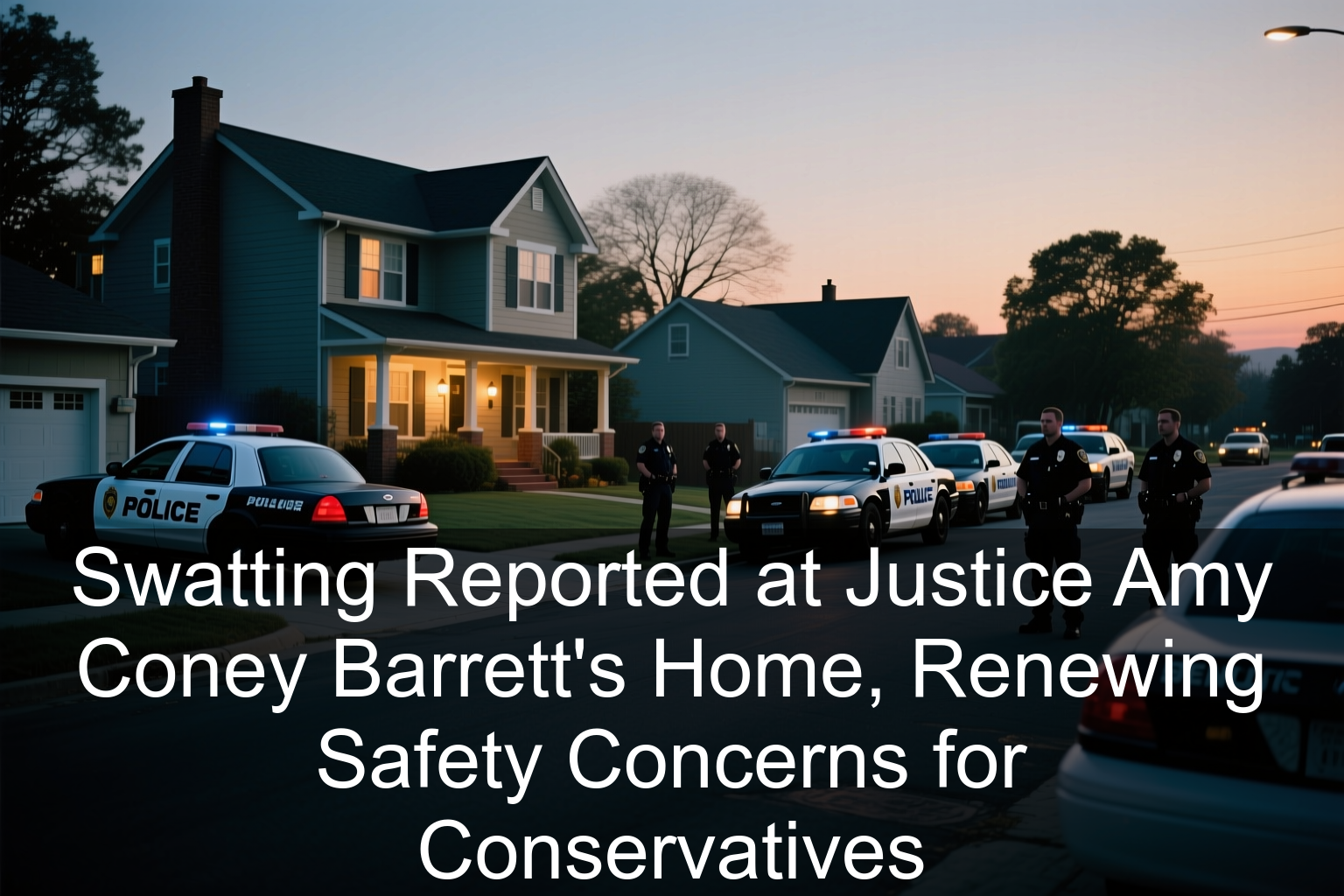
Reports say a swatting call targeted the residence of Supreme Court Justice Amy Coney Barrett, the latest episode in a broader pattern of threats and harassment directed at prominent conservatives. Swatting typically involves a false emergency report intended to trigger an armed police response, placing occupants and responding officers at risk.
The incident is being discussed as part of a continuing climate in which political disagreement has spilled into intimidation tactics. Commentators note that when false reports are used to send law enforcement to a private home, the danger is immediate and indiscriminate, affecting families, neighbors, and public safety personnel alike.
In conservative and libertarian circles, the episode is also being framed as another consequence of heated rhetoric from national leaders. In that view, language that treats political opponents as illegitimate can encourage unstable actors to escalate from online hostility to real-world threats, even if those leaders did not direct a specific act.
Justice Barrett has been a frequent subject of political anger since joining the Supreme Court, and her position on major cases has made her a high-profile target. The reported swatting at her home adds to concerns that the rule of law is being strained by a culture that increasingly tolerates personal harassment as a substitute for lawful civic engagement.
Advocates for stronger accountability argue that swatting should be treated as a serious crime, not a prank, because it weaponizes emergency services and creates a high risk of injury or worse. They also contend that public officials across the political spectrum should condemn intimidation tactics clearly and consistently, especially when they are aimed at judges whose role depends on independence and security.