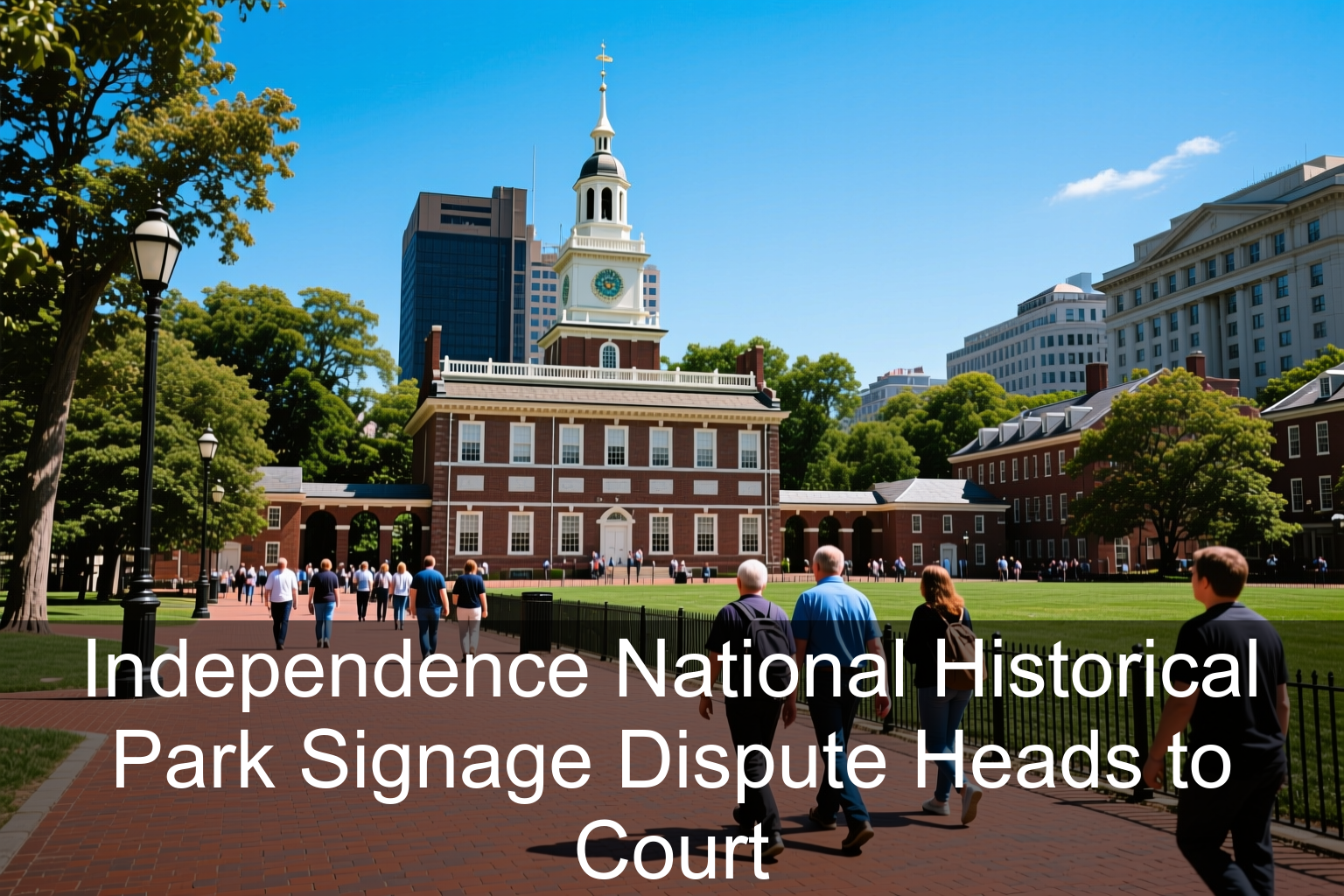
A fight over how America’s founding story is presented to visitors is escalating in Philadelphia, where proposed interpretive signage for Independence National Historical Park has become the subject of sharp political dispute. The controversy centers on new informational displays developed for the historic site and the objections raised against them, objections framed by critics in the language of modern ideological activism.
The signage was designed to guide visitors through the park with historical explanations tied to the location’s central role in the nation’s early political life. Supporters of the project describe the materials as well-researched and useful to the public, arguing they provide context that helps visitors understand what happened at the site and why it matters. From this perspective, the point of a national historical park is to inform Americans and tourists alike, not to filter the past through shifting cultural fashions.
Opponents, however, have pressed claims that the content reflects unacceptable assumptions or framing, pushing back on how the park’s history is being described and which themes are emphasized. In practice, that criticism has turned what might have been a routine update into a broader struggle over whether public history will be shaped by contemporary political demands rather than by a straightforward effort to convey the record.
With the disagreement unresolved, the dispute is moving into the legal system. The signs prepared for the Philadelphia site are now headed to court, a step that reflects how contentious even basic historical interpretation has become when government institutions face organized pressure campaigns. The court process will determine what happens next for the planned displays and may shape how similar conflicts are handled in the future.
At stake is more than a set of placards. The outcome will influence whether public spaces devoted to the country’s founding principles can present information without being continually second-guessed by ideological gatekeeping. For advocates of limited government and a culture of free inquiry, the better approach is to let accurate history be presented clearly and allow citizens to draw their own conclusions, rather than turning public heritage sites into battlegrounds for political enforcement.