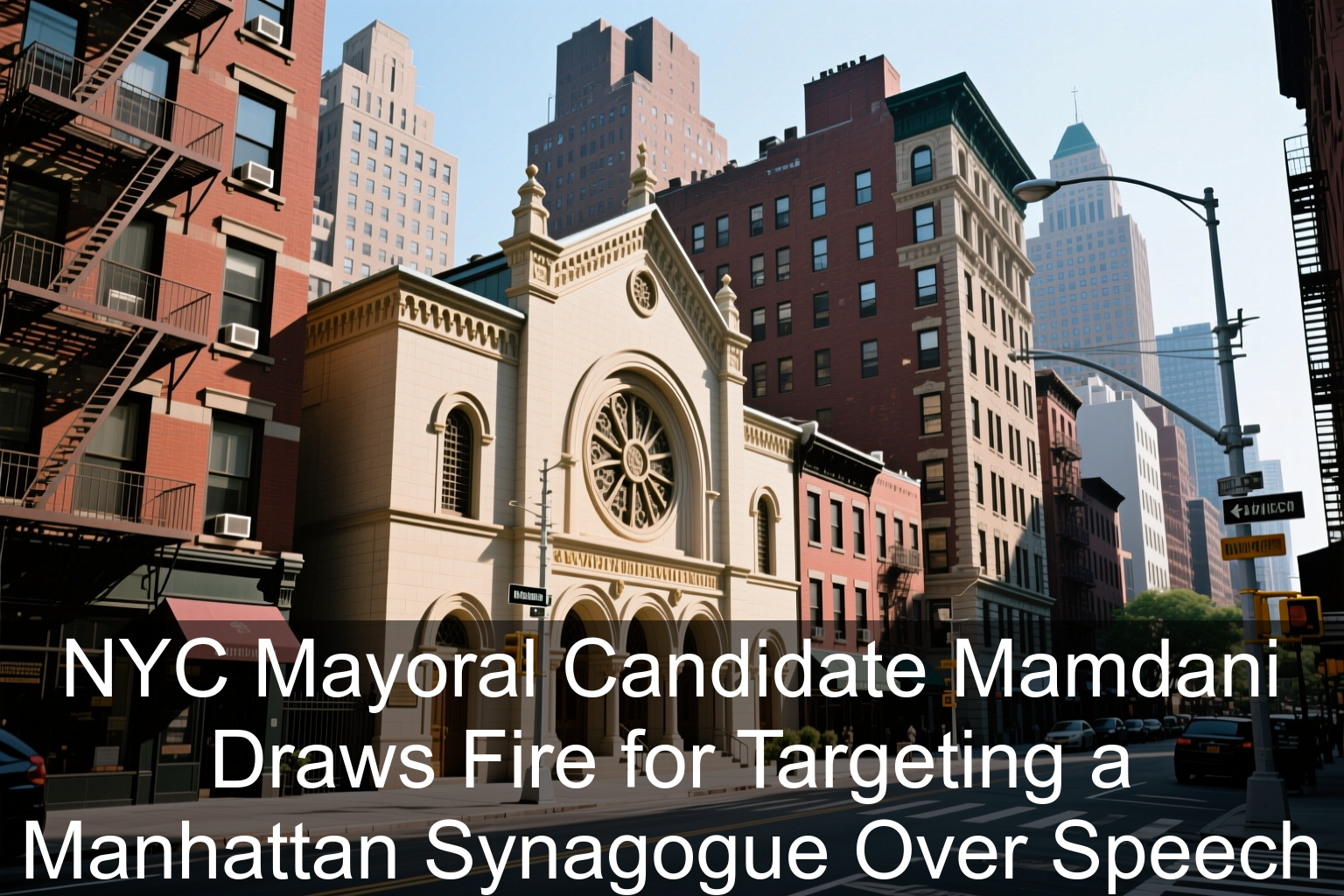
A new dispute over free expression in New York City politics has centered on remarks directed at a Manhattan synagogue, raising questions about whether constitutional protections are being treated as contingent on political approval. The argument has unfolded in the context of a mayoral campaign, where candidates’ stated commitments to civil liberties are being tested by contentious cultural and ideological fights.
At the heart of the controversy is mayoral candidate Zohran Mamdani’s public condemnation of the synagogue. Critics say the episode reflects a broader tendency in city politics to treat speech rights as something that must be “earned” by adopting the “right” views, rather than protected as a baseline principle for everyone, including those whose opinions are unpopular.
From a conservative and libertarian perspective, the larger issue is not whether one agrees with the synagogue’s message or the event that prompted criticism, but whether political leaders are willing to defend free-speech protections consistently. When elected officials or candidates imply that protected expression becomes illegitimate when it clashes with their ideology, they create a framework that can be applied against any group once the political winds shift.
The dispute also highlights how institutions that serve religious communities can become targets in broader political struggles. Synagogues, like other houses of worship, operate not only as religious spaces but also as community institutions; when political figures single them out for condemnation connected to speech-related controversies, it can chill open debate and encourage the public to view constitutionally protected activity through a partisan filter.
As the mayoral race continues, the episode is likely to sharpen divisions over whether New York City’s political leadership will treat free speech as a universal right or as a privilege granted only to approved viewpoints. For voters focused on civil liberties, the key question is whether candidates will defend the principle even when it is politically inconvenient—and whether they will apply it evenly rather than making protections depend on ideological alignment.