
Tag: journalism

  • New Jersey Detention Center Protests Raise Concerns Over Press Freedom and Public Safety

    New Jersey Detention Center Protests Raise Concerns Over Press Freedom and Public Safety

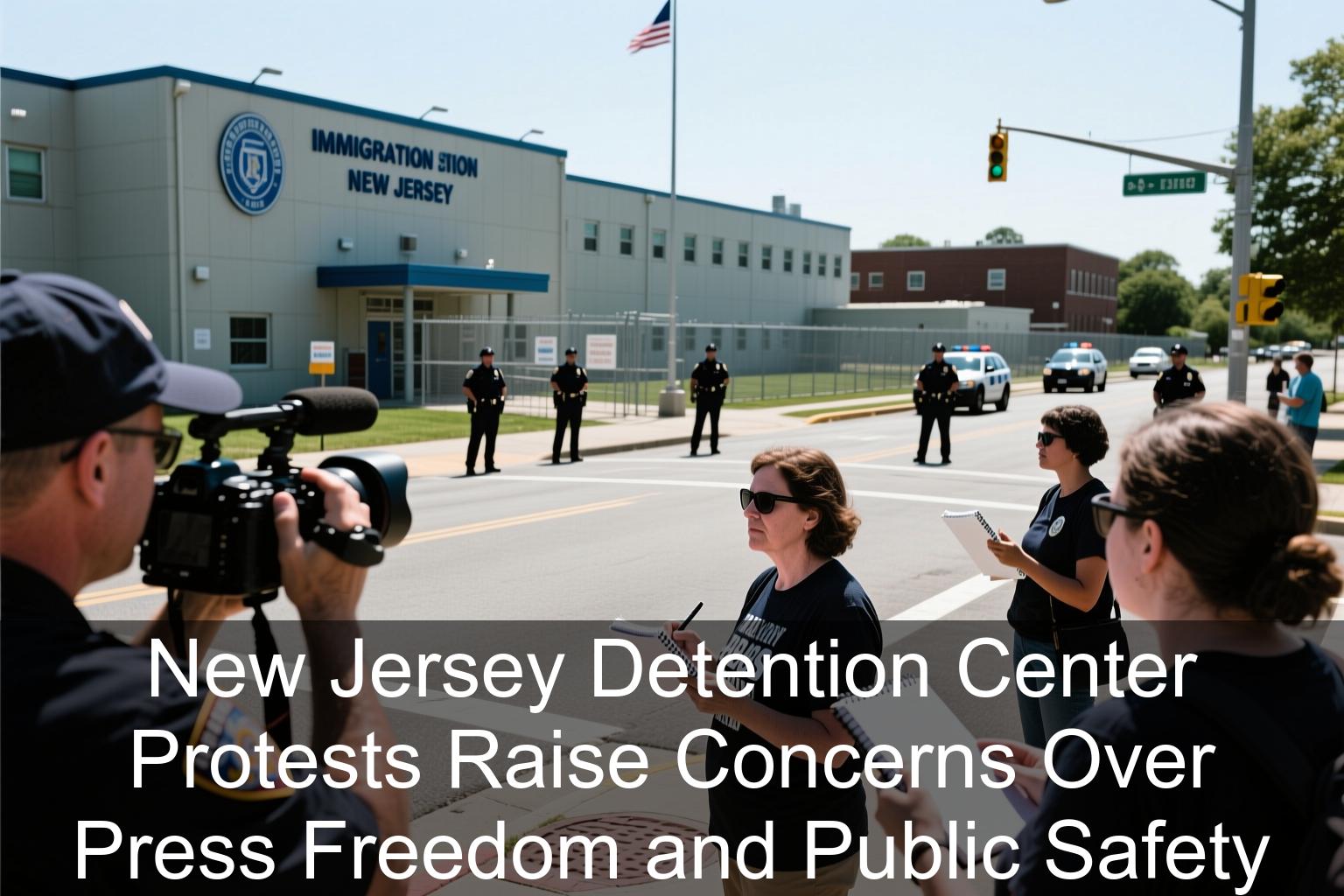
    Reporting from the public streets outside an immigration detention facility in New Jersey has drawn renewed scrutiny after accounts surfaced suggesting that covering nearby demonstrations can carry real physical risk. The episode is being framed by civil-liberties advocates as more than a local dispute, pointing instead to broader questions about whether Americans can observe, record, and report on contentious public events without retaliation.

    The Foundation for Individual Rights and Expression (FIRE) says it is continuing to monitor and document incidents in which protesters and journalists may be penalized for engaging in activity protected by the First Amendment. In its public communications, the organization emphasizes that the same constitutional safeguards that cover political speech also protect newsgathering and the public’s ability to witness government-adjacent activity in open spaces.

    At the center of the concern is the prospect that simply doing the work of journalism at protests near the New Jersey detention center could result in severe harm serious enough to require hospitalization. Civil-liberties advocates argue that when the costs of reporting include potential injury, the public loses access to independent information and government power faces less oversight.

    From a libertarian-leaning civil-rights perspective, the chilling effect matters as much as the incident itself. If individuals believe they could be punished or physically endangered for documenting demonstrations, fewer people will record encounters, fewer journalists will show up, and officials will operate with less accountability—outcomes that run directly against the principles of open government and free expression.

    FIRE says its ongoing effort is aimed at ensuring that neither demonstrators nor members of the press are punished for exercising constitutionally protected rights. The organization’s stated focus is on tracking violations, publicizing them, and pushing back on conduct that undermines peaceful protest, lawful observation, and the ability of journalists to report from public places.

  • Privacy Protection Act Under Pressure as Government Leak Hunts Target Journalists

    Privacy Protection Act Under Pressure as Government Leak Hunts Target Journalists

    The Privacy Protection Act was created to stop government agencies from treating journalists and other investigators like criminals simply for doing their jobs. It sets limits on when officials can seize or search work materials connected to reporting, aiming to prevent raids that chill scrutiny of people in power. But those protections only matter when they are respected in practice, especially during politically charged “leak” investigations.

    The central concern is what happens when the government treats the hunt for a source as a justification to go after the messenger. When officials act as if “find the leaker” automatically means “search the reporter,” the law designed to defend watchdog work can be reduced to a procedural obstacle rather than a real barrier. That shift matters because aggressive investigative tactics can intimidate reporters, deter sources, and shrink the flow of information the public needs.

    Supporters of strong press protections argue that the point of the Act is not to create special privileges for media organizations, but to safeguard the public’s ability to learn what government is doing. When agencies can raid reporting operations or seize newsgathering materials, the pressure does not land only on a newsroom. It also lands on ordinary citizens who might otherwise speak up about wrongdoing, mismanagement, or abuses of authority.

    From a conservative and libertarian perspective, the stakes are straightforward: government power expands most easily when it can operate with minimal accountability. Leak hunts can be legitimate, but they are also an easy pretext for overreach, particularly if investigators start treating journalistic work product as a convenient shortcut. A system that allows raids on reporters risks turning transparency into a liability and official secrecy into the safer default.

    The Act’s value, then, is measured by whether it functions as a firm limit on state power instead of a mere technicality to work around. If officials can sidestep the spirit of the law whenever an investigation becomes inconvenient, the practical result is fewer watchdog stories, fewer whistleblowers willing to talk, and less oversight of government decision-making. The bigger question is whether public institutions will honor the guardrails that already exist—or continue to test how far they can push without real consequences.