
Tag: community

  • The End of Rec League and What It Reveals About Youth Sports Today

    The End of Rec League and What It Reveals About Youth Sports Today

    For years, I thought I understood youth sports from the outside: a few practices, a Saturday game, and some photos for the family album. What I didn’t anticipate was how intense the secondhand experience could be once the kids on the field were my own sons. The emotional ride doesn’t belong only to the players. Parents end up feeling every close call, every small improvement, and every hard lesson as if they were out there themselves.

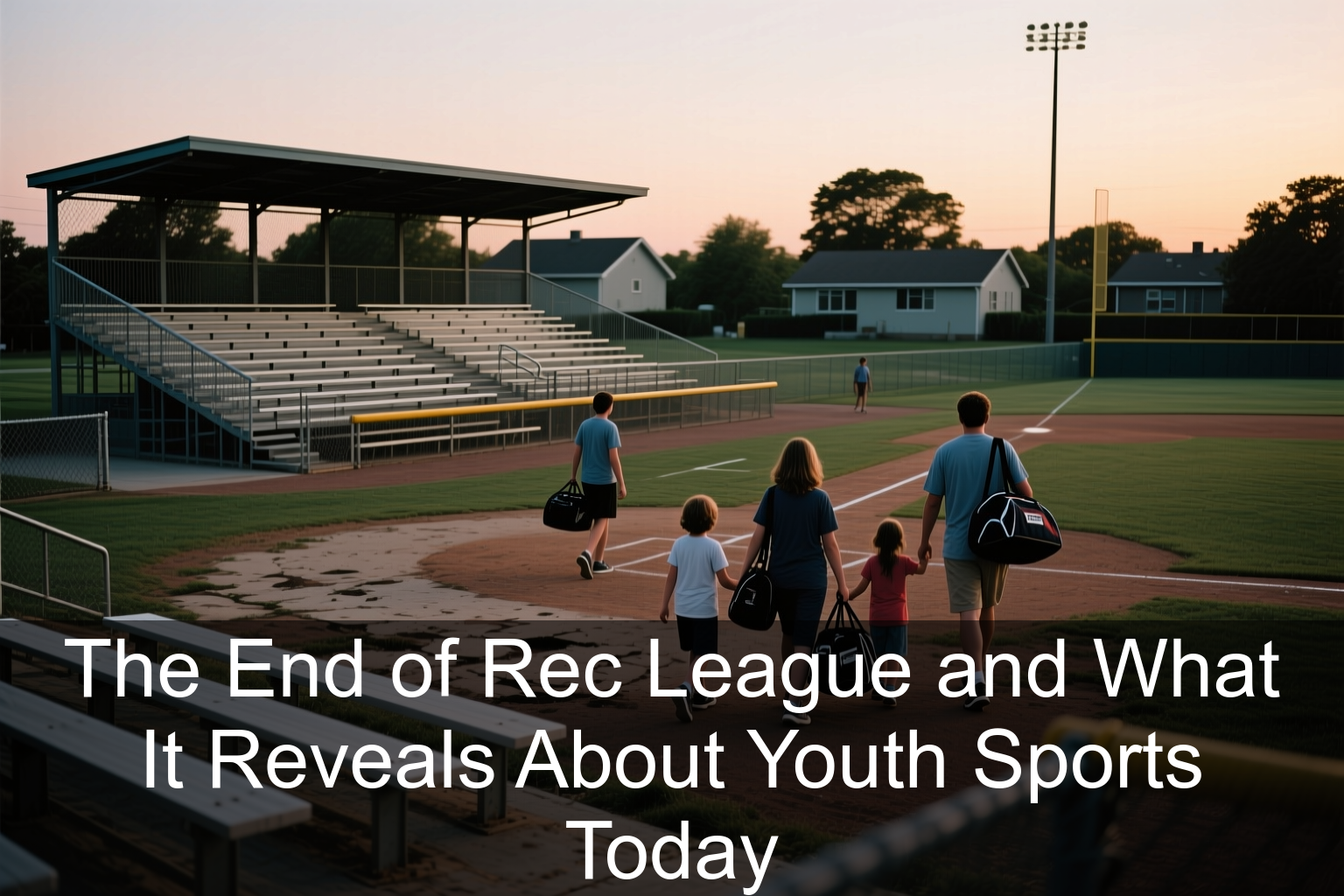
    That realization becomes unavoidable in the final stretch of recreational league. Rec sports are often where families first learn the rhythms of a season—showing up on time, learning rules, and figuring out how to be a good teammate and a good sport. It can be messy and uneven, but it’s also accessible. You don’t need elite coaching networks or costly travel schedules to participate, and that’s part of what makes it valuable.

    As boys grow, though, the structure changes. The casual setup that once fit their stage of life begins to give way to more competitive tracks, and the community-based simplicity of rec league starts to feel like it’s disappearing. That transition is not only logistical; it’s cultural. It asks families to decide whether they want to keep sports as a local, low-stakes activity or treat it like an escalating commitment that competes with other parts of childhood.

    There’s a broader lesson in that shift. When youth sports become increasingly professionalized, more decisions get centralized—league policies, coaching pipelines, and expectations about time and money. From a conservative and libertarian perspective, it’s worth noticing how quickly something rooted in neighborhood life can be replaced by systems that reward specialization and status. The more the pathway depends on large organizations and expensive commitments, the less room there is for ordinary families to make choices that fit their values, schedules, and budgets.

    Still, none of this erases what rec league gave us. It created a setting where my sons could play, learn, and compete without the sense that every game was an audition. And it taught me, unexpectedly, how powerful it is to watch your children pursue something they care about. The end of rec league marks a change in the calendar, but it also marks a change in how a family experiences sports—and in what youth sports increasingly demand from the people who just wanted their kids to play.

  • America at 250: Trust, Renewal, and the Case for a More Humane Public Spirit

    America at 250: Trust, Renewal, and the Case for a More Humane Public Spirit

    As the United States approaches its 250th anniversary, the national mood invites something more substantial than slogans and ceremonies. The moment calls for a sober look at what holds the country together when politics is loud, institutions feel strained, and citizens often seem to speak past one another. The approaching milestone is an opportunity to step back and consider the deeper habits that sustain a free society.

    A central theme worth recovering is the idea captured in a familiar national phrase: “In God we trust.” In practice, that line has long signaled more than a motto; it points to limits on human authority and reminds citizens that the state is not the ultimate source of meaning. For many Americans, faith traditions have shaped community life, personal responsibility, and charity in ways that government programs cannot easily replicate.

    That same outlook naturally encourages something else that is increasingly rare in public life: the ability to pause. The country’s civic culture is often dominated by relentless outrage and constant mobilization, as though every day must be treated as an emergency. Yet a society that never stops to breathe loses its capacity for judgment. Rest is not escapism; it is part of maintaining perspective, resisting manipulation, and preserving the mental and moral clarity that self-government requires.

    From rest comes renewal—personal, communal, and national. Renewal does not demand utopian schemes or sweeping federal ambition. It is more often built through the quiet work of families, congregations, local associations, and neighbors who choose steadiness over rage. In a conservative and libertarian understanding of the American experiment, renewal is strongest when it rises from the bottom up, anchored in voluntary cooperation rather than centralized direction.

    At 250, the country can also benefit from a call to basic decency: to carry a heart for fellow citizens even amid disagreement. That does not mean surrendering principles or softening convictions about liberty, constitutional limits, or the need for restrained government. It means remembering that political opponents are still people, and that free institutions survive only when citizens retain enough goodwill to share a nation without trying to crush one another.

    The approaching anniversary, then, is a fitting time to reclaim a balanced civic posture—trust that ultimate authority is not political, rest from constant agitation, and renew the habits of community and compassion that make liberty livable. Those themes do not resolve every policy dispute, but they can help restore the moral and cultural foundations on which a free people depend.