
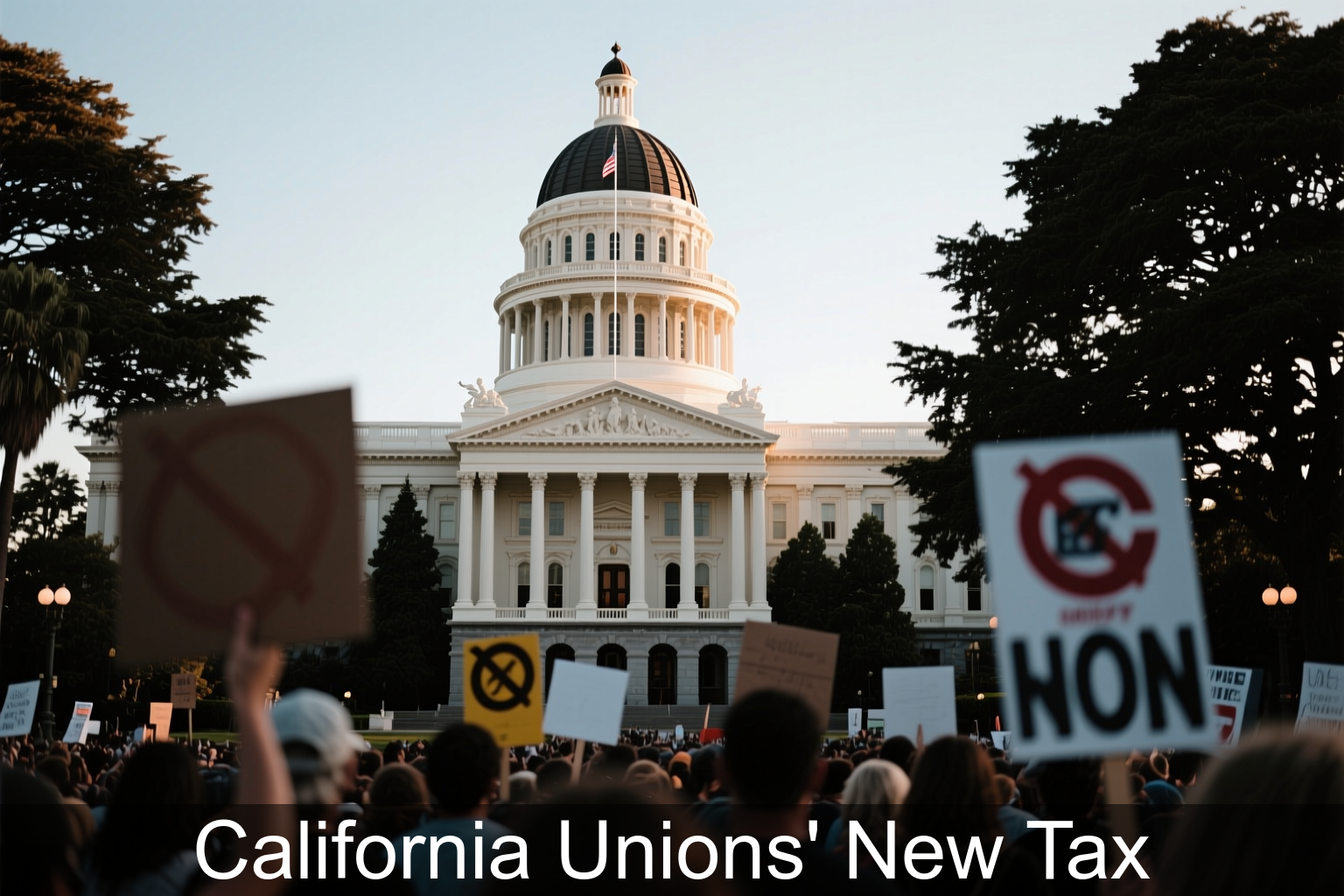

California’s organized labor movement is once again betting on a familiar political strategy: raise taxes on high earners and promise bigger public-sector funding as the payoff. The latest “tax-the-rich” push is being promoted as a way to shore up government programs and meet big spending goals. But as the proposal collides with voter skepticism, economic constraints, and the state’s own budget problems, the campaign is showing signs of strain before it even reaches the finish line.
At the center of the debate is a recurring California pattern: advocates argue that wealthy residents and large paychecks can be tapped again without broader consequences, while critics point out that the state’s revenue system already depends heavily on a small share of high-income taxpayers. That dependence makes Sacramento vulnerable when markets slide, capital-gains income falls, or top earners change their residency or alter how they realize income. A plan built on extracting even more from the same narrow group can look politically easy, but financially risky.
Labor’s influence has long been intertwined with California’s public-sector growth. Union leadership often frames new revenue measures as necessary to protect schools, services, and staffing levels. Yet every additional surtax or high-end hike tightens the state’s reliance on volatile income streams. From a conservative and libertarian perspective, this is the core contradiction: the political coalition demanding greater and more permanent spending is trying to fund it through tax sources that are neither stable nor guaranteed.
The initiative’s troubles reflect more than messaging. California already has a reputation for high taxes and heavy regulation, and proposals that further concentrate the burden on top earners can feed uncertainty for employers and investors. Even many voters who like the idea of taxing “someone else” can become wary when they see how quickly optimistic revenue projections can fail to materialize—especially during periods when the state is already juggling fiscal gaps and competing priorities.
Organized labor may also be discovering the limits of its own playbook. When a movement repeatedly returns to the same solution—new taxes aimed at the same segment of the population—opponents can more easily define the measure as another round of extraction rather than reform. That makes it harder to build durable support beyond the core base, and it invites questions about whether Sacramento is addressing underlying cost drivers or simply seeking a larger pipeline of money to feed an expanding set of commitments.
For Californians, the broader issue is whether the state will keep leaning into an unstable, top-heavy tax structure or pivot toward restraint, efficiency, and economic growth. The current proposal underscores the same unresolved tension: public-sector interests pushing for bigger government and higher spending, while the economic reality of revenue volatility—and the mobility of wealth—keeps undermining the promise that the bill can be sent to “the rich” with no tradeoffs.
Leave a Reply