
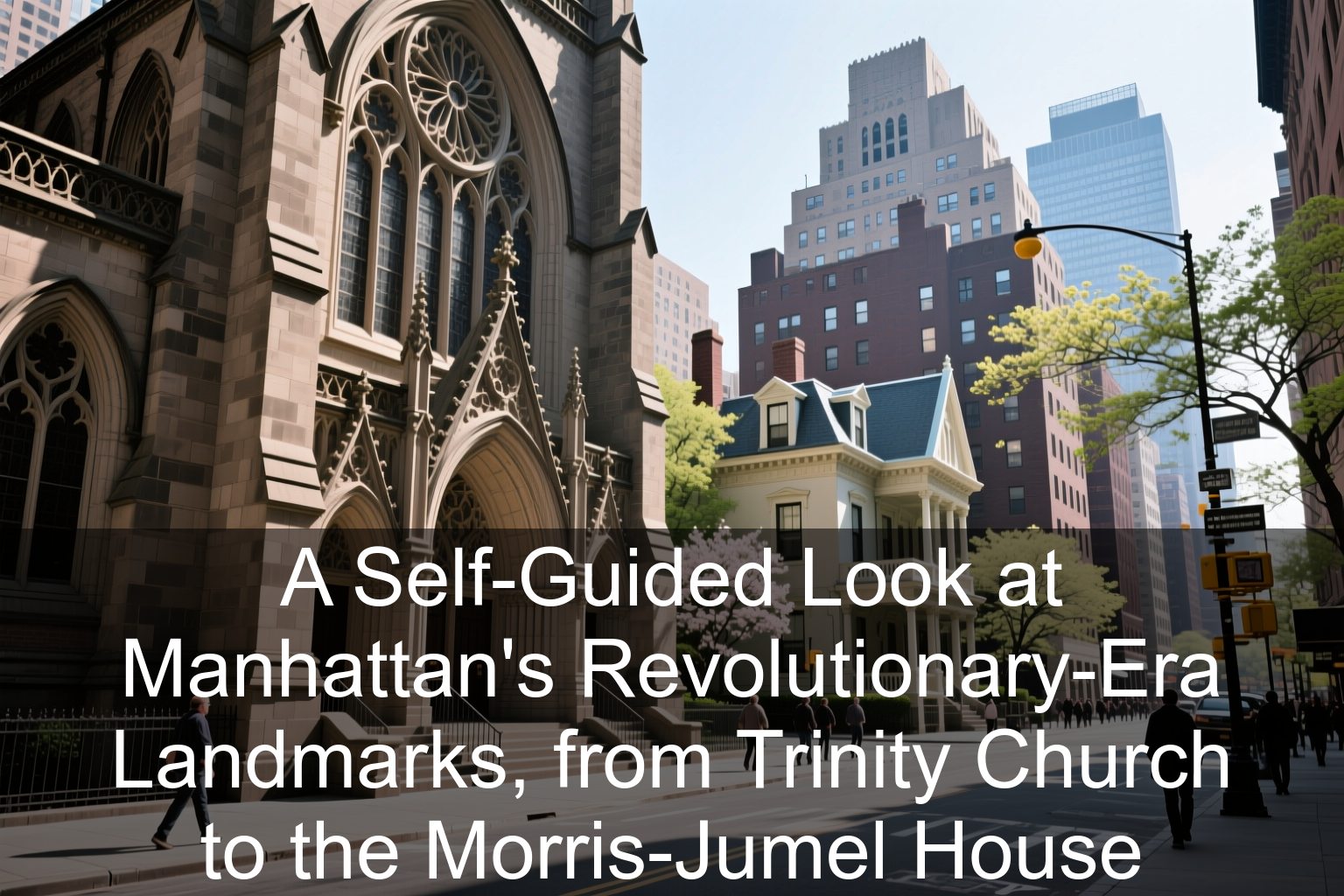

Lower Manhattan still carries visible reminders of the country’s early political and military struggles, and a walk through the area makes clear how closely New York’s streets are tied to America’s founding era. The stops are familiar to many visitors, yet they also serve as a practical lesson in how history survives when a city chooses to preserve it.
One key destination is Trinity Church, a landmark that anchors the story downtown and offers a direct connection to the period when the nation’s institutions were taking shape. Nearby is the grave of Alexander Hamilton, a site that draws attention not only because of Hamilton’s outsized role in early American finance and governance, but also because it sits in the middle of a modern city that often treats its past as optional.
The route then shifts from monuments and memorials to the harder realities of wartime decision-making. George Washington’s fight for control of Manhattan remains central to understanding why the city mattered strategically, and why the island became a focal point during the Revolutionary War. The contest for Manhattan highlights the founding generation’s constraints—limited resources, difficult terrain, and the stakes of defending a crucial position.
Moving uptown changes the atmosphere, but it does not leave the past behind. The Morris-Jumel House comes into view as another preserved window into early New York, offering a different kind of encounter than a churchyard or battlefield story. It stands as a reminder that private spaces can be as historically revealing as public ones, especially when they are maintained rather than replaced.
The stop at the Morris-Jumel House also carries a lighter, local note: the lingering question of whether a ghost might still be associated with Jumel Terrace. Whatever one makes of that tradition, the larger point is straightforward—New York holds layers of American history across neighborhoods, and protecting those places keeps the city’s story accessible to ordinary people rather than locking it away in archives.
Leave a Reply